From physics to policy: researching women’s role in global environmental decision-making
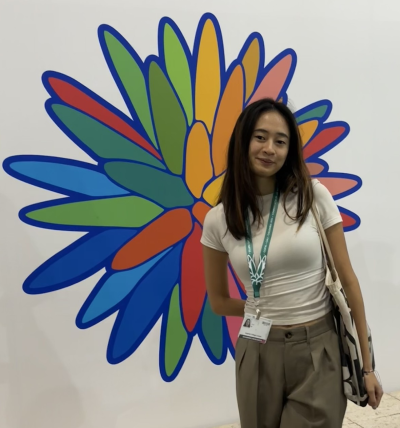 I am a third-year PhD student at the Centre for Environmental Policy, where my research focuses on women’s participation in global environmental policy. I’m particularly interested in the social and equity dimensions of environmental challenges such as climate change and biodiversity loss. While these issues are often framed as scientific or technical problems, they are deeply social and gendered. My work looks at how including more diverse voices – especially those most affected by environmental change – can lead to better, fairer, and more effective policies and outcomes for all.
My path into this field hasn’t been a straight line. I studied physics originally, but over time I realised that the work felt quite abstract and removed from the real-world issues I cared about. I wanted to engage more directly with the people and ideas shaping science and society. That curiosity led me into science journalism, where I had the chance to speak with scientists, researchers, and advocates working on fascinating problems. Those conversations made me realise that what interested me most was the human side of science – how knowledge connects to people, politics and policy. Pursuing a PhD felt like a natural way to bring together those interests.
One of my favourite parts of my research so far has been the people I’ve been able to meet along the way. As an early-career researcher still finding my footing in the field, it has been incredibly inspiring to speak with women who are working at the forefront of global environmental policy. Many of them are advocates and negotiators who are pushing for more inclusive and equitable approaches to environmental decision-making. Seeing their work translate into real outcomes – such as during global biodiversity negotiations like COP16 in Colombia – has been a powerful reminder that research and advocacy can genuinely shape change. It has also been a privilege to travel and learn from people across different parts of the world.
Like many people in academia, I’ve faced challenges along the way. Funding and financial stability can be real barriers, and coming from a working-class background, I’ve sometimes felt out of place in academic spaces. I’m surrounded by incredible colleagues and friends – many of whom come from very privileged backgrounds – and while they are brilliant and supportive, it can sometimes make you feel like the odd one out in a room. Over time, I’ve learned that there isn’t just one kind of person who belongs in academia. Our different backgrounds shape the perspectives we bring, the questions we ask and the kind of research we pursue.
For women considering a similar path, my biggest advice would be not to be afraid to change direction. Careers rarely follow a straight line, and sometimes the most interesting paths come from following your curiosity. I would also encourage people to reach out to others whose work they admire and ask questions. In my experience, people are often much kinder and more generous with their time than you might expect. Those conversations can open doors, shape your thinking, and remind you that you don’t have to navigate these spaces alone.
Find out more