A career at the science–policy interface
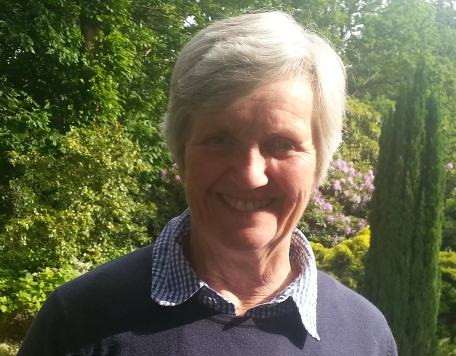 When I look back on my career, I realise how fortunate I have been in the opportunities I’ve had. I didn’t set out to work in air pollution, but I have lived through a time of enormous environmental change and have had the chance to contribute to understanding and addressing it.
Some of my earliest memories are of the severe smog episodes in the UK. Schools would close and visibility could drop to just a few yards. I remember my father driving us home while my mother walked ahead of the car in bright clothing so he could see where to go. Experiences like these made air pollution a very tangible problem.
I began by studying mathematics at the University of Oxford, which at the time was considered a versatile subject. One of the great advantages of Oxford was the freedom to attend lectures across different departments. I enjoyed seeing how mathematicians, physicists and chemists approached similar ideas from different perspectives, and that interdisciplinary thinking has stayed with me throughout my career.
I later completed a PhD in astrophysics at the University of St Andrews, studying radiative transfer deep within the Sun. Afterward I worked part-time in astronomy at the University of Southampton, where I shared an office with Jocelyn Bell Burnell, who had discovered pulsars. It was an exciting environment to be part of.
My career gradually shifted toward environmental modelling, particularly the impacts of nuclear accidents and air pollution. This unexpectedly placed me in a unique position when the Chernobyl disaster occurred in 1986. By combining meteorological data with monitoring reports from across Europe, we were able to model the spread of the radioactive cloud and estimate the scale of the release. I later visited the Chernobyl site and the evacuated city of Pripyat – an experience I will never forget.
Like many women in science at the time, I did encounter prejudice during my career. While my colleagues were supportive, there were very few women in engineering departments, and some senior figures did not believe women were capable of scientific research. That was challenging, but it strengthened my determination to focus on work that mattered. I was much happier when I moved to Imperial’s Centre for Environmental Policy, where interdisciplinary research and environmental challenges were central to the work we were doing.
Much of my research has focused on the science–policy interface: ensuring that scientific evidence informs real-world decisions. I have worked with international organisations and governments to address transboundary air pollution, contributing to agreements that reduce harmful emissions across Europe.
Today I continue working on integrated assessment modelling to support UK air quality and climate policy, exploring future scenarios for emissions, energy systems and agriculture. There are still many challenges ahead.
One of my greatest sources of satisfaction is working with and mentoring a talented team of researchers. Seeing the next generation of scientists tackling these problems – including many more women than when I began – is hugely encouraging.
Find out more