Cause for celebration! The high-impact developments paving the way for even greater success
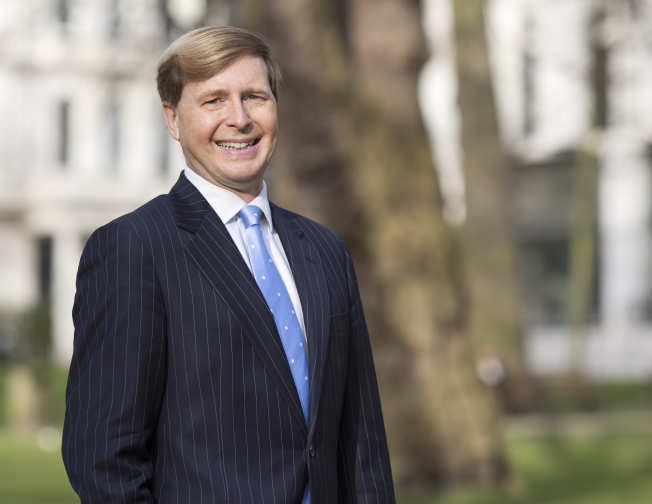
"Here in the Centre for Environmental Policy (CEP), we believe that universities must show the value of their contributions to economic competitiveness, sustainability and the quality of life for people in rich and poor nations.”
For almost forty years CEP has focused on ground-breaking, internationally-recognised research and teaching that addresses key environmental and global policy challenges through the interdisciplinary study of science, technology and innovation.
That is why our Department has grown its research and education programmes by more than 80% in the past five years. Translating our research and educational programmes into positive, real-world business and policy impacts is what we are all about. CEP’s focus is on environmental and development issues, including energy, pollution, conservation of natural resources (such as fisheries, forests, agricultural land, air and water), food security and poverty reduction.
What we are all about
We have started a new research phase in enhancing food security that is being realised through our Department’s food systems and AgForImpact initiatives. Among the authors of the world’s first green revolution, Gordon Conway, assisted by myself and Erik Chavez, and our food security team are now focused upon sustainable systems of agricultural production, particularly in the developing world. We have already signed up 50,000 farmers who we are bringing into the formal economy. This activity is of vital importance noting the possible 400% productivity gains on offer.
On a related track, our work on pest management and crop production in Asia, led by John Mumford and Megan Quinlan has featured the use of non-chemical, organic techniques and solutions to improve crop yields. As a direct consequence of this research fruit crop production earnings on the Indian sub-continent have risen by $200 million annually in recent year.
Closer to home, our business and environment research has assisted major companies to improve and enhance both their environmental performance and technology offerings. Our ten year collaboration with firms such as Veolia and the UK’s major water companies has identified new mechanisms for identifying and removing pollutants from countries’ surface, groundwater and, therefore, potable water supplies. Our environmental quality researchers, led by Nick Voulvoulis, have led the way in showing Veolia how to create and expand the circular economy of sustainable goods and services.
Finally, our ICEPT energy policy research is defining how Governments can create low carbon futures based upon world leading sociotechnical and economic analysis of the energy mix. Rob Gross’ leadership of UKERC’s Technology and Policy Assessment function provides UKERC's flagship policy assessment activity providing research based reports for government and other energy industry stakeholders. We also lead on the College’s interdisciplinary delivery of carbon capture and storage research. These are just a few of the many examples of the project activities and outcomes of our Departmental research.
Still to come
Since success breeds success we have more new initiatives on the go. For the first time ever, under Professor Jim Skea's Chairmanship, a University (that is to say, our Department) will host the Intergovernmental Panel on Climate Change (IPCC). We will be the home of thirteen new IPCC-related staff who will be engaged in the production of the next IPCC WG3 Report with work to continue through to 2021. We will house staff at offices here in London and in New Delhi, India.
Our Department is also intending to host offices for the world famous CGIAR Climate Change, Agriculture and Food Security Programme. Discussions involving Gordon Conway, Sonia Vermeulen and I are at an advanced stage in this regard. What a way to move forward our sustainable food systems Initiative.
We have also begun discussions around a formal sister institutional relationship with the University of Geneva, Institute for Environmental Science. This should extend our research and education critical mass that much further.
With these ideas in mind we are seeking to establish a Sustainable Innovation Lab at Imperial West. A Sustainable Innovation Lab will allow us to organise and lead the College in tackling these challenges in a completely inclusive, participatory environment.
Our alumni
Our alumni are our legacy, our present and our future. For going on 40 years we have featured our MSc in Environmental Technology as the world’s premier interdisciplinary environmental course. In turn, our graduates are national, European and international leaders in the environmental field. As a tribute to you, on Friday 9 September this year, we are celebrating our 40th anniversary as a Department and as a course. We will also be celebrating our 4,000th alumnus and will be putting on a big bash here at Imperial with leading speakers, a buffet dinner and a band for what will be an unforgettable night. Join us and in the meantime, think about how you can support our next forty years. Get involved in our Alumni Committee and in our Department. Give us a call!
Please give
In summary, we work on the cutting edge of the world's most pressing challenges some of which even threaten our way of life. Our shared inspiration is to work with our funders within a stakeholder community that seeks to maintain and enhance life on our planet. The environmental crises that we face in climate change and the dwindling environmental resources and ecosystems are a call to action for us. We hope that it is for you too. Come and work with our community on these grand generational challenges.
Dr Zen Makuch
Director and Head of Department
Centre for Environmental Policy