Pit stop in pictures
by Colin Smith
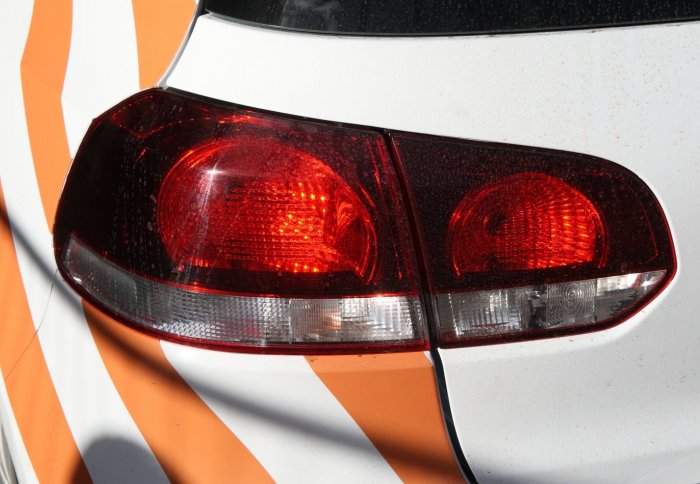
Rear view of one of the RAC Future Car Challenge vehicles
Low emission vehicles all converged on Imperial College London– the official end point - as part of one the UK’s premiere car challenges.


See the low emissions entrants, the winners, and the Imperial team involved in this year’s event in the slideshow above.
Low emission vehicles all converged on Imperial College London– the official end point - as part of one the UK’s premiere car challenges, which happened this month.
Researchers at Imperial donated their expertise and time for the Royal Automobile Club’s Annual Future Car Challenge (FCC). The aim of Challenge is see which low emission vehicle can use the least amount of energy on a 63 mile route from Madeira Drive, Brighton, to Imperial, and onwards to London’s Regent Street.
The Royal Automobile Club, the proprietors of the world's longest running motoring event - the London to Brighton Veteran Car Run - established the FCC to actively promote new low-energy technology and echo the pioneering start of motoring in 1896.
This year, the Imperial team carried out a technical analysis on each vehicle to determine the winner. The analysis took place at Imperial’s Prince’s Gardens.
Article text (excluding photos or graphics) © Imperial College London.
Photos and graphics subject to third party copyright used with permission or © Imperial College London.
Reporter
Colin Smith
Communications and Public Affairs
