Mini profile: Cris Banks-Leite
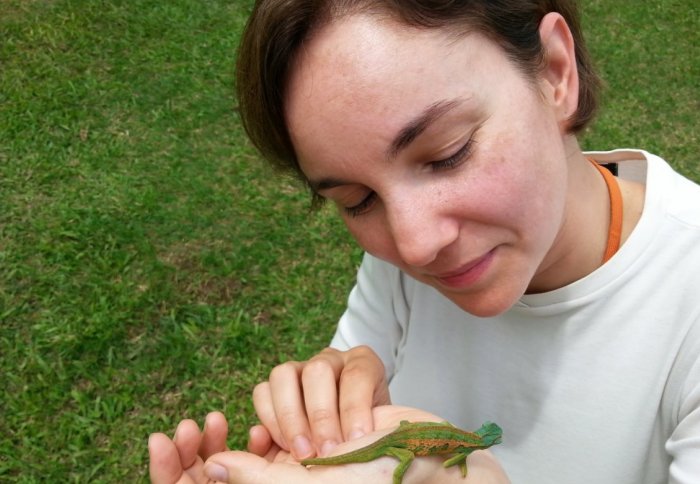
Dr Cristina Banks-Leite discusses her research and involvement in the GCEE initiative
What’s your specialist research interest and what first attracted you to it?
My main area of interest is to understand how communities are structured in human-modified landscapes. I find this area fascinating for two main reasons: (1) because community ecology is a very complex science and is still in great need to be further developed theoretically. (2) Because the results I obtain are highly applicable and can be easily translated into management and conservation policies. This area thus allows me to work at cutting edge science and have an impact on global conservation issues.
What does your research involve?
My research always starts with data collection in some paradisiac area in the world, such as the rainforests of Brazil, Borneo, Africa or Australia. Then my group and I grab a cup of coffee and the data crunching starts. We analyse data to understand how species turnover, species traits, and ecosystem functioning are modified by habitat loss and fragmentation. We build theoretical models to better understand observed patterns (with model complexity being determined by whether mathematicians and physicists are part of the equation or not). Finally, we upscale our results to provide a better picture as to how management and conservation efforts can be best allocated to different areas of the biome or the world.
What are you working on at the moment?
Most of my current research is focused on understanding the links between species loss and the loss of ecosystem functions in the Atlantic Forest of Brazil. I have two ongoing projects in the State of São Paulo where we are collecting information ranging from local scale nutrient cycling to large scale patterns of biodiversity.
What attracted you to the Grand Challenges in Ecosystems and the Environment Initiative?
The GCEE brings together top-quality scientists from very different areas of expertise but with a similar goal of tackling global environmental issues. The diversity of interests and backgrounds is what makes GCEE such a dynamic and exciting place to work.
What Grand Challenge will you be tackling under the initiative?
It is inevitable that we will lose species to global changes, so we have to prioritise efforts. My interest lies on how many species or which species can we afford to lose, and how to best manipulate landscapes to maximise benefits for biodiversity and humans.
How do you think that the Grand Challenges in Ecosystems and the Environment Initiative can make a difference to the environmental challenges that we are facing?
With the amount of information available growing at a steady pace and with research areas becoming ever more complex, nobody can claim that to have deep and broad knowledge across different areas of expertise. However, environmental issues are by nature multi-disciplinary. Given GCEE’s diverse interests, I believe we are one step closer to making a difference to global environmental issues.
Article text (excluding photos or graphics) © Imperial College London.
Photos and graphics subject to third party copyright used with permission or © Imperial College London.
Reporter
Victoria Ireton
Department of Life Sciences (Silwood Park)
