Mini profile: Ben Raymond
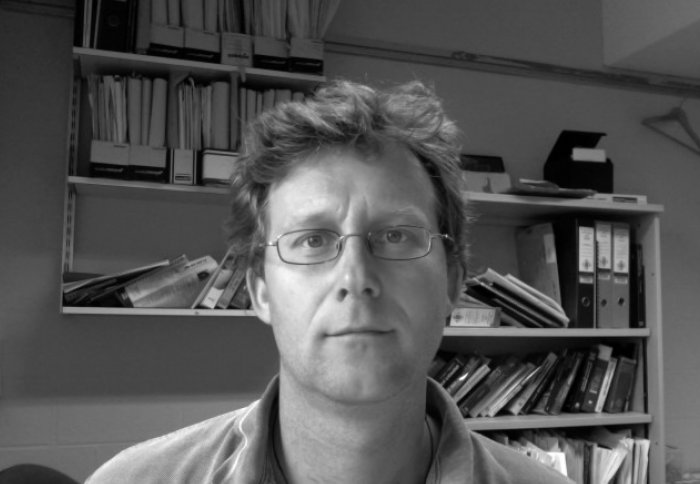
Dr Ben Raymond discusses his research and his involvement in the GCEE initiative
My main research interests are applied evolutionary biology and the evolutionary ecology of bacterial pathogens and symbionts. Working in applied fields satisfies my urge to do useful science while evolutionary biology is fascinating and intellectually stimulating. With insect and microbial systems you can observe natural selection happening in quite short periods of time: this is exciting every time and often surprising. I am primarily an experimentalist, although my work ranges from field ecology and experimental evolution to molecular biology and next generation sequencing. Much of my work centres around the invertebrate pathogen, Bacillus thuringiensis, which is one of the most important bacteria in modern agriculture, although I work with diverse bacteria in different systems. I have several projects that are exploring diverse aspects of cooperation in microbes, either that based on virulence factors that are public goods or that are exploring mutualisms between hosts and bacteria. I still work on the evolution of resistance to B. thuringiensis and its toxins in insect pests and I have two students who are exploring the ecology of resistance to antibiotics. My work is relevant to the Sustainable food and water supplies challenge as well as the Managing target species in complex ecosystems challenge, most notably the management of pests and the treatment of bacteria. With global problems such as the evolution of resistance to antibiotics I think that new interdisciplinary and international approaches are required. The “more of the same” approach is not going to deliver long-term solutions to controlling infectious bacteria. We need integrated ways of looking at the problem that involves knowledge of selection, transmission and bacterial population biology as well clinically effective solutions to treating infection.What’s your specialist research interest and what first attracted you to it?
What does your research involve?
What are you working on at the moment?
What Grand Challenge will you be tackling under the Grand Challenges in Ecosystem and the Environment initiative?
How do you think that the Grand Challenges in Ecosystem and the Environment Initiative can make a difference to the environmental challenges that we are facing?
Article text (excluding photos or graphics) © Imperial College London.
Photos and graphics subject to third party copyright used with permission or © Imperial College London.
Reporter
Victoria Ireton
Department of Life Sciences (Silwood Park)
