Mini profile: E.J Milner-Gulland
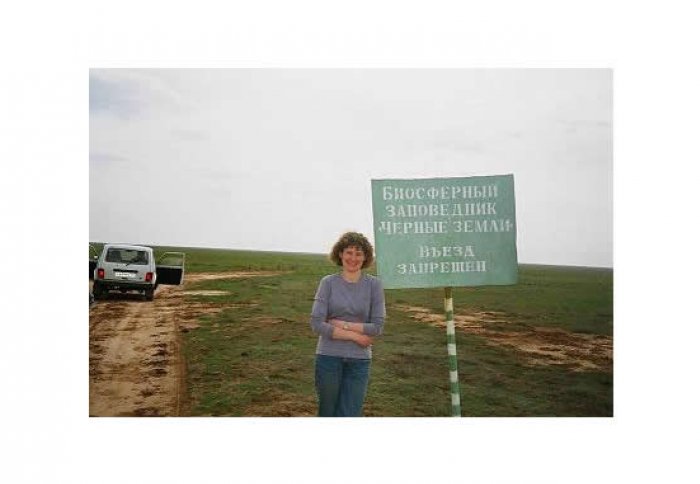
Professor Milner-Gulland discusses her research and her involvement in the GCEE initiative
I am interested in the way in which people interact with their environment, and how to understand and influence their behaviour towards natural resources. I am interested in this area academically because I am fascinated by uncertainty; how can we monitor and manage social-ecological systems robustly in the absence of full knowledge and understanding of the underlying processes? I am also passionate about conservation, which can only succeed if people and their relationship to nature are at the heart of any interventions we make. Conservationists intervene with the best of intentions, but without a solid understanding of how their actions fit within a system's dynamics, their interventions may have unintended consequences. My group is highly inter-disciplinary, and we cover the full range from ecology through social psychology to economics and anthropology. We use a range of approaches including both modelling and fieldwork, and we often apply theory developed in one field to new situations and disciplines. We are currently doing a lot of work on how to evaluate the impacts of conservation interventions, both social and ecological. It is very difficult to tease out the impacts of conservation actions in an ever-changing world, but crucial if we are to understand what works and why. More and more, our work on impacts considers the effects of conservation on the wellbeing of local people, which is a very difficult thing to understand, as it goes from relatively straightforward income effects (e.g. does a payments for ecosystem services scheme increase the wealth of households who receive it) to much less tangible effects on people's feelings of empowerment or security. Another big strand at the moment is transferring an approach called management strategy evaluation, which is widely used in fisheries, to conservation. This aims to help managers choose between conservation strategies, given that there is uncertainty both in the data that they can use (because we can't observe the world perfectly) and in the way in which the strategies they employ translate into changes in the system (e.g. because people may or may not abide by rules that are imposed). Grand Challenges is exciting because it is aiming to contribute to solving problems that the world faces rather than just being science for science's sake, and looks outwards to those making decisions, and to international and inter-disciplinary collaborators. I have always enjoyed working with people in other disciplines and other places, as it sparks off new ideas and ways of thinking about the world. In a standard university Department it is easy to get set in your ways and stay comfortable with your own viewpoint, and I think Grand Challenges will be a constant kick to make sure that this doesn't happen. My research is relevant to all three challenges. I have a long research interest in the sustainable use of wildlife, particularly hunted ungulates but also fisheries. I also work on the management of target species in complex systems, but with a particular interest in the human side - how does the adaptation of resource users to management interventions feed back into system dynamics. For example, if you stop people hunting bushmeat (either through a positive incentive or by imposing bans on its use), perhaps people will move instead into farming, causing more extensive habitat destruction. Finally, I am interested in predicting and mitigating the effects of change, whether this is environmental and social change. This goes to the heart of my work on how managers can operate in a climate of uncertainty when they are themselves part of the system rather than apart from it. In all these cases, I tend to work at a relatively local scale, in places where there is a lot of poverty as well as biodiversity, rather than at a global scale, so one challenge is making sure that the lessons learnt at the local level can scale up to global responses to conservation challenges. The Initiative has brought together some amazingly talented and committed people, with exciting ideas and with a strong vision of how working together we can be more than the sum of our parts. That will be the test of whether we have succeeded. The initiative will spawn new ways of thinking about the problems facing humanity, and a new cohort of scientists trained to think in an interdisciplinary, ambitious and broad way about the problems we face and how to solve them. I think we can have a strong impact on climate change research; understanding how this will affect ecological systems at different scales, and what impacts attempts to mitigate climate change could have on ecological and social systems at scales ranging from genes, through individuals and landscapes to the planet. This will be helped by strong links to Imperial College's Grantham Institute for Climate Change Research. I also think we can develop new ways of understanding the world, through the way we collect, analyse and understand different types of data, and using these data to make informed decisions. I would also like to see us having a strong impact on how actions are monitored and working out how we can use this information to improve management in an adaptive way. All of this will need strong links across College (to Engineering, Medicine, other Life Scientists, the Business School, and the Centre for Environmental Policy for example) and with colleagues in other institutions. Most centres for environmental sustainability are focussed around their own research and so can be quite inward-looking, or based on individual collaborations between researchers. The aim of GCEE is to act as a hub for world-leading research, by providing the space for deep thinking, collaboration, workshops and training where people from around the world can come and interact with the core staff. This outward looking approach is unique within the field of environmental challenges, though it owes a lot to the foundations laid by the NERC Centre for Population Biology and to the model that centres such as NCEAS in the USA pioneered. Given the magnitude of the challenges we face, an interdisciplinary, collaborative and inclusive approach is the only way forward, and GCEE will lead the way. What’s your specialist research interest and what first attracted you to it?
What does your research involve?
What are you working on at the moment?
What attracted you to the Grand Challenges in Ecosystem and the Environment Initiative?
What Grand Challenge will you be tackling under the initiative?
How do you think that the Grand Challenges in Ecosystem and the Environment Initiative can make a difference to the environmental challenges that we are facing?
What are the key areas where you feel that the Grand Challenges in Ecosystem and the Environment Initiative can have an impact?
How is the Grand Challenges in Ecosystem and the Environment Initiative different to other environmental initiatives globally?
Article text (excluding photos or graphics) © Imperial College London.
Photos and graphics subject to third party copyright used with permission or © Imperial College London.
Reporter
Victoria Ireton
Department of Life Sciences (Silwood Park)
