Mini profile: Jason Hodgson
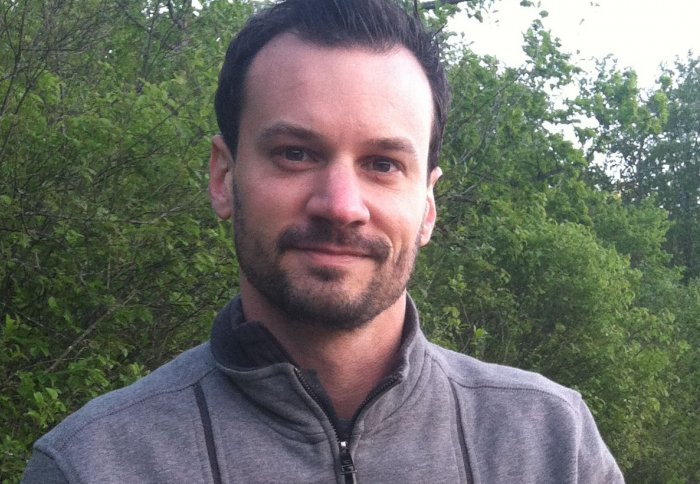
Dr Hodgson discusses his research and his involvement in the GCEE initiative
I am a geneticist specialising in human and primate evolution. I am particularly interested in the role that natural selection and migration play in creating and maintaining genetic diversity between populations. I was attracted to evolutionary genetics as a tool with which to address these issues, because new genotyping technologies and analytical techniques are allowing us to address these issues on a massive scale. These are exciting times for evolutionary genetics! My research involves 1) field work to collect DNA samples from populations of interest around the world, 2) laboratory work to process and genotype DNA samples, and 3) bioinformatics to analyse genetic data in the context of the extensive and growing publicly available comparative data. My research is currently focused on understanding all aspects of the peopling of Madagascar. We know humans first got to Madagascar only within the past 2,000 to 4,000 years, and arrived from both sub-Saharan Africa and Island Southeast Asia. Also, since human arrival, as much as 90% of Madagascar’s forest has been lost, and all large bodied fauna, including at least 17 species of giant lemurs, have gone extinct. However, much about the peopling of Madagascar remains unknown, including the role that humans played in Madagascar’s loss of biodiversity. Did human hunting pressure lead to the mass extinctions? Alternatively, was the clearing of land for agriculture and the corresponding habitat loss the major driver of extinction? By gaining insight into these and other issues we can inform our understanding of ongoing conservation issues in Madagascar and beyond. The thing that attracted me to the Grand Challenges in Ecosystems and the Environment initiative is its cross-disciplinary nature. My training is in biological anthropology, which is highly cross-disciplinary, and as such I appreciate that big problems require a diversity of approaches in order to make inroads. By bringing together researchers with a wide range of expertise and focus, the Grand Challenges initiative embraces the cross-disciplinary approach in a major way. The introduction of humans to an environment often has profound and negative effects. However, because we are not likely to disappear anytime soon, we must learn to better mitigate the effect we have on the environment. It is hoped that my research can contribute to our understanding of the role humans have had in effecting change in complex ecosystems. What’s your specialist research interest and what first attracted you to it?
What does your research involve?
What are you working on at the moment?
What attracted you to the Grand Challenges in Ecosystem and the Environment Initiative?
What Grand Challenge will you be tackling under the initiative?
Article text (excluding photos or graphics) © Imperial College London.
Photos and graphics subject to third party copyright used with permission or © Imperial College London.
Reporter
Victoria Ireton
Department of Life Sciences (Silwood Park)
