Mini profile: Guy Woodward
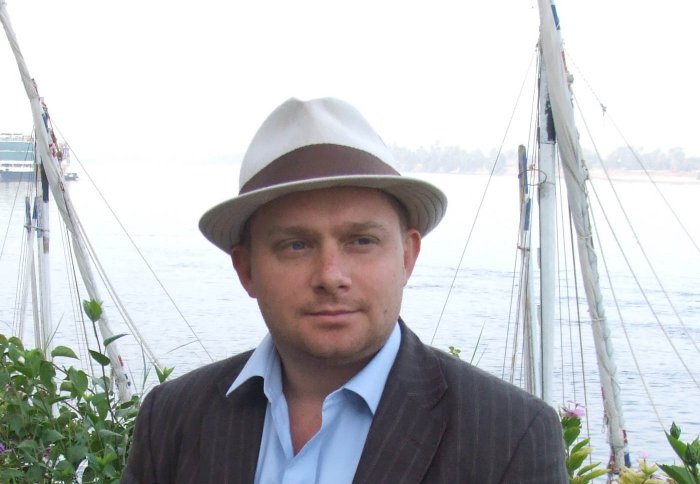
Dr Guy Woodward discusses his research and his involvement in the GCEE initiative
My main interest lies in understanding how complex systems respond to environmental change, with a particularly strong focus on using the food web as a prism through which to view impacts across multiple organisational levels: from genes to ecosystems. My interest in this was triggered by the realisation that we cannot predict the behaviour of natural systems to future change unless we move away from the traditional reductionist perspective and develop an holistic systems-level approach. The growing pressures imposed on the natural world due to climate change, pollution, habitat loss and fragmentation, urbanisation and other stressors require an understanding of not just how individual species, but also how their connections to other members of the ecological network affect the response of the whole multispecies system. A combination of ecological theory, experimentation and empirical surveys. Much of it is increasingly multidisciplinary, with numerous connections to many areas of the natural, physical and social sciences, but the core of what we do is to monitor, manipulate and model ecological responses of natural systems to stressors, especially via large-scale field-based studies. The impacts of climate change on freshwater food webs and ecosystem functioning – in a set of “sentinel systems” at high latitudes (Greenland, Iceland, Russia, Alaska, Svalbard) and in various large-scale mesoscom experiments closer to home in the UK. Other projects include understanding the system-level impacts of pesticides and land-use change in freshwaters and terrestrial agroecosystems. Its multidisciplinary nature and broad vision fit closely with the type and scale of the research work my group does, especially in terms of the potential to collaborate with world-class researchers and to set-up new field-based experimental facilities at Silwood Park, so we can easily harvest the cause-and-effect data we need to address these Challenges. Our group’s work addresses aspects of each of the three Challenges: Food Security, Complex Systems and Environmental Change are all central to my group’s main research themes. By providing the fundamental science that informs and shapes policy change, as well as by influencing environmental policy directly. By developing the multidisciplinary approach that underpins the GCEE vision, we will be very well-placed to have major impacts far beyond the scope of the fundamental science itself, by influencing policy and stakeholders at all scales, from local landowners to global policymakers. Much of the work being done within GCEE is closely aligned with major areas of environmental policy: for example, numerous papers published by GCEE researchers have already been incorporated into the new 2013 IPCC report on climate change. One key aspect is the ability to connect ecological theory to practice directly and at appropriate scales in time and space, especially via the huge potential for developing large-scale mesocosm experiments as a collaborative research facility based at Silwood Park. The capacity to manipulate systems at these scales addresses one of the major gaps that still separates many of the current ecological models from the reality in the field.What’s your specialist research interest and what first attracted you to it?
What does your research involve?
What are you working on at the moment?
What attracted you to the Grand Challenges in Ecosystem and the Environment Initiative?
What Grand Challenge will you be tackling under the initiative?
How do you think that the Grand Challenges in Ecosystem and the Environment Initiative can make a difference to the environmental challenges that we are facing?
What are the key areas where you feel that the Grand Challenges in Ecosystem and the Environment Initiative can have an impact?
How is the Grand Challenges in Ecosystem and the Environment Initiative different to other environmental initiatives globally?
Article text (excluding photos or graphics) © Imperial College London.
Photos and graphics subject to third party copyright used with permission or © Imperial College London.
Reporter
Victoria Ireton
Department of Life Sciences (Silwood Park)
