Mini profile: Colin Prentice
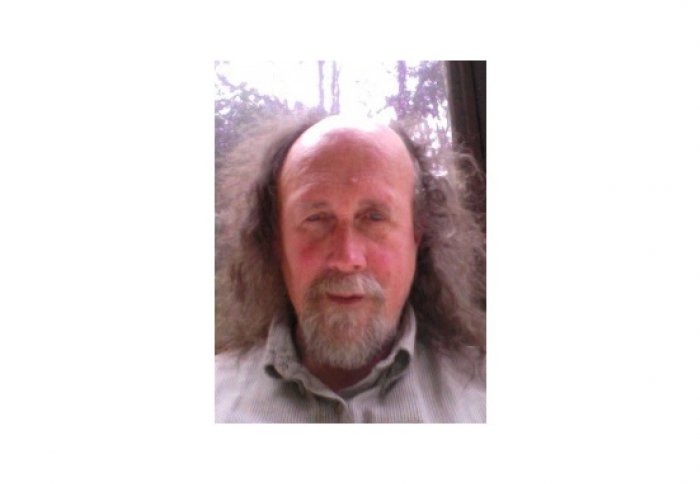
Professor Prentice discusses his research and his involvement in the GCEE initiative
My main research interest is the very general topic of how plants and ecosystems interact with their environment on a large scale. I’m interested in how the environment determines their function, the regulation of processes at the level of leaves and plants that ‘scale up’ to influence the atmosphere and climate, and constructing mathematical models to represent these interactions. The topic combines my lifelong interest in plants with my interests in climate change (both natural and human-caused) and my penchant for applying physical and mathematical reasoning to understand the natural world. My work generally involves three aspects: 1) field measurements (leaf traits and rates of CO2 and water exchange in ecosystems from different climates); 2) data analysis (making sense of large volumes of plant measurements and how they relate to various environmental factors); and 3) modelling. My approach to modelling involves ‘first principles’ predictions that can be tested using large observational data sets, but also the coupling of simple models for biological processes to more complex models of whole-plant growth and competition, the global carbon cycle and its interactions with land-surface energy and water exchanges and the hydrological cycle. At the moment my main thrust is the development of a ‘next-generation’ global model of plant and ecosystem processes, distinguished from earlier models by far greater robustness, thanks to much stronger theoretical and empirical underpinnings. With this ‘next-generation’ model we can apply this knowledge to the impacts and risks of climate variability and change on terrestrial ecosystems. The GCEE initiative attracted me because it involves thinking on a large scale about important issues. Although much of my work is fundamental science, I am keen on its applications and indeed my present position, funded by the AXA research fund, is all about gaining a better understanding of climate change impacts on ecosystems, whether natural, managed or artificial: a theme that fits right into the goals of the GCEE. At the core of my AXA research program is the development of next-generation process-based models to describe and forecast the responses of plants and ecosystems to atmospheric composition and climate, including modelling of crop yields and the suitability of different crops and agricultural systems. This research is beginning to move the biosphere modelling enterprise ahead of current global vegetation models and forestry and crop models, which are for the most part based on the state of knowledge circa 1990. I’m a strong advocate for ecologists to look outside their specialisms: a lot of important questions are not getting serious answers because necessary insights and needed research are falling in between these arbitrary divisions of science. So I’m hoping that the approach embodied by GCEE will encourage cross-cutting workshops, funding applications and Masters and PhD student projects that will be bolder, more challenging, and ultimately more useful than most. I’m convinced that environmental scientists could do a far better job of providing useful information, but that it needs such cross-cutting, ambitious initiatives to unlock this potential.What’s your specialist research interest and what first attracted you to it?
What does your research involve?
What are you working on at the moment?
What attracted you to the Grand Challenges in Ecosystem and the Environment Initiative?
What Grand Challenge will you be tackling under the initiative?
How do you think that the Grand Challenges in Ecosystems and the Environment Initiative can make a difference to the environmental challenges that we are facing?
Article text (excluding photos or graphics) © Imperial College London.
Photos and graphics subject to third party copyright used with permission or © Imperial College London.
Reporter
Victoria Ireton
Department of Life Sciences (Silwood Park)
