Naseer Ahmed
Dr Colin Vickery used to help us in the weekly lab sessions when I was doing my B.Eng between 1981 and 1985. He was a great help and if we faced a sticky technical problem, I remember he never rested until he had solved it. R.I.P.
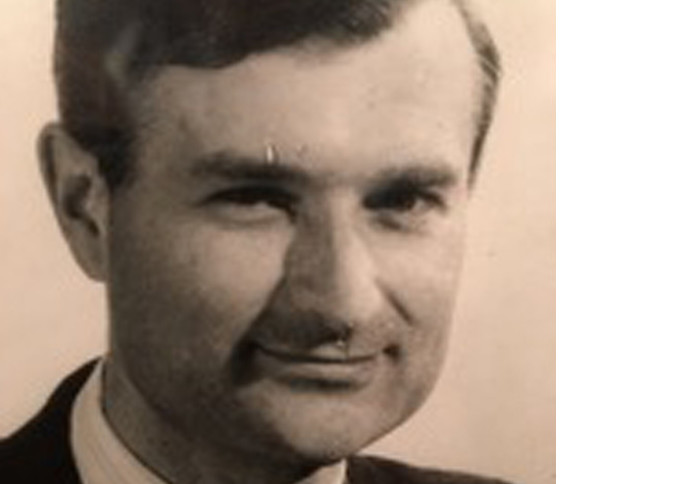
Dr Colin Vickery, who retired from the Department nearly two decades ago, passed away on 22 February 2021.
Colin joined the Department as a young lecturer around 1960, after completing his PhD on the switching theory of transistors — not long after their invention. He was responsible for teaching the “modern” subject of digital circuits throughout the 1960s and 70s. Colin was popular among the undergraduate students and was particularly good at solving students’ circuit problems in laboratories.
In 1982, he was invited by the Head of Department Bruce Sayers to form the Microprocessor Application Group (MAG), which he led for many years.
He unfortunately suffered a serious stroke which cut short his academic career but continued his involvement with the Department, including exam setting and marking, and was a regular visitor with his wife Kate.
Colin is survived by Kate, who was his main carer since his stroke, two daughters Helen and Laura, a son Simon, and two granddaughters. He will be dearly missed.
Professor Bob Spence
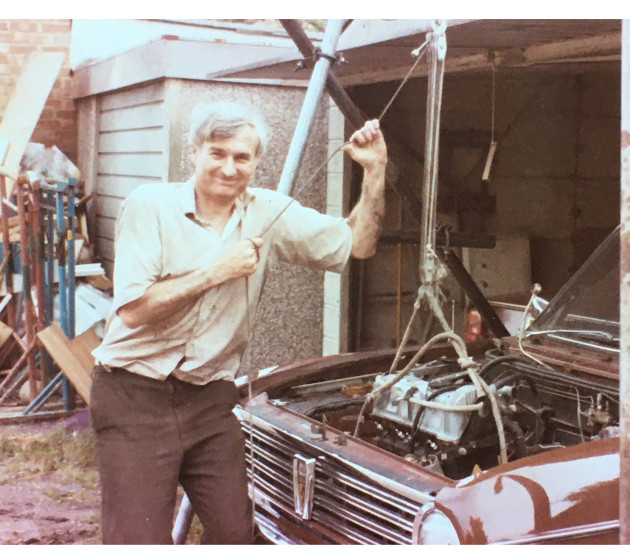 In his long career, Colin applied himself to an enormous range of engineering projects in addition to inspired and much appreciated teaching. But I valued his friendship as a person, and that is what I shall briefly recall here.
Our friendship goes back to 1953 when we were PhD students. Later we were appointed to Lectureships, and served the Department through teaching and research. Sadly, Colin suffered a stroke in 1996 but, to nobody’s surprise, continued serving the Department for a further eight years. But rather than try, in this brief note, to summarise Colin’s amazing range of talents — an impossible task — I’ll just pick out a few of the fun bits: that’s how I like to remember him.
I recall, for example, the two of us searching for somewhere to live in London, and visiting a ghastly collection of accommodations until we came across a flat in Notting Hill Gate containing two bedrooms separated by a divider: we quickly agreed that, by folding back the divider, the place would be ideal for throwing parties, of which we organised many over the next two years. I remember his generosity, which even extended to lending me his car so that I could take my friend on a week’s holiday. And I recall his rapport with students which, long after graduation, prompted a mature lady graduate to turn up at an alumnus celebration bearing some coursework from her student days: she suggested, with tongue in cheek, that Colin should have awarded it a B+ rather than a B.
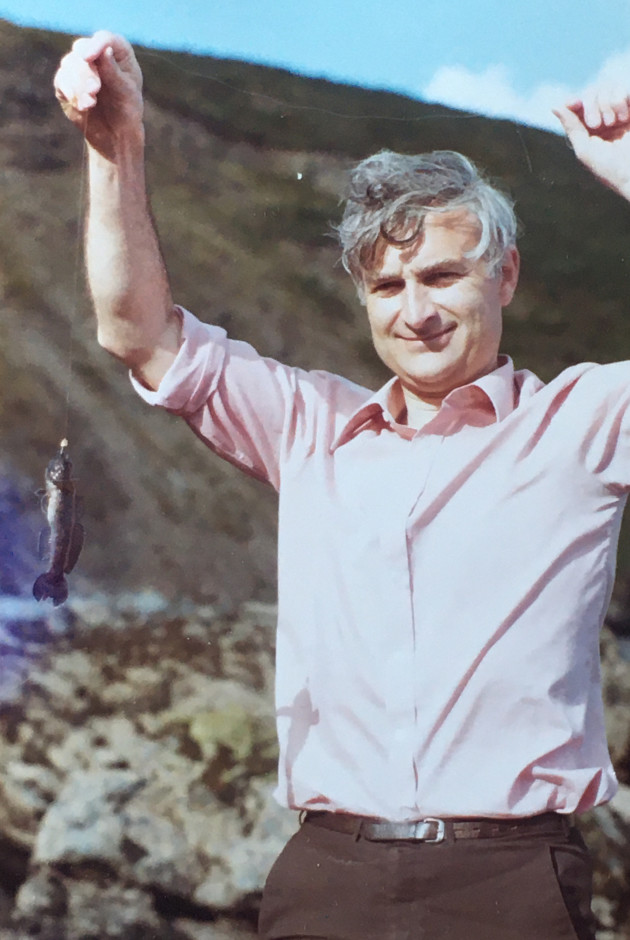 I also remember his humour, which came into play when we hit upon the idea of doing our thesis writing in isolation at the Common Cold Research Unit, at no cost to us. An attractive idea until Colin pointed out that we might catch a nasty cold. His exploratory transfer from fly fishing – in which he was expert – to sea fishing (which he was not), and his apparent ability to speak ‘guinea pig’ to his pets, would take too long to explain, but are some of the many fun moments that I’ll remember.
Colin’s influence was felt by generations of students through, for example, his work on medical electronics in the Engineering in Medicine Section – arguably the forerunner of the Department of Bioengineering – and his extensive involvement with microprocessor applications. But to end, I can do little better than quote a past student who said to me “Colin? A brilliant and much loved teacher and an engineer who made things – and they worked.
Article text (excluding photos or graphics) © Imperial College London.
Photos and graphics subject to third party copyright used with permission or © Imperial College London.
Dr Colin Vickery used to help us in the weekly lab sessions when I was doing my B.Eng between 1981 and 1985. He was a great help and if we faced a sticky technical problem, I remember he never rested until he had solved it. R.I.P.
Dr Colin Vickery taught me microelectronics back in 1990-91. I remember him as kind, generous and was ever willing to help us who did not have the English language as their mother tongues. He was willing to slow down his lectures to accommodate us and even using simpler languages just to make us understood the subject. He made a good impression on me that Imperial College academic staffs are very supportive of the needs of international students.
I remember fondly my final year Hons project supervised by Colin Vickery. This was in 1970-71 and he was already deeply interested in biomedical topics. As a result, my project was an early attempt to use (analogue) electronics to sense, and process ECG signals. For want of ready volunteers I spent hours in his lab covered in electrodes. My subsequent career never matched the interest of this 9 month period and Dr Vickery was the inspiration!
Colin was a great teacher when I joined the medical engineering department where he assisted Pr. Sayers in 1967. Calm and extremely helpful, thanks to him I have been able to cover the (large) field of knowledge which was taught there. I keep great memories of him, his kindness and his attention.
I can never forget Colin with his spontaneity empathy and humour, particularly when he visited me early in 1960 while I was suffering (at age 30) from a nasty and contagious measles in Hammersmith. My late wife was most impressed with his compassion and friendliness. Colin and I were then postgraduate students in the transistor lab of Imperial College.
Colin was a good colleague, a friendly source of valuable advice on many things, and he will be missed. Among several memories, I recall he was an astonishingly thorough second marker who would try the draft exam questions without sight of the model solutions and then provide really helpful insight into what might accidently trip up a student. Visiting his house, after his stroke, to receive the verdict on my draft exam papers was a pleasure in renewing his acquaintance but mixed with some trepidation that the paper might not have met the standard.
Colin was part of the interview panel when I applied for the job in EE back in 1990. He was great to work with in the labs and always supportive of my personal development. He always had a lot of time for people. After his stroke he was still tinkering with circuits and I would deliver parcels to his house on the motorcycle. Because of this I was lucky enough to meet his lovely family and during long catch-ups was always fuelled up with tea, sandwiches and biscuits for the return journey! Great memories of him, and he will be sadly missed.
Department of Electrical and Electronic Engineering
Department of Electrical and Electronic Engineering
