Macrocyclic peptide inhibitors for CD59 receptor
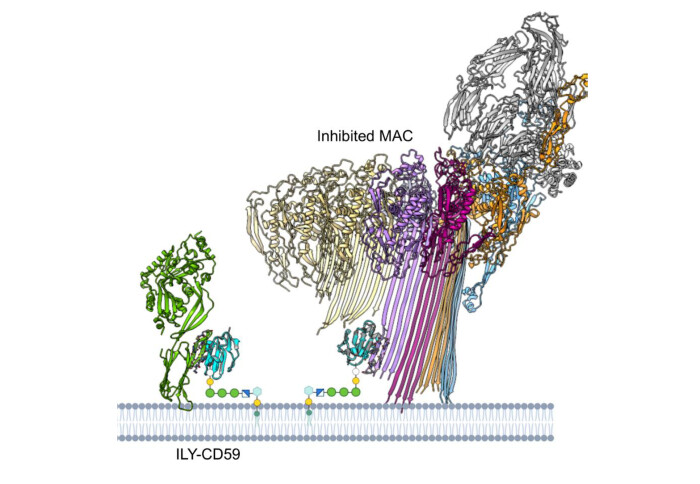
A collaboration between the Tate, Bubeck and Kawamura groups has developed the first macrocyclic peptide inhibitors for cell-surface receptor CD59
CD59 is a protein found on the surface of human cells. It can be hijacked by bacteria to cause disease which makes it a potential therapeutic target. Despite many efforts, CD59 remains a challenging target to engage.
In a heavily cross-disciplinary project, researchers from the Departments of Chemistry and Life Sciences at Imperial College London combined with Chemistry from Newcastle University, the Francis Crick Institute and Diamond Light Source to publish their research in Angewandte Chemie.
The team applied a screening technology called mRNA-display to identify peptides which bind tightly to CD59. Through structural biology, medicinal chemistry and biophysical characterisation, the researchers investigated the binding of these ligands to CD59 and found that they mimic biologically relevant binding partners. The low nanomolar ligands were further optimised through lipidation and dimerisation strategies to develop exciting probes which provide the basis for future development of CD59 inhibitors as a potential therapeutic strategy.
Congratulations to all involved in the research on this excellent publication! The research was supported by funding from CRUK, EPSRC, ERC, and NIHR BRC.
Article supporters
Article text (excluding photos or graphics) © Imperial College London.
Photos and graphics subject to third party copyright used with permission or © Imperial College London.
Reporter
Edward Bartlett
Department of Chemistry
