Machine learning to predict immunotherapy treatment outcomes in liver cancer

New research looks at how machine learning models could be used to predict immunotherapy treatment outcomes for liver cancer patients.
Immunotherapies are a type of cancer treatment that activate the body’s immune system to attack cancer cells. These types of therapies are revolutionising cancer treatment, with improved outcomes and survival for patients. However, not all patients respond to immunotherapies, and there can be some dangerous side effects. These treatments can also be very expensive, and not all immunotherapies are available on the NHS.
Over 6,500 people are diagnosed with liver cancer each year, and only 8% survive for 10 or more years. Although immunotherapies can be used on liver cancer treatment, specifically hepatocellular carcinoma (HCC), there are currently very few indicators to predict how patients will respond to treatment. Given the severity of potential side effects, this can lead to a lot of uncertainty and potentially additional risk to patients.
New research, led by researchers from Imperial's Department of Surgery and Cancer and published in the Journal of Hepatology, is using the machine learning pipeline to extract information from pre-treatment scans and images to identify features that could indicate how a patient will respond to immunotherapy. These machine learning models are capable of outperforming current clinical markers in predicting survival and response to immunotherapy in liver cancer patients.
The team hope this research could go on to guide personalised treatment pathways for patients and ensure that those who receive immunotherapy will benefit from treatment. It will also mean that those who won’t benefit can explore alternative options and don’t need to take unnecessary risks.
The research involved a Clinical Research Fellow from the CRUK Convergence Science Centre.
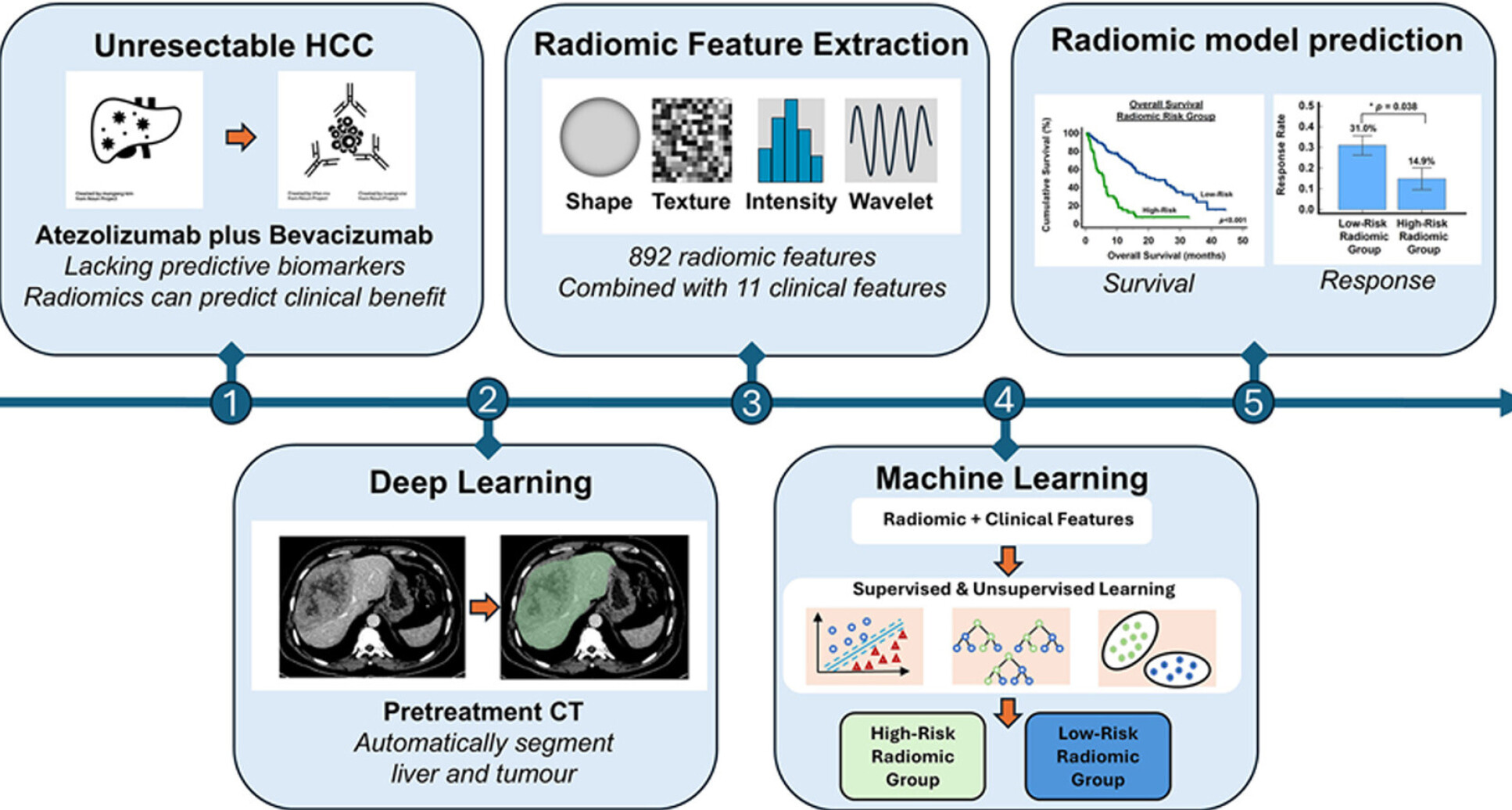
Machine learning based radiomic models outperform clinical biomarkers in predicting outcomes after immunotherapy for hepatocellular carcinoma. Mathew Vithayathil, Deniz Koku, Claudia Campani, Jean-Charles Nault, Olivier Sutter, Nathalie Ganne Carrié, Eric O. Aboagye, Rohini Sharma. Journal of Hepatology.
This article was based on materials from the CRUK Convergence Science Centre.
Article text (excluding photos or graphics) © Imperial College London.
Photos and graphics subject to third party copyright used with permission or © Imperial College London.
Reporter
Benjie Coleman
Department of Surgery & Cancer