The power of vaccination takes centre stage at the Italian Embassy
by Emily Govan
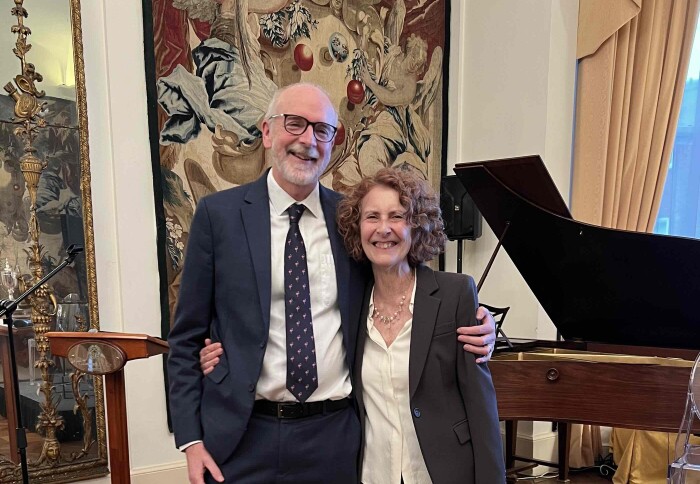
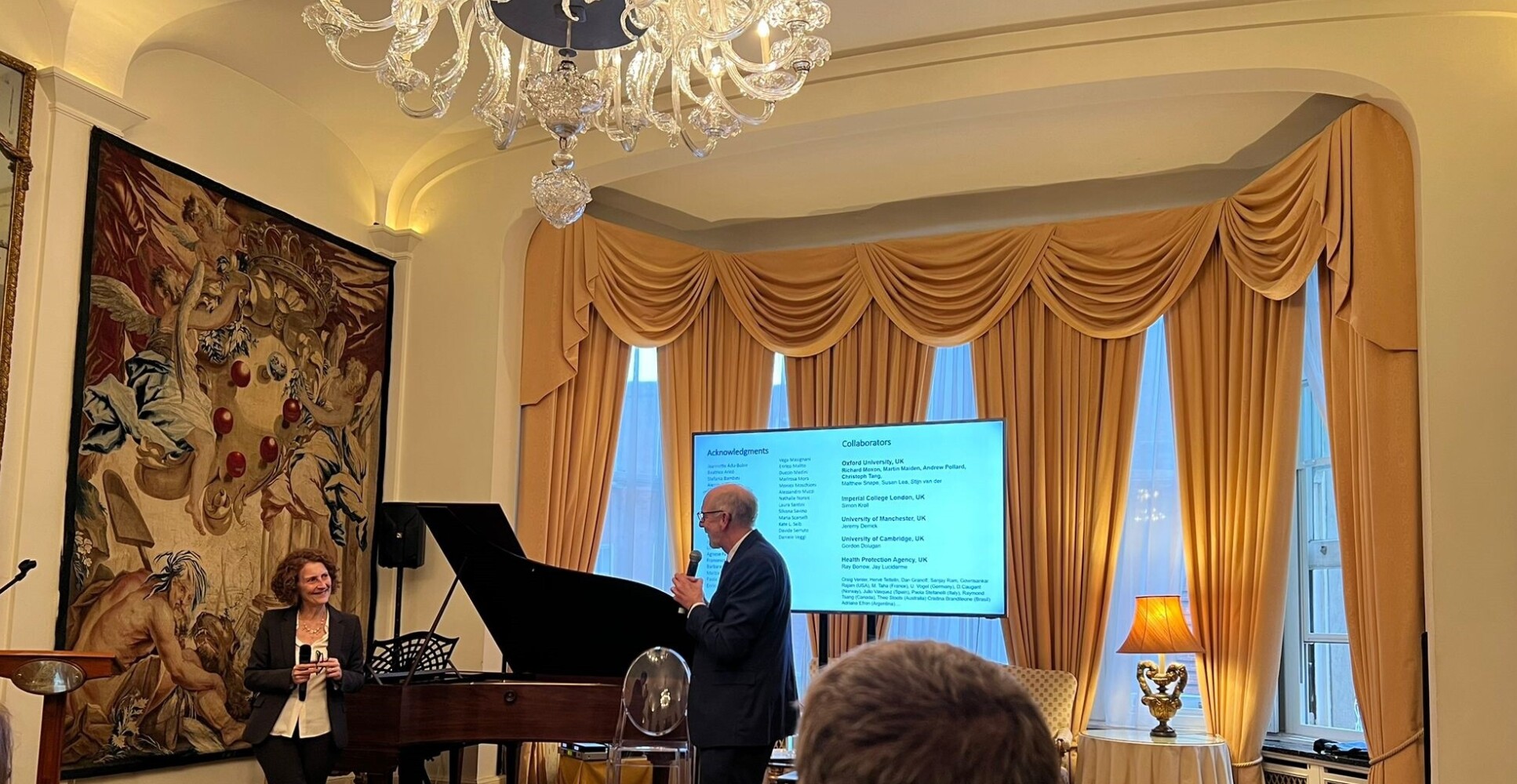
Professor Mariagrazia Pizza delivered a special guest lecture at a prestigious event hosted by the Italian Embassy on 15 May.
Her talk, ‘The Power of Vaccination’, explored the vital role vaccines play in combating infectious diseases and tackling the global challenge of antimicrobial resistance.
We caught up with Mariagrazia, who is Co-Director of the Imperial’s Centre for Bacterial Resistance Biology, to find out about her talk and her research around the power of vaccination.
Mariagrazia, what an honour to give the keynote talk at at the Italian Embassy event! Many congratulations. Can you please tell us what was the main message you wanted to convey?
The keynote I delivered at the Italian Embassy in London focused on the transformative impact of vaccines, from scientific discovery to their implementation in global health. My main message was that vaccines are not only one of the greatest medical achievements in history, but also a powerful example of how science, innovation, and collaboration can save lives. I shared my experience in leading bacterial vaccine projects, particularly the development of a vaccine against Neisseria meningitidis serogroup B, using the novel approach of reverse vaccinology.
What was the significance of holding this event at the Italian Embassy in London?
The Italian Embassy provided a highly symbolic setting for this event. It reflects the deep commitment of Italy to scientific diplomacy and its recognition of the valuable contributions made by Italian researchers abroad. The collaboration of the Embassy with AISUK (Association of Italian Scientists in the UK) also highlighted the importance of creating platforms for dialogue between scientists, institutions, and the public. It was especially rewarding to see both experts and non-experts engaging with such a critical topic in an open, accessible forum.
Why is now an important time to talk about the power of vaccination?
Now is a crucial moment to refocus the public conversation about vaccines. The COVID-19 pandemic demonstrated the power of rapid scientific innovation in vaccine development, but it also revealed significant gaps in public understanding and trust. At the same time, we are witnessing a worrying resurgence of preventable diseases due to vaccine hesitancy. As Professor Andrew Pollard emphasized during the event, mass childhood vaccination in the UK eliminated many deadly diseases, but misinformation is now threatening that progress. It is essential to act before these gains are lost.
You’ve played a pivotal role in vaccine development - can you highlight a vaccine project you're especially proud of?
One project I am especially proud of is the development of the meningococcal B (MenB) vaccine. Leading the effort to identify novel antigens through reverse vaccinology was a major scientific and collaborative challenge. The resulting vaccine has now been approved in over 50 countries and is helping to protect infants and adolescents worldwide. It is an incredible emotion to know that this work has contributed to saving lives and to prevent a devastating disease.
How have the vaccines you've helped develop impacted public health globally?
The vaccines I have been involved in have had a tangible impact on global public health. They have significantly reduced disease incidence and prevented deaths. This kind of impact is only possible through long-term commitment, collaborations, and a focus on translating scientific innovation into health solutions. One particularly promising development has been the observed cross-protection of the meningococcal B vaccine against Neisseria gonorrhoeae, the bacterium responsible for gonorrhoea and highly resistant to antibiotics. For the first time, we have concrete evidence that a vaccine that can offer protection against gonococcal infections is possible. This finding has had significant public health implications: from August 2025, in UK, subjects considered at higher risk of gonorrhoea infection are being offered the meningococcal group B vaccine to help protect them against gonorrhoea infections. It is an excellent example of how vaccine science continues to evolve, also bringing unexpected but highly valuable benefits.
What recent advancements in vaccine technology are most exciting or promising in your view?
There are several exciting advances shaping the future of vaccinology. mRNA technology, for instance, has opened new possibilities for rapid response to emerging pathogens. Structure-based antigen design and the emerging field of precision vaccinology are also incredibly promising. They allow to design vaccines that are tailored to specific populations, age groups, or immune profiles, increasing both efficacy and safety.
What are some of the biggest challenges in helping the public understand and trust vaccines today?
One of the biggest challenges is rebuilding and maintaining public trust. The rapid spread of misinformation, especially online, can undermine decades of progress. Many people are overwhelmed by complex scientific data or feel disconnected from the decision-making processes behind vaccination policies. Addressing this requires not only scientific transparency, but also empathy, openness, and willingness to engage in dialogue.
How can scientists and institutions better communicate the science behind vaccination to non-experts?
We need to make science more accessible. That means using clear language, and explaining the real-world impact of our work. We need to listen, to understand public concerns, values. People often forget the devastating impact of diseases like polio or diphtheria, and this because we no longer see them. But this absence is not a coincidence; it is the direct result of successful vaccination programs. We must remind the people that the disappearance of these diseases does not mean that the threat never existed, but it is proof that vaccines work. Institutions can also play a bigger role by supporting communication trainings and creating more opportunities for public engagement. Events like the one hosted by the Embassy are a great example of how to bridge the gap between the lab and the society.
Article text (excluding photos or graphics) © Imperial College London.
Photos and graphics subject to third party copyright used with permission or © Imperial College London.
Reporter
Emily Govan
Department of Life Sciences
