Process and sustainability expert wins top Academy award
by Helen Wilkes
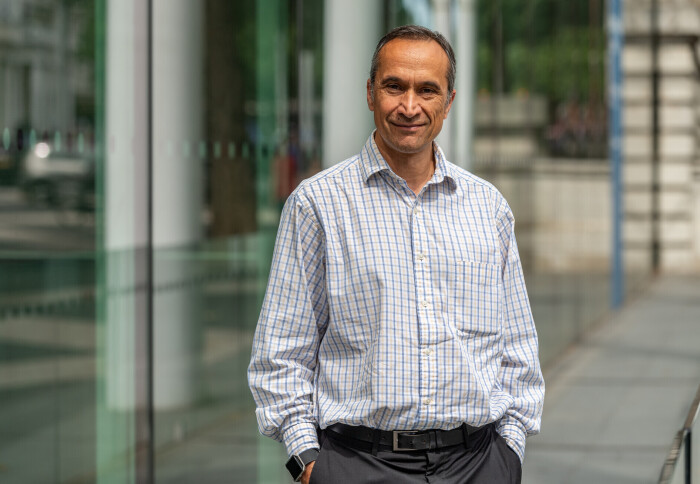
Chemical processing and sustainability expert Professor Nilay Shah OBE FREng will receive a prestigious Royal Academy of Engineering award.
In recognition of his enormous contribution to the Academy’s work, from policy advice to promoting the Fellowship Fit for the Future initiative, Professor Shah will receive the President’s Medal at the Academy Awards Dinner in London on Tuesday 8 July.
Previously Head of the Department of Chemical Engineering at Imperial College London, Professor Shah has recently been appointed as one of four co-directors – one each from engineering, science, business and health – of a new School of Convergence Science in Sustainability at Imperial. The new school aims to address the big problems that face society, such as climate change, decarbonisation and sustainability.
Nilay Shah always knew that he wanted to be an engineer. He liked chemistry at school but was more interested in its application than fundamental science, and chemical engineering seemed like a natural career option when he embarked on his studies at Imperial College London. He has now spent almost 40 years at Imperial, working in areas from paint-making to vaccine production, and has seen chemical engineering change in ways that no one could have foreseen.
One of the biggest changes has been the use of information technology, and Nilay’s research developed around modelling, simulation and optimisation of chemical and energy processes from the molecular level up to simulating complete chemical plants. That work culminated in the development of gPROMS, a software platform to monitor and forecast a processing plant’s performance throughout the process lifecycle. The technology has had an impact throughout the processing industry, including oil, pharmaceuticals, consumer products and food. Its models are used for everything from real-time process plant design and optimisation to operator training.
With colleagues he set up Process Systems Enterprise Ltd, a spinout company to commercialise gPROMS, with Professor Costas Pantelides FREng as its CEO. The company won the MacRobert Award for UK engineering innovation in 2007 for gPROMS. It became a market leader in process simulation with more than 160 employees and a global revenue of more than £16 million in 2019, when it was acquired by Siemens. His current business ventures include Zero Petroleum, a synthetic petroleum startup that he co-founded with former F1 Executive-Director Paddy Lowe FREng.
Professor Shah has brought his business and academic expertise to his work with the Academy, as an active policy advisor on energy, biofuels and sustainability, serving as Deputy Chair of the National Engineering Policy Centre Net Zero working group. Through that he was involved in the NEPC’s advice to government on the Clean Power 2030 Action Plan and the role of hydrogen in a net zero energy system.
Sir John Lazar CBE FREng, President of the Royal Academy of Engineering, says:
“Nilay Shah is an active and strong supporter of the Academy, contributing much to its aims and activities, as a key policy advisor and as a Trustee. As Chair of the Membership Committee, he initiated the Fellowship Fit for the Future campaign, which set an aspiration that at least half of all candidates elected to the Academy each year would be from underrepresented groups in engineering. In fact, the 2024 cohort of new Fellows surpassed this aim with 68% meeting the criteria, the most successful year in the Academy’s history. This simply could not have been achieved without Nilay’s hard work, dedication and effective leadership.”
On receiving the award, Professor Shah says:
"I'm delighted to have my contributions recognised in this way. It's also a recognition of my many outstanding colleagues who have supported me in along the way".
This story was adapted from a press release by the Royal Academy of Engineering.
Article text (excluding photos or graphics) © Imperial College London.
Photos and graphics subject to third party copyright used with permission or © Imperial College London.
Reporter
Helen Wilkes
Faculty of Engineering
