Top chemistry honours for Imperial researchers
by Helen Wilkes
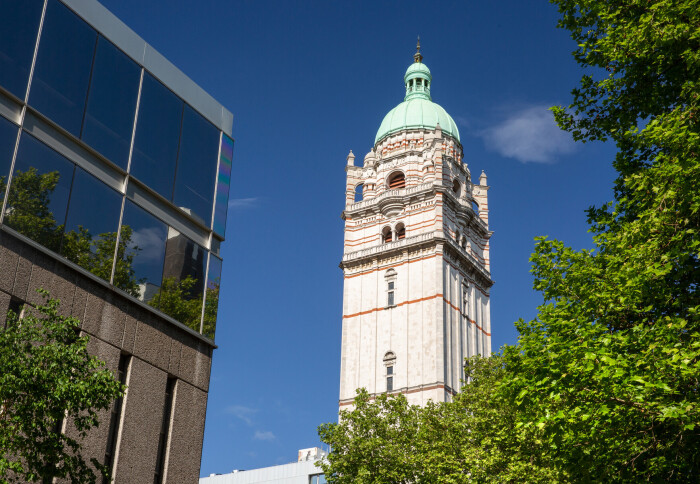
Researchers from Imperial have been awarded prizes from the Royal Society of Chemistry.
Visiting Professor James Calder (Department of Bioengineering), Dr Chun Ann Huang (Department of Materials) and Professor Kim Jelfs (Department of Chemistry) were named in the RSC’s most recent round of awards.
Honouring their significant contributions to the field of chemistry, the awardees join more than 40 other chemical scientists and teams being commended.
Professor James Calder: Faraday Horizon Prize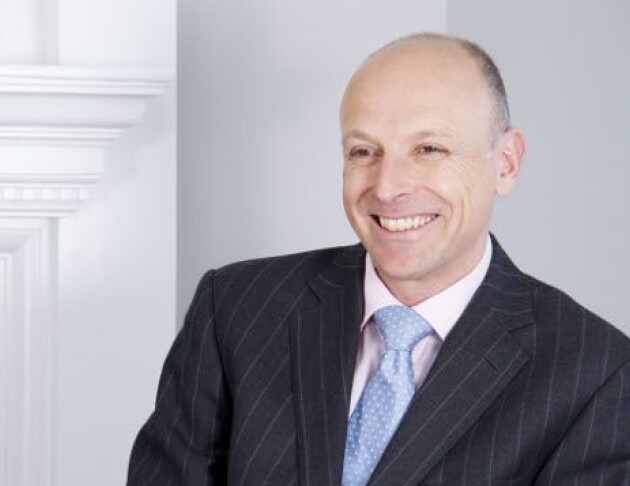 The Royal Society of Chemistry’s Faraday Prize Committee has elected to award a 2025 Horizon Prize for advancing the understanding of the physicochemical properties of exhaled aerosols, and their impact on the transmissibility of respiratory pathogens to a team including Professor James Calder.
Professor Calder is a consultant orthopaedic surgeon and Visiting Professor in the Department of Bioengineering Imperial College. He specialises in research into sports injuries and his clinical practice centres on the treatment of elite athletes. After qualifying in medicine from the London Hospital, he trained as a surgeon and completed his Doctorate of Medicine with Professor Julia Polak at Imperial College in 2001 and then his PhD at Amsterdam University in 2017. He is past Chair of AFAS in the European Society of Sport Traumatology and Knee Arthroscopy (ESSKA) and serves on the council of several international scientific sports committees. Professor Calder was appointed the Clinical Lead of the Nightingale Hospital London during the COVID-19 pandemic and chaired the UK government committees which opened professional during the initial lockdown. He was also appointed Scientific Advisor by the Secretary of State, Department of Culture Media and Sport to the Culture Recovery Fund and responsible for several initiatives to re-start return of spectators and opening of the Performing Arts and recreational sports across England. During this role, he co-ordinated the research groups investigating aerosol generation during exercise, singing and the playing of wind instruments as part of the “PERFORM” study.
Professor Calder subsequently chaired the committee which published the UK Guidance on Concussion in Grassroots Sport in 2023 and has subsequently been adopted in Australia, New Zealand, Holland and influenced FIFA. In 2025 he rode a camel with 3 others 1100km for 5 weeks across Saudi Arabia and Jordan in the Laurence Tribute Trek raising money for charity (sfcbf.org). He was appointed OBE for exercise and sport in 2020.
Professor Calder said: “The PERFORM study was a huge collaboration across several universities and scientific disciplines. It was a series of novel experiments conducted in the ultra-clean-air orthopaedics operating theatres. The results influenced government scientists on the effects of opening society during some of the worlds darkest days. It also dispelled some of the myths about how respiratory viruses may spread.
The huge bank of data and publications can be used in the future to guide scientists as to ways to mitigate viral spread in places such as restaurants, theatres, festivals and travel in planes and trains.
The Faraday Prize recognises incredible hard work and dedication of scientists from very disparate backgrounds working together and producing some ground-breaking research of the highest quality which has influenced public health experts globally.”
Dr Chun Ann Huang: Faraday Early Career Prize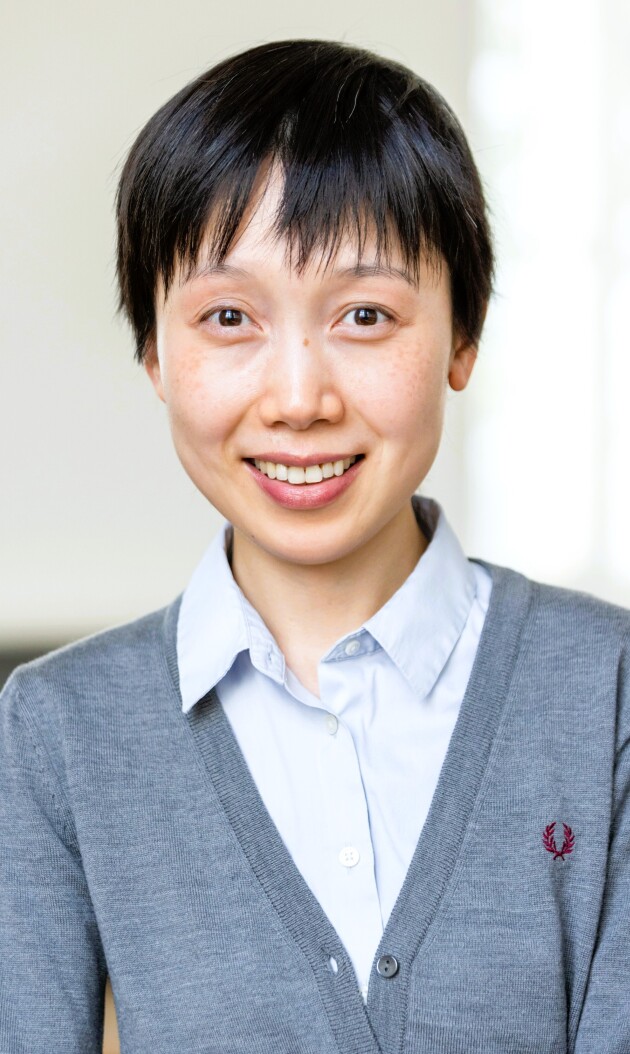 Dr Huang earned recognition for pioneering the combination of imaging with X-ray Compton scattering and computed tomography (XCS-CT), and novel processing to unravel and control ion transport in 3D structures.
Dr Huang completed her undergraduate study in Materials Science and Engineering (First Class Honours) at Imperial College London and PhD in Materials Science at the University of Oxford. She was a Lecturer in Engineering at King’s College London, and Senior Lecturer and Reader (Associate Professor) in Energy Storage Materials at the Department of Materials, Imperial College London. Ann’s research focuses on developing new materials, operando X-ray correlative imaging, and processing technologies for lithium-ion batteries and next generation batteries such as solid-state, sodium-ion, lithium-sulfur. She has been awarded the ERC Starting Grant, the UKRI EPSRC Innovation Fellowship, and the Faraday Institution Industry Fellowship. She is a co-investigator of the multi-million Faraday Institution Degradation and Nextrode programmes.
Dr Huang said: “I am humbled to receive this prize. It has been a privilege to work with so many brilliant minds within Materials and across departments at Imperial. This award would never have been possible without my generous colleagues who have helped me. Working with my students, postdocs and collaborators has kept encouraging me to pursue new knowledge in the battery research area.”
Professor Kim Jelfs: Corday-Morgan Mid-Career Prize for Chemistry Professor Jelfs won the Corday-Morgan Mid-Career Prize for innovation in the computational discovery of organic materials through the use of both molecular simulations and artificial intelligence techniques.
Professor Jelfs is a Professor of Computational Materials Chemistry in the Department of Chemistry at Imperial College. Her group specialises in the use of computer simulations and artificial intelligence to assist in the discovery of supramolecular materials, particularly porous materials and organic electronics, working closely with experimental collaborators. She is co-Director of AIChemy, the EPSRC AI hub for Chemistry, co-Director of the Institute for Digital Molecular Design and Fabrication at Imperial and an Associate Editor for Chemical Communications.
Professor Jelfs said: “I am delighted at the recognition of my group’s work over the last few years. Not only our team, but also our inspiring collaborators and research professionals that enrich and enable what we do. I’m grateful to have the privilege to work with them all.”
Dr Helen Pain, Chief Executive of the Royal Society of Chemistry, said: “The chemical sciences cover a rich and diverse collection of disciplines, from fundamental understanding of materials and the living world, to applications in medicine, sustainability, technology and more. By working together across borders and disciplines, chemists are finding solutions to some of the world’s most pressing challenges.
“Our prize winners come from a vast array of backgrounds, all contributing in different ways to our knowledge base, and bringing fresh ideas and innovations. We recognise chemical scientists from every career stage and every role type, including those who contribute to the RSC’s work as volunteers. We celebrate winners from both industry and academia, as well as individuals, teams, and the science itself.
“Their passion, dedication and brilliance are an inspiration. I extend my warmest congratulations to them all.”
Article text (excluding photos or graphics) © Imperial College London.
Photos and graphics subject to third party copyright used with permission or © Imperial College London.
Reporter
Helen Wilkes
Faculty of Engineering
