Imperial students honoured with planetary defence prize by Apollo astronaut
by Gege Li

A team led by a PhD student at Imperial College London have received this year’s Schweickart Prize.
The Schweickart Prize is a coveted award established to enhance global protection efforts against asteroid impacts.
Jordan Stone, a Research Postgraduate in the Department of Earth Science and Engineering (ESE) at Imperial, devised the winning proposal: the creation of an international body to safeguard asteroid orbits against the emerging – yet currently unaddressed – risks of human space activities.
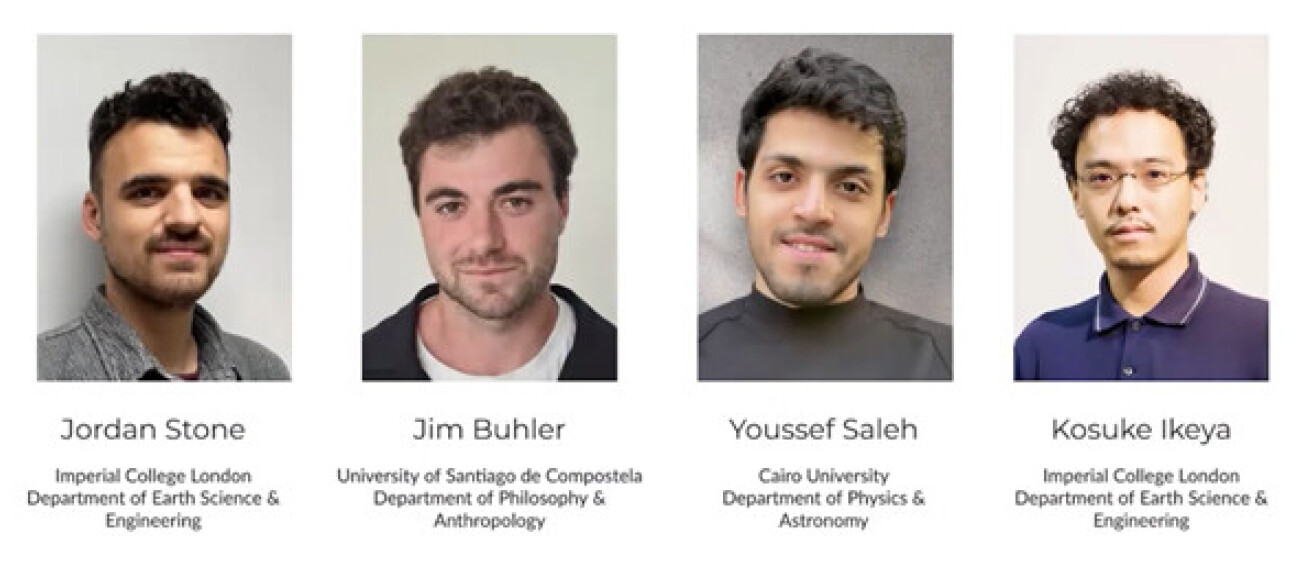
In a ceremony to be held at the Lowell Observatory in Arizona today (30 June), to coincide with International Asteroid Day, Jordan will be presented the prize and a $10,000 cheque by esteemed astronaut and scientist Rusty Schweickart, who the award honours. Also part of the winning team are Kosuke Ikeya, also a Research Postgraduate in ESE, Jim Buhler at the University of Santiago de Compostela, Spain, and Youssef Saleh at Cairo University, Egypt.
Speaking of the team’s selection during the official prize announcement last Thursday, Rusty said: “Not only will [asteroids] serve as in situ resources to facilitate the future [of Earth life emerging into the larger universe], but ironically they also pose an existential threat to this future in the form of destructive impacts.
“The Schweickart Prize recognises the critical need for young, bright minds in addressing the many future challenges ahead. In particular, this year’s winners directly address the necessary environmental responsibility – that is, cosmic environmental responsibility – required to ensure that as we access future asteroidal resources we do not inadvertently create additional long-term threats by redirecting asteroids towards future impacts.”
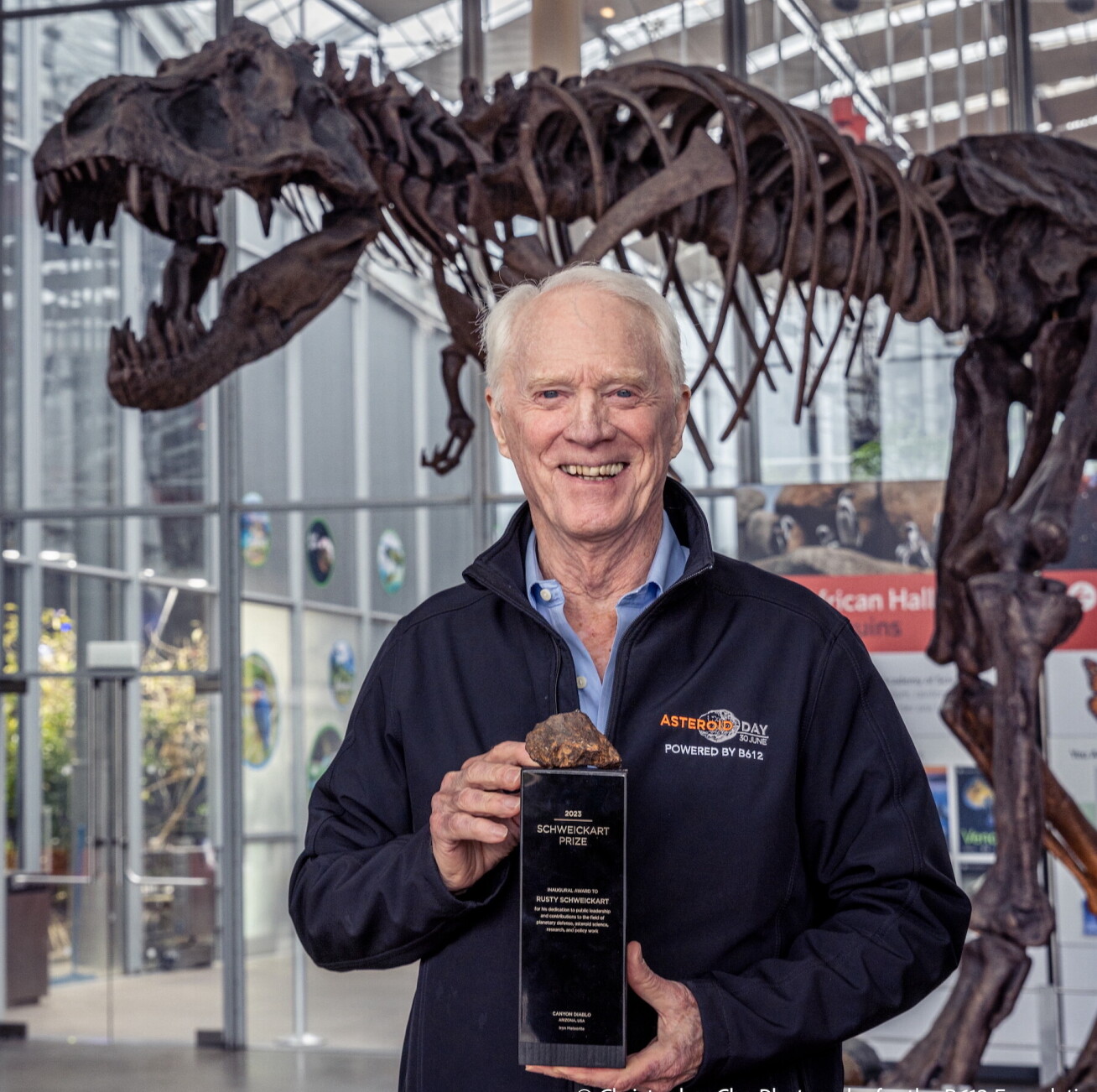
A long-standing advocate for planetary defence, Rusty Schweickart is the co-founder of the B612 Foundation – a nonprofit that established the Schweickart Prize and dedicated to protecting against asteroid impacts – as well as the founder of the Association of Space Explorers (ASE) society. Rusty served as the lunar module pilot for NASA’s 1969 Apollo 9 mission in what was the first manned lunar module.
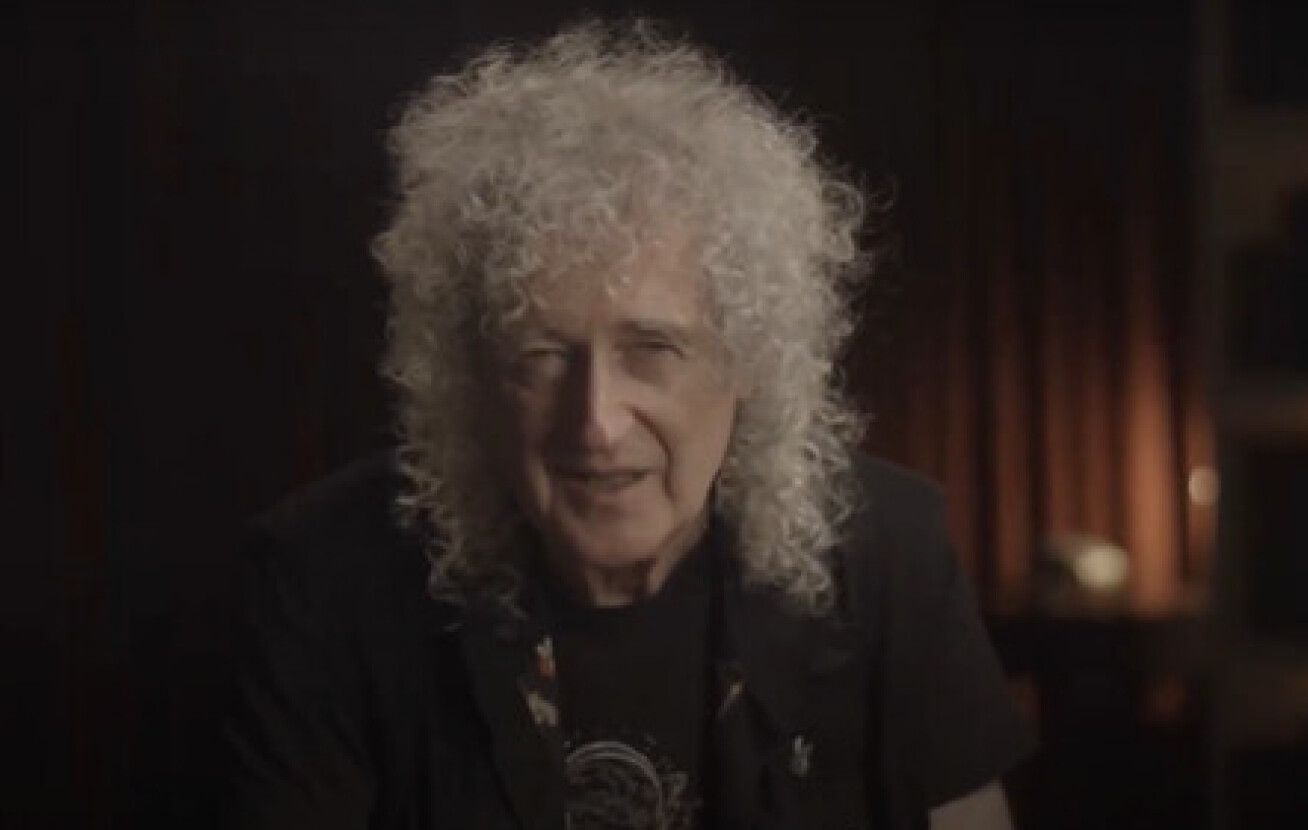
As part of the announcement, Dr Brian May – musician, astrophysicist and B612 strategic adviser, who holds a PhD from Imperial College London – shared a video message where he commended Rusty’s leadership in raising worldwide awareness about the importance of asteroid surveillance, and gave a shout-out of appreciation to Imperial which has “so massively raised our game in near-asteroid detection”.
The Impacts and Astromaterials Research Centre (IARC) within ESE is just one of the research groups at Imperial that is investigating questions within this sphere, such as the nature of asteroid collision events and interpreting data from space missions to address planetary science problems.
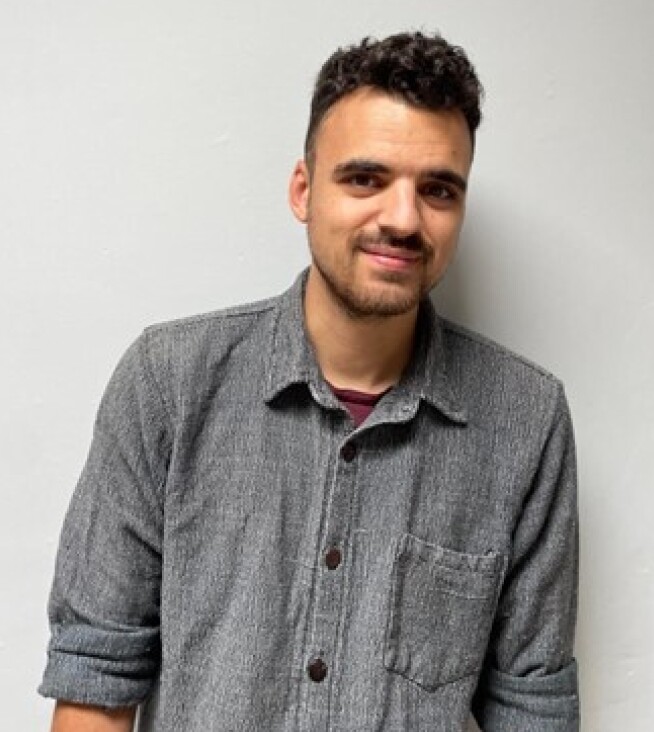
“I'm over the moon that we won the Schweickart Prize, and honoured to have met and received it from Rusty Schweickart himself!” said Jordan, who researches interactions between planetary molecules, gases and rock surfaces under Professor Mark Sephton in ESE. “Without Rusty’s dedication, we wouldn't be in the fortunate position today where the risks of asteroid impacts are so well-handled.
“The prize really allows us – the next generation – to pick up that torch and continue protecting Earth from asteroids in the future. Space presents huge opportunities but these are always balanced by risks, so caution and foresight are crucial as we expand our activities in this exciting domain.”
Asteroid impact risk
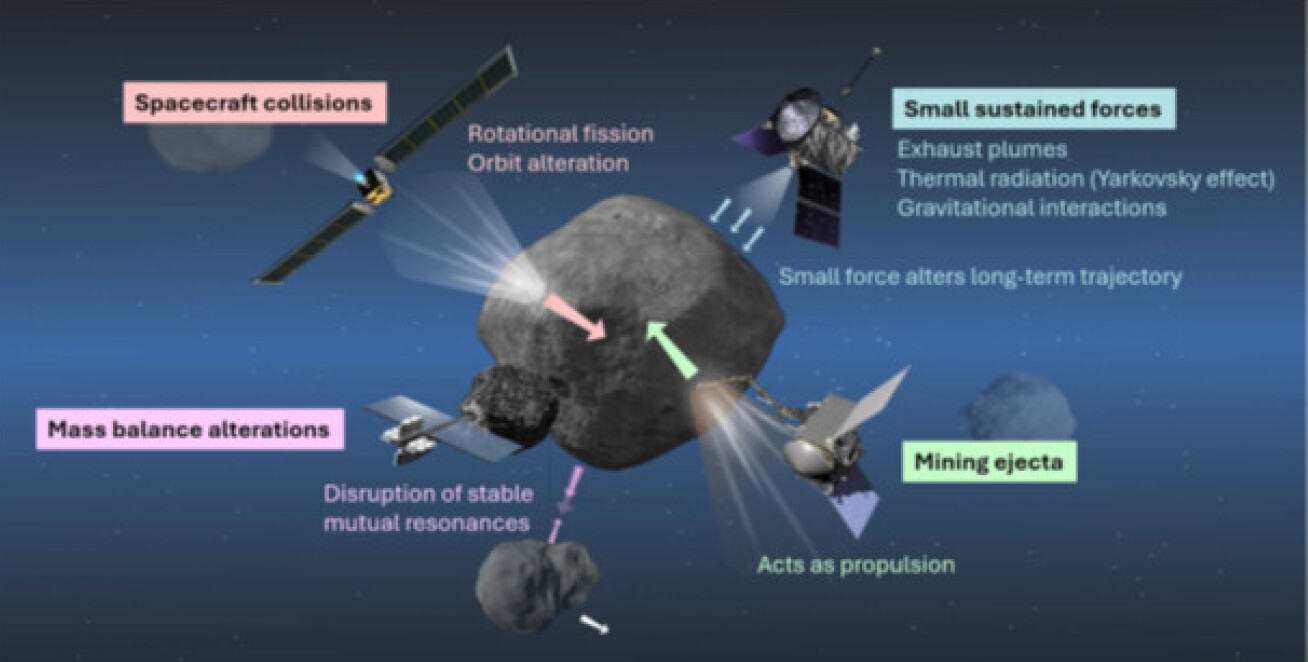
As our capability to explore beyond Earth continues to expand, our stamp on space becomes ever more entrenched, and not without consequences. Human activities in space – whether that be asteroid mining to extract raw materials from asteroids and other minor planets, scientific missions, or spacecraft operations – are gaining traction, but these practices also come with potential dangers.
One emerging risk is that near-Earth asteroids can be knocked out of their orbit. NASA’s 2022 DART mission, which involved ESE’s Professor Gareth Collins, proved that humans are indeed capable of manipulating asteroids for mining or defence, by deliberately smashing into an asteroid to alter its orbit.
While we have now detected and know the orbits of around 87% of large near-Earth asteroids (measuring one kilometre or more), unintentional changes to their trajectories may make it difficult – even impossible – to predict when they’ll hit Earth.
That could be potentially catastrophic for planetary defence: asteroids that would previously pass us by might now be on course for collision, possibly decades into the future, or else off-course asteroids could cross paths with satellites and spacecraft or another asteroid, in turn changing their trajectory. On the flip side, accidental collisions between spacecraft themselves might also nudge asteroids onto new paths and change their gravitational balance with other bodies.
Responsibility in space
Despite myriad potential hazards, there remains no established system to assess and manage their technical, legal and logistical aspects. Jordan’s idea tackles this issue through the coining of the Panel on Asteroid Orbit Alteration (PAOA) – an international body that would address the unintended impact of human space activities on orbiting asteroids, and co-ordinate efforts to keep them on-course.
The PAOA would have four main goals: to research asteroid orbital changes and mitigation strategies; create guidelines to prevent harmful alterations to asteroid orbits; collect and share data with planetary defence organisations such as the Minor Planet Center; and develop policy recommendations for international bodies like the Space Missions Planning Advisory Group (SMPAG).
Given the relative infancy of asteroid orbit-altering activities at present, the PAOA would be a timely intervention to bring together international experts and devise a critical framework for ensuring a responsible human presence in space – before the dangers of altered orbits actually come to fruition.
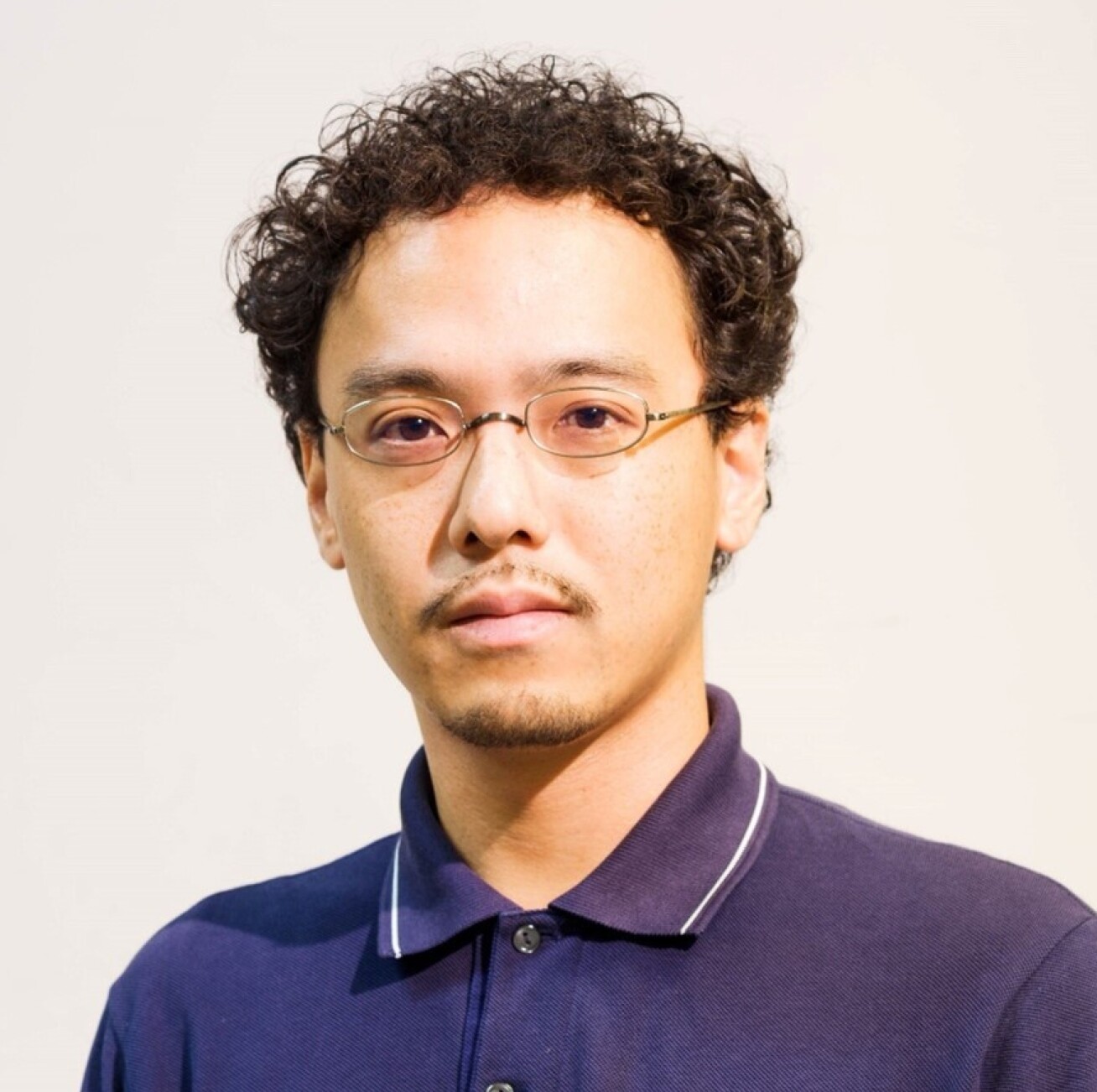
Kosuke, who analysed and modelled orbit alteration scenarios for the proposal, and provided expertise in space mining and orbital dynamics, said: “The easiest time to act is now, while human activities are minimal and there is enough time to do the research and develop mitigations.”
Ambitious future
The role of the PAOA would expand in line with the rise of human space activities but wouldn’t act against these practices per se. Asteroid mining, for example, is picking up speed, with a ‘gold rush’ era of private companies piling in on the value of extracted asteroid resources, which is only set to increase in the coming years.
By maintaining a balance between what we reap and what we sow with the appropriate guidelines and oversight, the PAOA would work in tandem with the industry to ensure it contributes to a thriving, healthy future for humans in space.
Professor Jonathan Eastwood, Co-Director of the School of Convergence Science in Space, Security and Telecoms at Imperial, commented: “I stand in continued amazement at the quality and abilities of our Imperial students – Jordan’s proposal is a wonderful combination of rigorous science and out-of-the-box thinking.
“The rapid increase we’re seeing in the use of space, and ambitions for the future, is throwing up both challenges around security and safety, like those Jordan is addressing, as well as exciting opportunities for a more connected, resilient world. Our newly formed School of Convergence Science in Space, Security and Telecoms will be continuing Jordan’s vein of adventurous thinking to tackle and exploit these – for example interrogating whether we really can venture into the solar system for the security of humankind, and how do we do this in a sensible, realistic, and smart way.”
Extending his congratulations, Professor Nigel Brandon, Dean of the Faculty of Engineering at Imperial, said: “The Schweickart Prize is a fitting tribute to the work Jordan has done leading a team in the Space Generation Advisory Council in their mission to identify, and mitigate, risks in the space sector. The international nature of the project is a perfect example of Imperial working across borders to solve global challenges."
Although there is no obligation for Schweickart Prize winners to put their proposal into practice, the team do have big aspirations for the PAOA: “I'm excited to take our idea forward, all the way up to the United Nations if we can!” said Jordan.
“During my lifetime, human activities will expand significantly in space. I believe we’re at a pivotal time when we’ll be setting precedents that could impact humanity for thousands of years, and there could be an amazing future if we go about this expansion responsibly. So wherever I can work on these important issues is where I'll go!”
Article text (excluding photos or graphics) © Imperial College London.
Photos and graphics subject to third party copyright used with permission or © Imperial College London.
Reporter
Gege Li
Department of Earth Science & Engineering
