New necroptosis probe published
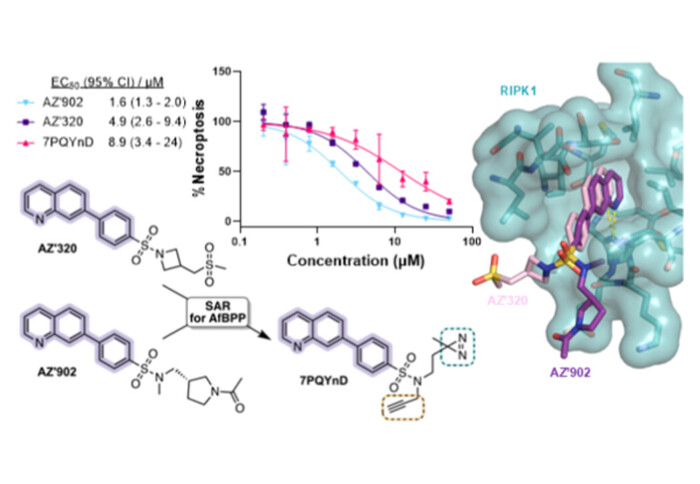
We report the synthesis and validation of a new chemical probe targeting RIPK1
A collaboration between AstraZeneca, University of Lisbon, Francis Crick Institute and the Shenoy and Tate labs at Imperial College London to validate a novel chemical series targeting necroptosis has been published in ACS Chemical Biology.
Necroptosis is a form of programmed cell death associated with cancer and inflammatory diseases. A previous high-throughput screen identified a novel chemical series containing a 7-phenylquinoline (7PQ) motif that inhibited necroptosis. This work involved the synthesis of a 7PQ photoactivatable probe which was used to establish the cellular target as receptor-interacting kinase 1 (RIPK1), a key protein involved in necroptosis regulation. Biochemical, cellular and structural biology techniques validated the series as type I kinase inhibitors that are active in vitro and in vivo. This study provides the basis for the development of novel RIPK1 inhibitors and presents a new photoaffinity probe to investigate RIPK1 target engagement in cells.
Congratulations to all involved in this research! This research was supported by funding from AstraZeneca, EPSRC and a Royal Government of Thailand PhD scholarship.
Article supporters
Article text (excluding photos or graphics) © Imperial College London.
Photos and graphics subject to third party copyright used with permission or © Imperial College London.
Reporter
Edward Bartlett
Department of Chemistry
