Pioneering paper lays groundwork for smarter, connected biofoundries worldwide
by Ruth Ntumba

A new paper published in Nature Communications outlines an innovative framework that could support global standardisation across biofoundries.
The global bioeconomy, driven by technological advancements in biotechnology, is growing rapidly and has the potential to address some of the world’s most pressing challenges. These efforts include making food production more sustainable, developing new drugs and bio-based therapies, and shifting from petrochemicals to more sustainable methods for manufacturing chemicals and materials.
Engineering biology is a core technology that is accelerating this growth. It does so through the development of advanced labs called biofoundries, which use high-speed tools to speed up experiements and innovation. In 2019, the Global Biofoundries Alliance (GBA) was launched to promote collaboration and coordination among public-funded biofoundries worldwide. To date, the GBA has 33 members, united by the shared goal to “share experiences and resources and work together to overcome shared challenges and unmet scientific and engineering needs.”
However, biofoundries support a wide variety of complex experiments, and collaboration between facilities is often limited by the absence of clear benchmarks or standards to enable interoperability and data sharing.
A new landmark publication from a consortium of five international biofoundries, including the London Biofoundry based at Imperial College London, the Edinburgh Genome Foundry, the DOE Agile BioFoundry, all led by the K-Biofoundry, aims to tackle this issue. It provides the first framework to help publicly funded biofoundries collaborate more effectively on major global challenges.
Addressing the need for standardisation
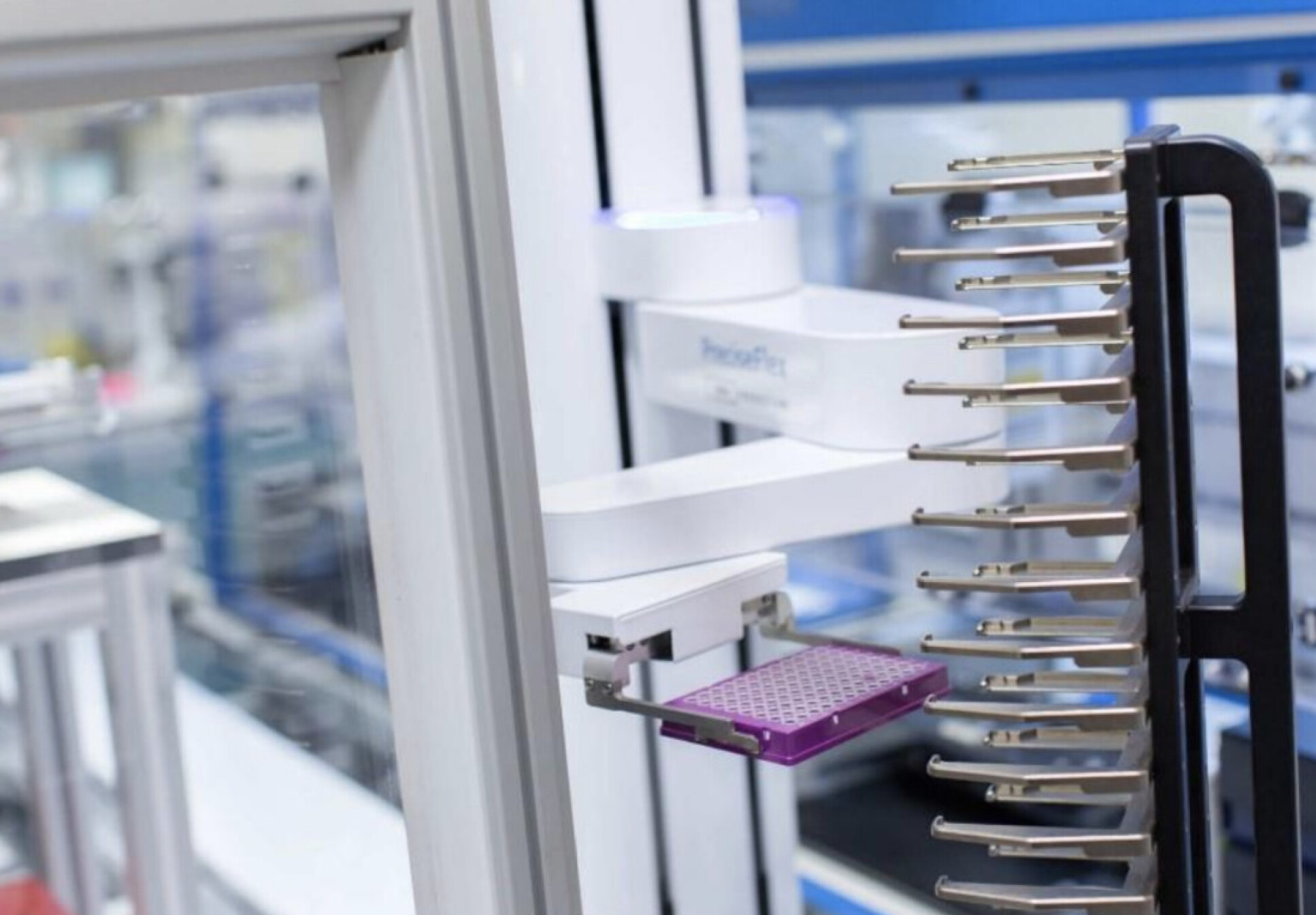 The authors propose a hierarchical framework that could improve scalability and efficiency of engineering biology research by addressing the current lack of standardisation.
The framework organises biofoundry activities into four levels:
- Project: the series of tasks undertaken to meet the biofoundry user’s requirements.
- Service/Capability: the functions provided by the biofoundry.
- Workflow: the Design-Build-Test-Learn sequences (a framework commonly used in synthetic biology to systematically develop and optimise biological systems).
- Unit-operations: the specific hardware or software operations.
" ... workflows and operations can differ greatly between biofoundries. This highlights the need for open standards and methodologies to enable protocol exchange." Professor Paul Freemont
Professor Paul Freemont, Co-Director of The London Biofoundry, and co-corresponding author of the publication, said: “The diversity of experiments and the continual advancements of software and AI mean that workflows and operations can differ greatly between biofoundries. This highlights the need for open standards and methodologies to enable protocol exchange. A flexible framework is needed to allow for biofoundry-specific protocols that can be tailored to diverse workflows to be shared and exchanged.”
The flexible framework outlined in this publication identifies clear areas whereby standards and metrics can be applied to support comparison across biofoundries. This could lay the foundation for distributed biofoundry networks to work together, marking a key step towards building a more sustainable global bioeconomy.
International biofoundry partnerships
Imperial is leading a new collaborative partnership between the UK and the Republic of Korea, focused on developing shared protocols and workflows across biofoundries. Researchers from the University of Manchester, the University of Edinburgh and Imperial are working alongside colleagues from the Korea Advanced Institute of Science and Technology (KAIST) and the Korea Research Institute of Bioscience and Biotechnology (KRIBB), forming the UK-Korea Biofoundry Network.
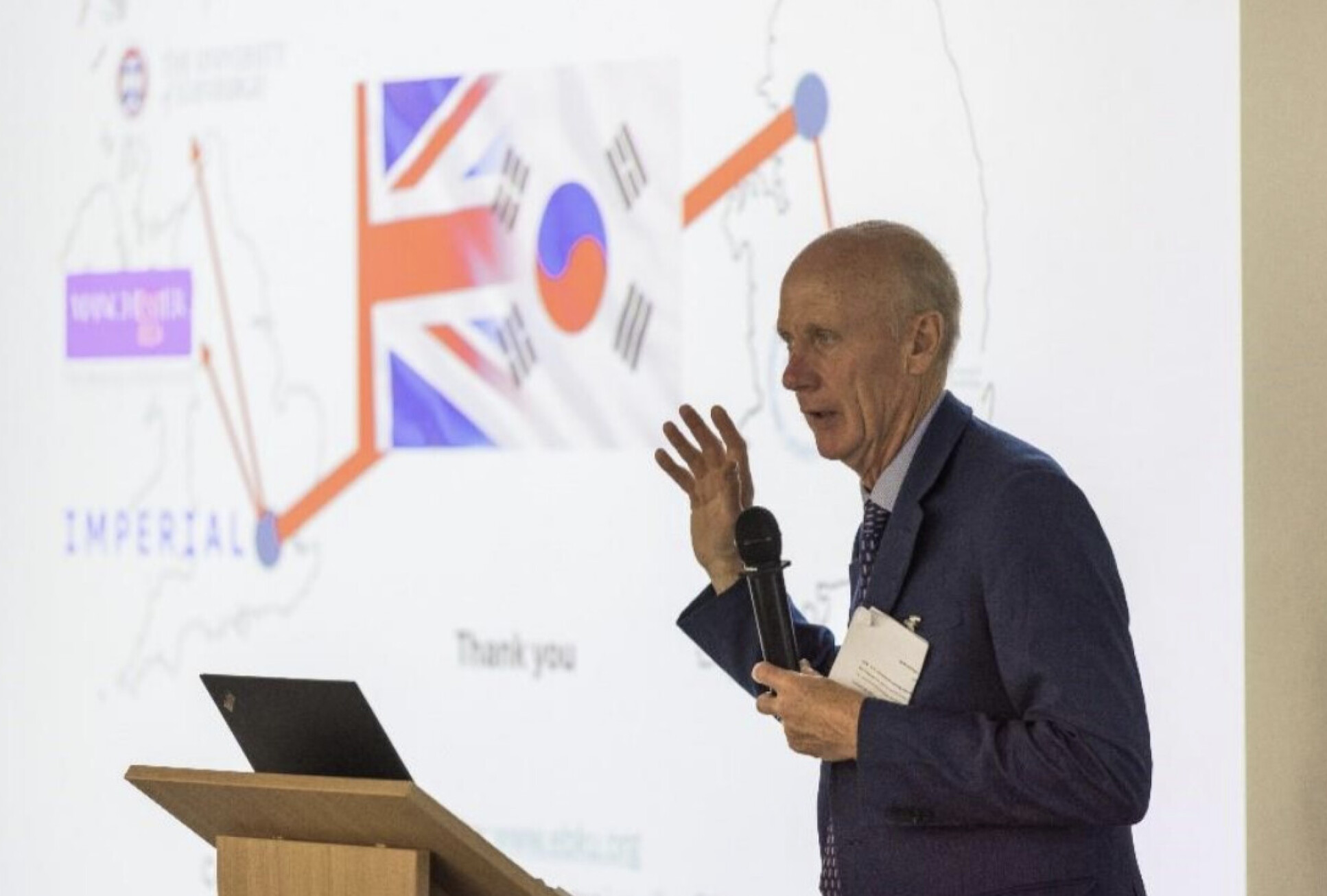
As public-funded research and development infrastructures, biofoundries enable rapid cell factory design, construction, and testing of biological systems. This partnership is an excellent example of how international collaboration can accelerate efforts towards a more sustainable bioeconomy by advancing interoperability of biofoundries.
Dr Haseong Kim, Senior Researcher at KRIBB and lead-author of the publication, said: “Working with colleagues across the UK-Korea Biofoundry Network, we can identify the many challenges faced in adapting experimental protocols into a biofoundry environment. Moving forward, we will prioritise the standardisation of workflows to enable the sharing of experiences and resources across global public biofoundries. We hope this will accelerate the advancement of engineering biology and enable public biofoundries to take a leading role in driving the bioeconomy and addressing global challenges.
____________________________________________________________
Read the full publication in Nature Communications.
For more information about the UK-South Korea Research Partnership on Engineering Biology, visit the website here.
Article text (excluding photos or graphics) © Imperial College London.
Photos and graphics subject to third party copyright used with permission or © Imperial College London.
Reporter
Ruth Ntumba
Faculty of Medicine Centre
