Championing artificial intelligence for health innovation in Zimbabwe
by Ruth Ntumba
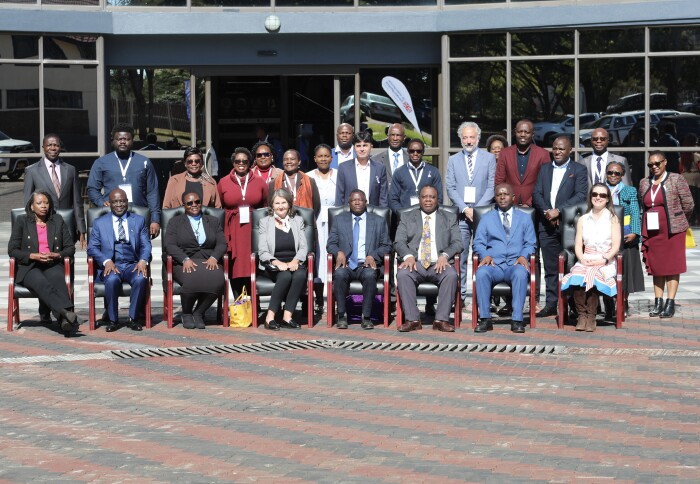
In June 2025, British and African experts convened to explore the transformative role of AI in shaping healthier societies.
Organised by Dr Felicity Fitzgerald from Imperial’s Department of Infectious Disease, this high-impact three-day workshop was funded by the Wellcome Trust and the UK Foreign, Commonwealth and Development Office and was hosted by the University of Zimbabwe in Harare.
Artificial Intelligence (AI) is transforming global health research and holds great promise for societal impact in Zimbabwe and across Africa. Despite this there is significant untapped potential for Zimbabwean academics in a range of disciplines to utilise AI to contribute to healthy societies across the continent. Realising its benefits requires not only technical proficiency in AI methodologies but also a critical understanding of the ethical, social, and contextual implications of its application in health.
In response, June’s event went ahead with four key objectives:
- To inspire Zimbabwean researchers to integrate AI into existing and future health-related projects.
- To build foundational understanding of AI processes, including associated risks and challenges.
- To facilitate collaborative ideation and development of grant proposals through small-group sessions involving faculty and early career researchers from UZ, BRTI, and partner institutions.
- To establish sustainable networks between Zimbabwean academics and international experts to foster long-term collaboration.
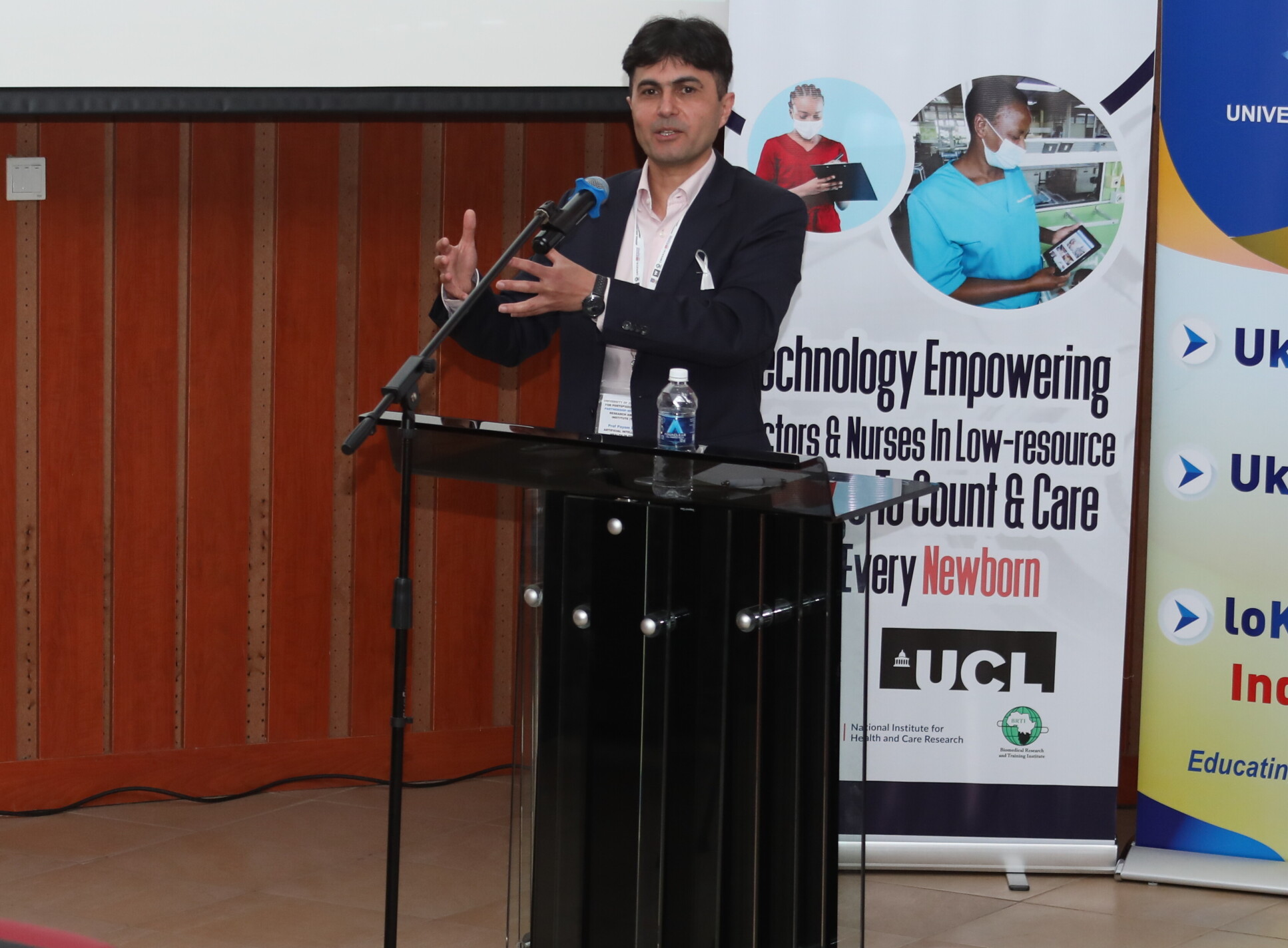 The event commenced with keynote lectures by leading international and national experts, inspiring and engaging academics, students, NGOs, and community organisations. Among the speakers were Professor Payam Barnaghi from Imperial’s Department of Brain Sciences who delivered a talk titled “How Machine Learning Can Improve Child Healthcare?”, highlighting scalable AI solutions for paediatric care. Professor Barnaghi is also Co-Director of Imperial’s recently launched School of Convergence Science in Human and Artificial Intelligence.
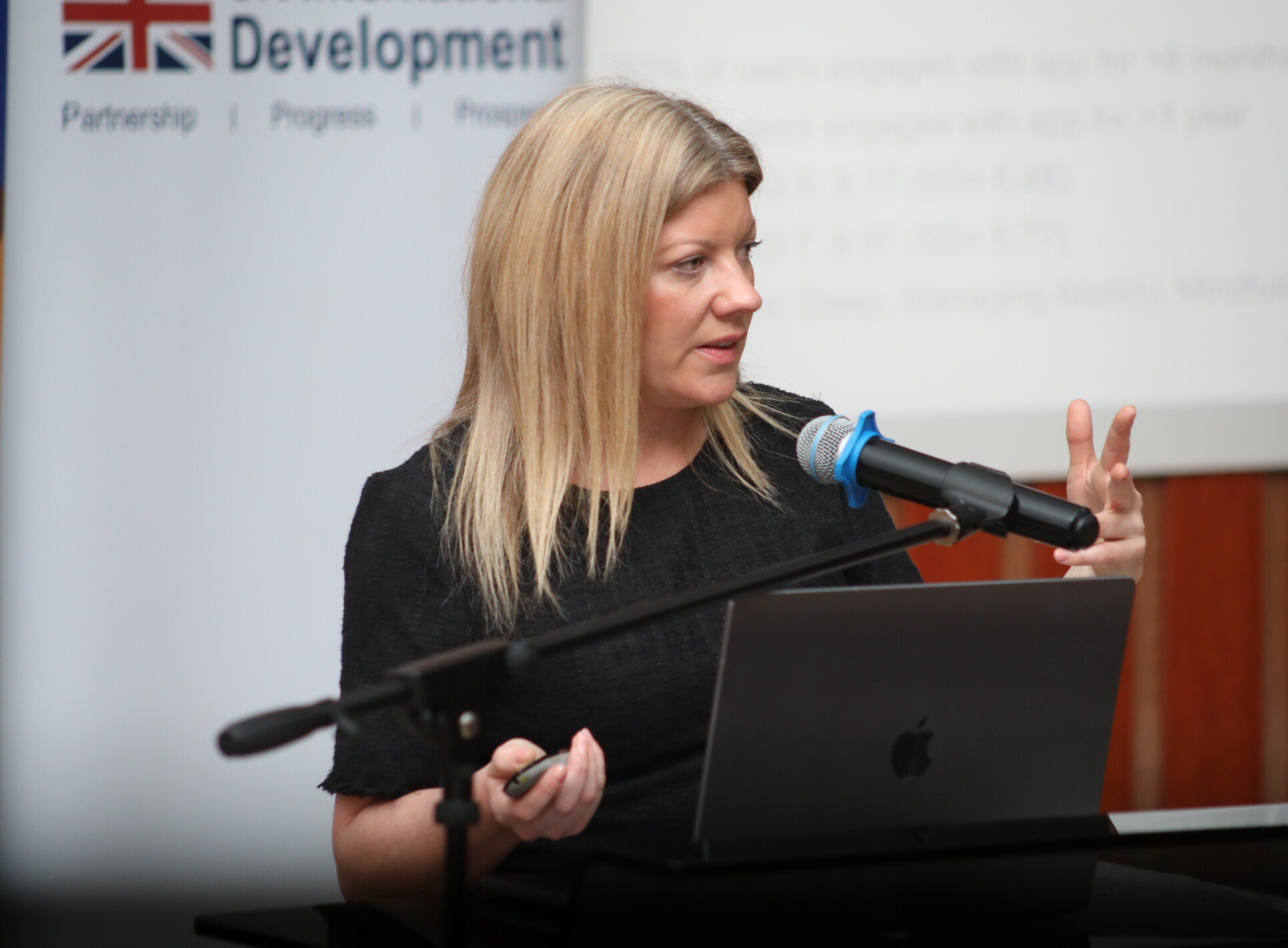 Professor Ceire Costelloe, Group Leader in Health Informatics at the Institute of Cancer Research and Visiting Professor at Imperial’s School of Public Health, presented “Harnessing the Power of Real-World Healthcare Data to Drive Innovation in Data Science”, showcasing how electronic health records and predictive modelling can inform healthcare delivery and improve patient outcomes.
Dr Simbarashe Chimhuya, Zimbabwe Principal Investigator of Neotree and PhD student at UCL and Dr Felicity Fitzgerald presented “Neotree, a Learning Health System”, about the development of a digital platform to improve newborn care and bring AI to the bedside for vulnerable newborns in Zimbabwe and Malawi, led by Professor Michelle Heys at UCL.
A networking reception at the British Ambassador’s Residence in Harare followed the day of lectures, with subsequent days focused on bringing together expert visitors from Imperial, national faculty and African entrepreneurs with Zimbabwean Early Career Researchers (at PhD and post-doctoral level) to discuss foundational and advanced AI concepts and showcase examples from Imperial’s global research initiatives. Discussions also addressed the risks and benefits of AI at scale in the context of Zimbabwe.
Speaking to ZiFM radio, Professor Attwell Mamvuto, Pro Vice Chancellor for Academic Affairs and Administration at the University of Zimbabwe, said: “
This workshop plays a critical role in bridging the gap between medical practice and digital innovation. This international workshop is going to further strengthen the cordial relationship which already exists between Zimbabwe and the UK. Professor Attwell Mamvuto Pro Vice Chancellor for Academic Affairs and Administration at the University of Zimbabwe
It is a cutting-edge workshop for the University of Zimbabwe where there are skills sharing and knowledge transfer for our participants.” Deputy British Ambassador Dr Jo Abbot echoed this sentiment, highlighting the importance of African-led innovation in health. She emphasised that the workshop served as a platform to explore how homegrown solutions can be leveraged to improve health outcomes across the continent.
The event culminated in a pitching competition where 25 early career researchers from a range of Zimbabwean institutions and disciplines presented their ideas about how to improve health in Zimbabwe using AI. After intensive mentoring from local and visiting faculty from Imperial College London, they pitched to a diverse panel that included university leadership and the Deputy Ambassador.
Reflecting on the competition, participant Kevin Meck said: “Having never pitched to a panel before, this was a great experience that taught me how to package a technical concept for a diverse audience. I can confidently say my next pitch will be ten times better and the skills learned are invaluable for both my current role and PhD aspirations.”
Cyprian Masvikeni, the youngest Early Career Researcher (ECR) at the event, at just 25, secured second runner-up. Commenting on the workshop, he said: “I had the honour of presenting my project, Shanduko AI, a WhatsApp-based chatbot designed to reduce teenage pregnancies by providing youth with accessible, private, and culturally relevant sexual and reproductive health information. Being awarded second runner-up in the pitching competition was both humbling and motivating. It reinforced the urgent need for digital solutions that are built with and for the communities they serve.
I’m deeply grateful for the feedback, mentorship, and connections made during the event. This experience has significantly shaped my confidence and commitment to building meaningful, scalable health innovations in Zimbabwe.”
Participants left equipped with new knowledge, collaborative connections, and concrete ideas for future research.
By fostering interdisciplinary dialogue and building capacity in AI for health, the event marked a significant step toward empowering Zimbabwean researchers to lead innovation in digital health.
Article text (excluding photos or graphics) © Imperial College London.
Photos and graphics subject to third party copyright used with permission or © Imperial College London.
Reporter
Ruth Ntumba
Faculty of Medicine Centre
