From Bangladeshi roots to natural algae dyes

Celebrating South Asian Heritage Month 2025 with Redwan Rahman, researcher in Sustainable Chemical Engineering and co-founder of Brilliant Dyes.
My roots are in Bangladesh—specifically in Dhaka and Chattogram—where I watched rivers like the Buriganga turn flat under the weight of synthetic dye pollution.
These untreated dyes have devastated aquatic ecosystems and are linked to rising healthcare costs, estimated at £3 billion annually, for communities facing skin diseases and cancer.
Driven by my heritage
Fuelled by my Bangladeshi roots, I transitioned from a top-performing fisheries and aquaculture student earning distinctions and a Gold Medal, to a researcher tackling water pollution head-on.
The rivers of my childhood ignited a vision: to pioneer a cleaner, sustainable alternative to synthetic dyes. And that is how Brilliant Dyes was born.
Microalgae: A route to resilience
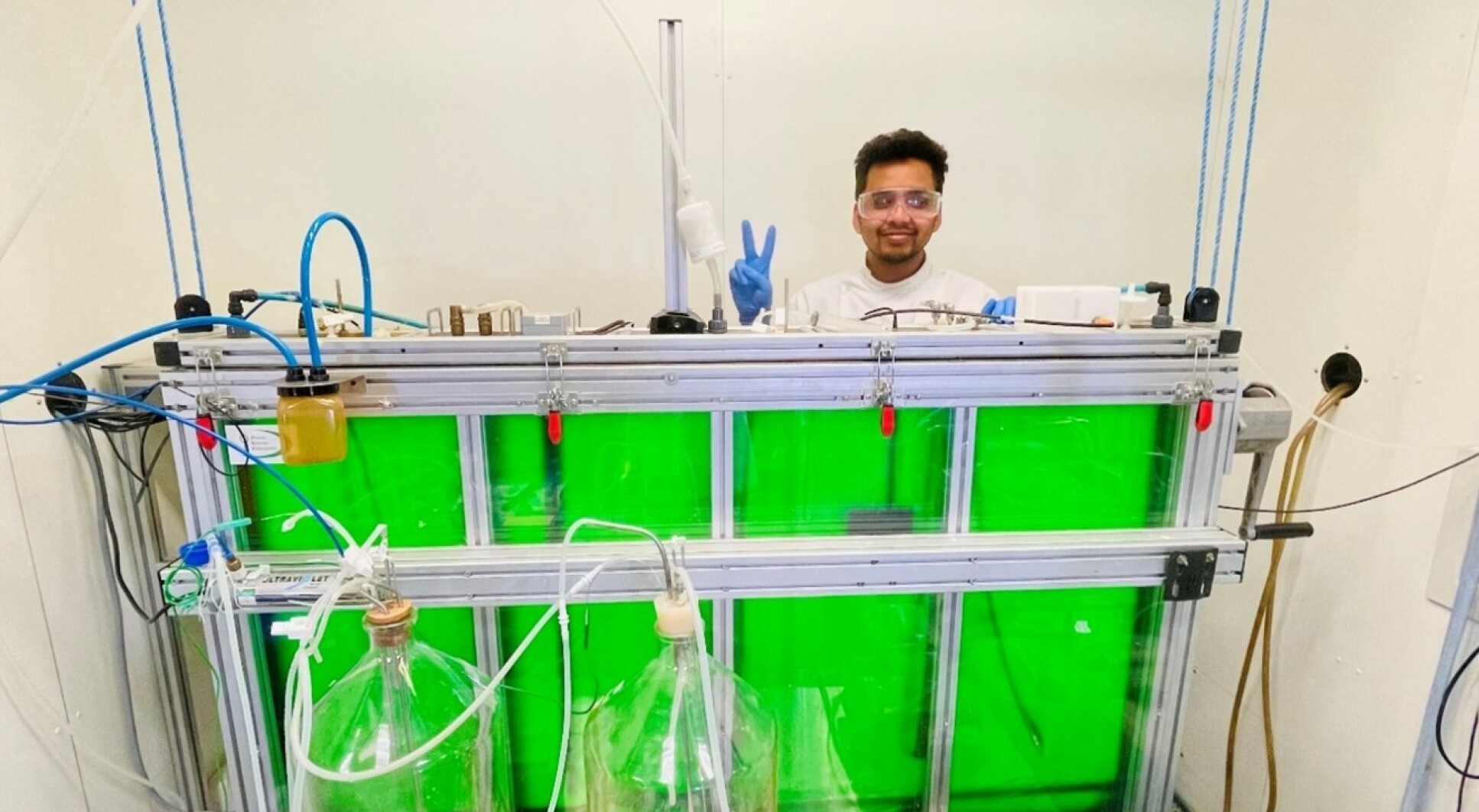
At Imperial College London, I am harnessing microalgae and cyanobacteria to produce natural, carbon‑negative dyes through a carbon-capturing, circular bioprocess.
This closed-loop system is not just environmentally friendly, it is tailored for high-value applications in textiles, cosmetics, and food industries.
It is a powerful synergy of roots and routes, inspired by my heritage and scaled through global innovation.
Reversing and preventing pollution
By shifting from synthetic to microalgae-derived dyes, my research aims to:
- Prevent dye pollution: helping restore rivers to thriving ecosystems
- Reduce illness: improving public health in vulnerable communities
- Fuel green job creation: specifically in Bangladesh, empowering scientists and engineers with sustainable skills
A future built on connection
Imperial’s vibrant, innovation-driven ecosystem, powered by AI, sustainability initiatives, and interdisciplinary collaboration, has enabled me to establish a dedicated research wing.
Here, I bridge cutting-edge engineering with real-world environmental impact.
My journey from Bangladesh’s waterways to pioneering labs in London truly embodies this year's theme 'Roots to Routes', where personal heritage meets a global route to a cleaner, brighter future.
South Asian Heritage Month
Article text (excluding photos or graphics) © Imperial College London.
Photos and graphics subject to third party copyright used with permission or © Imperial College London.
Reporter
Navta Hussain
Department of Chemical Engineering
