Chemistry's Student Work Placement Programme

Each year, Chemistry hosts up to 10 students from Years 10 to 13 to give them insight into life at university and inspire chemists of the future.
This year’s programme took place from 7–11 July across both the White City and South Kensington campuses. The cohort included nine students from both local and further afield schools. Their first day was hosted at the Molecular Sciences Research Hub in White City, where they met the Acting Head of Department, heard from a postgraduate speaker about their journey into science, toured a lab with the technical team and connected with long-serving staff members who shared reflections on their careers. They also joined the department’s EDI Directors for lunch and created wellbeing-themed presentations for the Chemistry community. Students’ ambition and authenticity were welcomed, and their ideas on wellbeing are already helping inform departmental policy.
Reflecting on the programme’s evolution, Ingrid Temmerman said, “After several years of co-leading on this initiative, I am stepping down to focus on new challenges. What started out as a group of two students grew to a cohort of eleven, including an international student, and this year to a larger group with a focus on diversity and ability. I thank everyone who has supported this work over the years and look forward to seeing it evolve going forward.”
The students continued their placement at the South Kensington campus, where they explored the undergraduate teaching labs. With guidance from the technical team, they assisted with daily tasks and gained hands-on experience in a real lab setting. “This experience not only helped them understand what happens in a lab,” shared Fatema Khatun, “but also gave them a taste of what it might be like to work in the scientific field.”
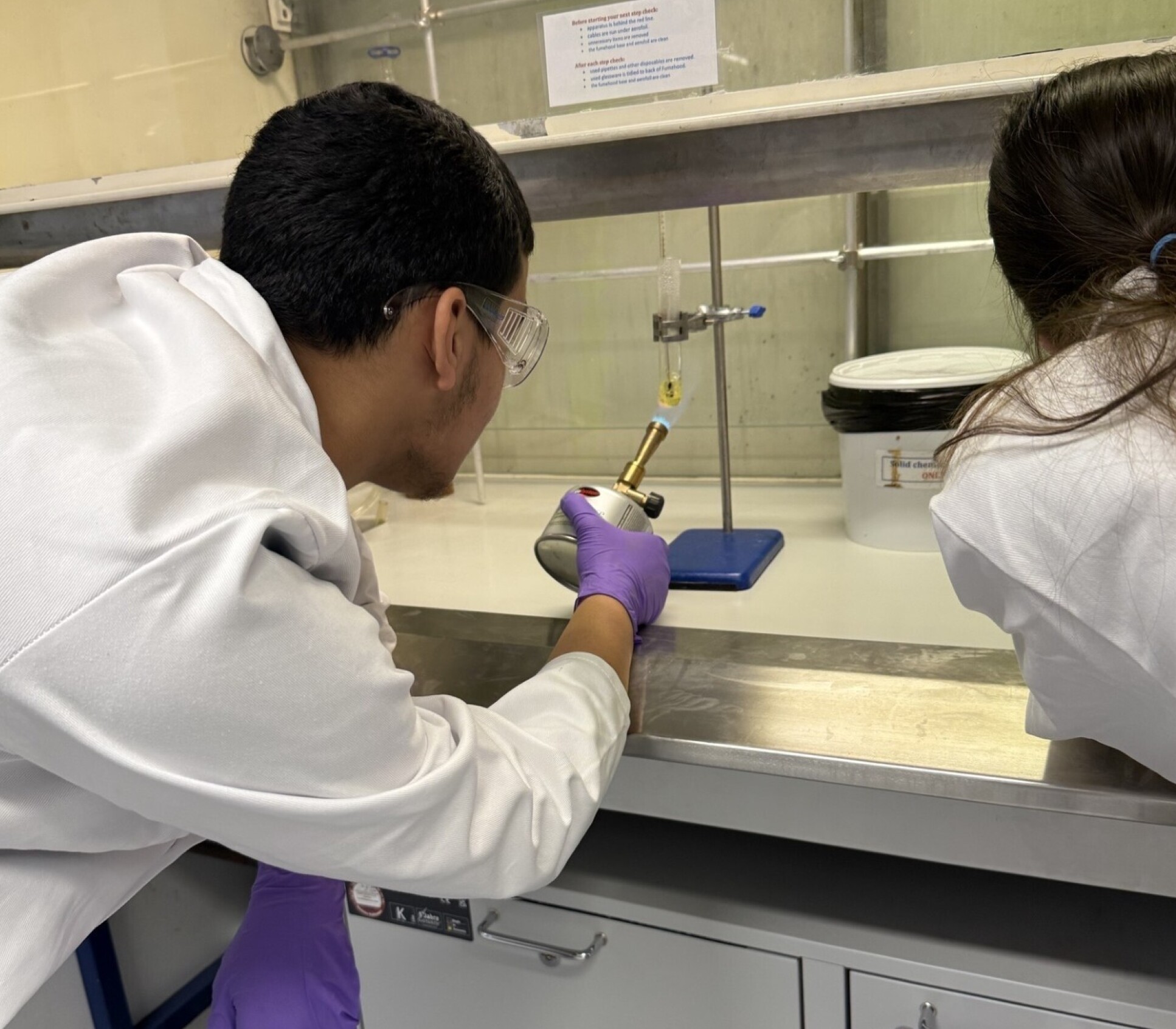
As part of this experience, students tested several experiments, synthesising luminol and witnessing its glow-in-the-dark reaction, performing hydrolysis of aspirin, and designing and 3D-printing a spectrograph. They also learned about analytical instruments such as Fourier Transform Infrared Spectroscopy (FTIR) and melting point analysis, using them to identify unknown compounds, an experience that was both fun and educational.
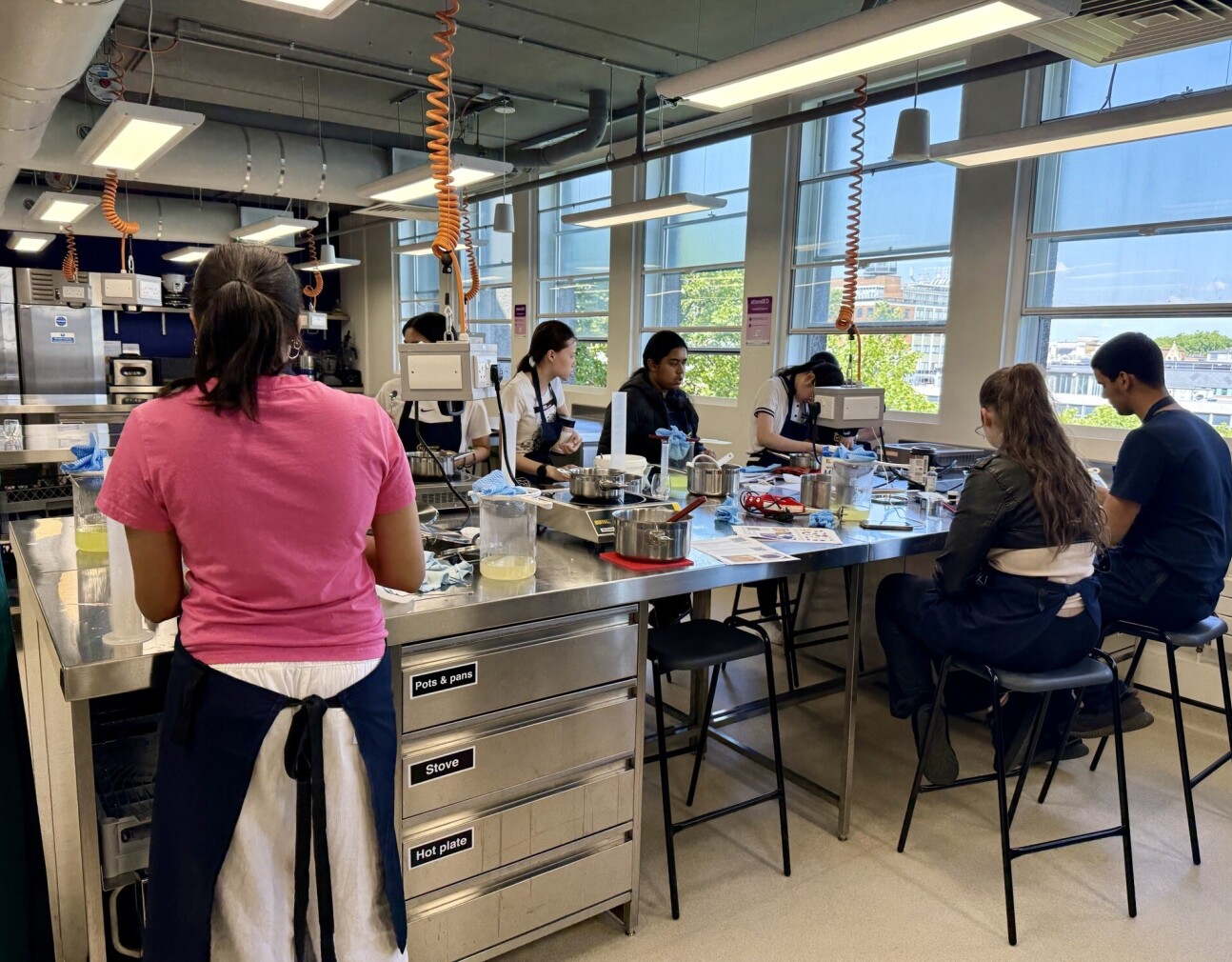
For their last day, the students undertook a final project in the Chemical Kitchen. Guided by our Graduate Teaching Assistants (GTAs), they began with a practical lab management task by taking a full inventory of the laboratory contents, applying the principle of mise-en-place in practice. This led into a hands-on transdisciplinary experiment that blended the practical ways of working in a scientific laboratory with culinary arts, resulting in the students successfully making fresh cheese from scratch and creating their own delicious cheesecakes.
 Throughout the week, students had meaningful conversations with staff members who shared personal stories of their journeys into research and higher education. These exchanges encouraged students to reflect on their own interests and future study options. For some, the experience deepened a passion for science; for others, it introduced exciting new possibilities they hadn’t considered before.
The programme was met with enthusiasm from students and their families. Many described it as transformative, helping clarify academic ambitions and sparking fresh curiosity. Its success reflects the dedication of the staff involved throughout, from technical leads and coordinators to educators and volunteers, including Kat Harris, Fatema Khatun, Ingrid Temmerman, Dr Jakub Radzikowski, Dr Lisa Haigh and many more.
Article text (excluding photos or graphics) © Imperial College London.
Photos and graphics subject to third party copyright used with permission or © Imperial College London.
Reporter
Saida Mahamed
Department of Chemistry
