Q&A with Aran Singanayagam: 2025 ACS Young Investigator Awardee
by Meesha Patel
Aran Singanayagam discusses his research, inspirations, and being named a 2025 ACS Infectious Diseases Young Investigator.
This year, the American Chemical Society Infectious Diseases Young Investigator Award recognised three exceptional early-career scientists for their groundbreaking research in infectious diseases. Among the 2025 honorees is Dr Aran Singanayagam, whose work stands at the forefront of respiratory virus immunology and pathogenesis.
In this Q&A, we spotlight Aran's journey, scientific inspirations, and the impact of his research on the future of infectious disease treatment and prevention.
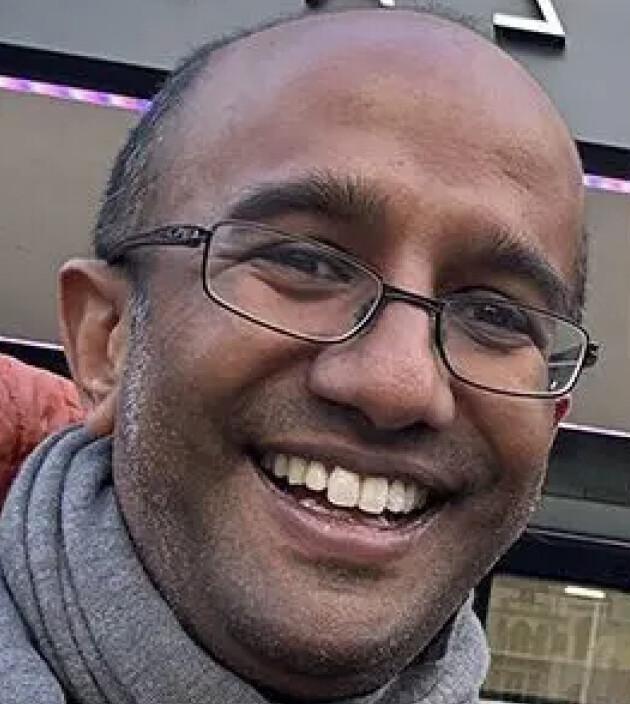 Aran Singanayagam is a Clinical Associate Professor in Respiratory Infection in the Department of Infectious Disease and Group Leader at the Centre for Bacterial Resistance Biology (CBRB) and a Consultant in Respiratory Medicine at the Royal Brompton and Harefield Hospitals (or Guy's and St Thomas NHS Trust).
What inspired you to pursue your area of research?
During my early clinical training, I was often exposed to patients suffering from chronic lung diseases such as asthma and COPD. There was a subgroup of these patients who kept coming back into hospital with repeated viral infections. The reasons for this susceptibility was unclear and I was struck by the distinct lack of therapies that were available to prevent these episodes. This inspired me to undertake mechanistic research to better understand what predisposes certain people to have recurrent infections with the hope that this understanding could lead to more effective therapies.
I have become specifically interested in the type I interferon pathway and its role in this context. In healthy people, the type I interferon response is ‘fine-tuned’ to ensure that the lungs rapidly clear invading viruses. In chronic lung disease, this pathway becomes disregulated and this adversely impacts the ability of the lungs to mount an appropriate response to clear infection. We are interested in understanding the underlying reasons why the type I interferon response is perturbed in patients with chronic lung disease.
What’s next for your research?
My research group currently investigate how commensal bacteria within the recently discovered airway microbiome impact upon the ability of the lungs to generate an appropriate type I interferon response. We have recently discovered that some commensal bacteria can boost the type I interferon response whilst others are inhibitory. We are now combining serial microbiome analyses in unique human viral experimental challenge studies and longitudinal naturally-occurring infection cohorts, to pinpoint commensals that correlate with viral susceptibility in chronic lung disease. We will then use functional microbiome manipulation experiments in human cells and animal models to understand cause and effect. We hope to mirror approaches taken in the gut microbiome field, where mechanistic studies have led directly to novel microbiome-targeting therapies e.g. faecal microbiota transplantation.
What problems in your field are you hoping to see solved in the next decade?
Longer term, we hope that our research will facilitate new microbiota-focused approaches to preventing or treating respiratory viral infections. Following completion of the mechanistic studies, we will be uniquely placed to progress into early phase experimental medicine studies (e.g. inhaled administration of commensals or manipulation of microbiota-regulated pathways in human models of experimental viral challenge), providing genuinely translational bench-to-bedside research for patient benefit. Ultimately, we hope that this will lead to new effective ways of reducing viral susceptibility in clinical practice.
What would your advice be to someone just starting out in the field?
Balancing clinical work with research can be challenging but it is important to be organised, motivated and resilient. I have regularly discussed my ideas and career plans with a range of mentors and peers over the years and getting an external perspective can be invaluable. I would also emphasise the importance of recognising that failure (e.g. grants, applications, manuscript submissions) is all part of the process but the ability to ‘bounce back’ after a disappointment is the recipe for success in this career.
The awards are presented at ACS Fall 2025 in Washington, DC, on Monday, August 18.
Article text (excluding photos or graphics) © Imperial College London.
Photos and graphics subject to third party copyright used with permission or © Imperial College London.
Reporter
Meesha Patel
Faculty of Medicine Centre
