Championing Equality: Dr Cris Banks-Leite Wins Julia Higgins Award
by Emily Govan

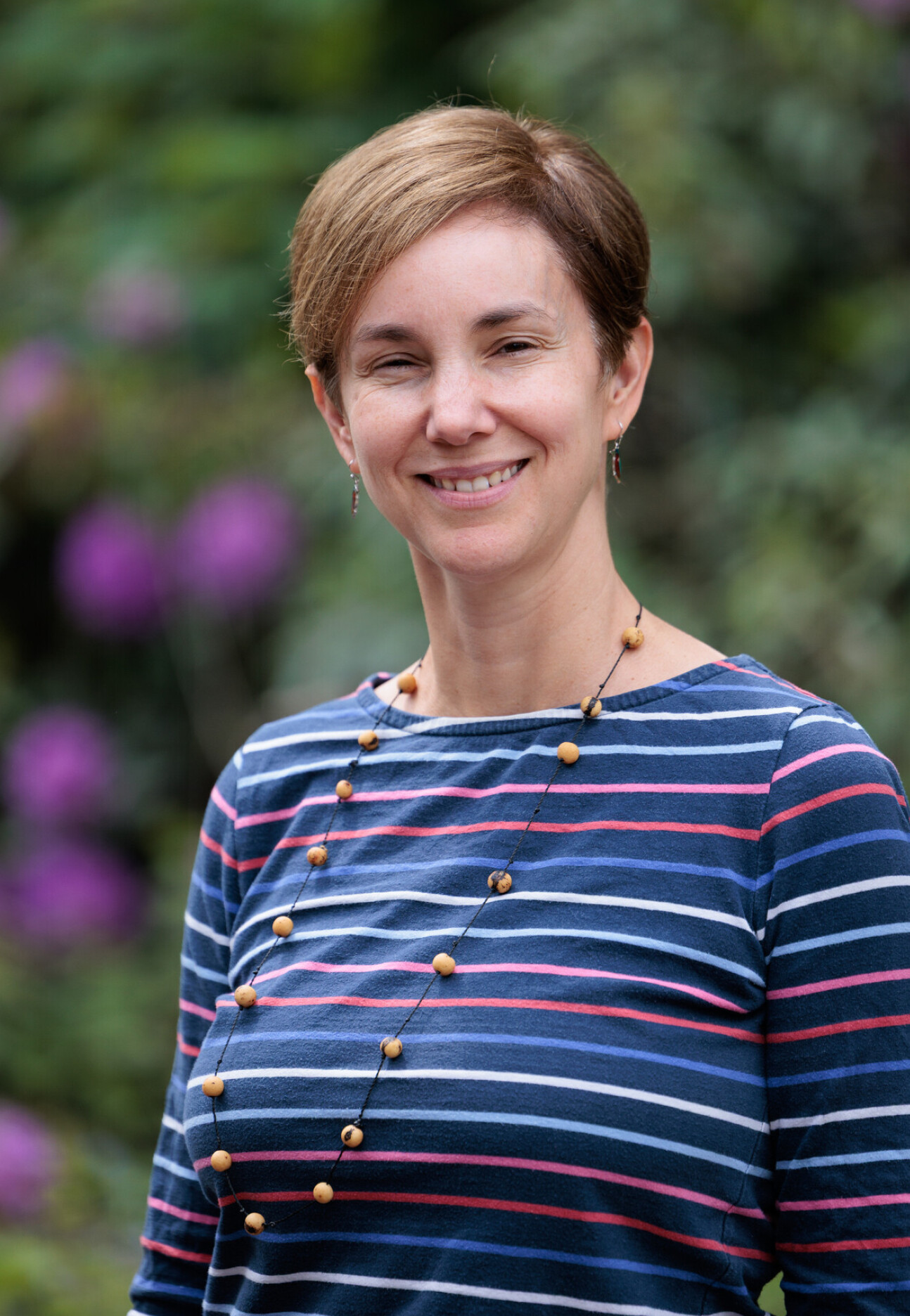
Dr Cris Banks-Leite of the Department of Life Sciences has been awarded the Julia Higgins Award for her work in supporting gender equality in science.
The Julia Higgins Medal and Awards are awarded each year to celebrate individuals, groups, and departments whose work has made a real difference for women in academia at Imperial.
The ceremony to celebrate the award winners this year was extra special, as it also marked 20 years of the Athena SWAN Charter - a milestone in Imperial’s ongoing journey towards equality. Imperial was a founding member in 2005 of this global framework for driving change in higher education and research.
"It’s an incredible honour to have received the Julia Higgins Medal, and to have met Dame Julia Higgins herself. This award is the culmination of a lifetime of thinking, talking, experiencing and fighting against gender disparity." Dr Cris Banks-Leite Associate Professor in Conservation Ecology
To mark the anniversary, there were guest speakers including two Imperial colleagues: Emeritus Professor Dot Griffiths OBE, Imperial Business School, and Professor Dame Julia Higgins FRS DBE FREng, Emeritus Professor and Distinguished Research Fellow, Department of Chemical Engineering. They reflected on the part they played in founding Athena Swan at Imperial 20 years ago, what has changed and how there is still work to be done.
At the event, Dr Banks-Leite’s name was called as the winner of the Julia Higgins Medal. We caught up with her to hear how it felt to receive the award - and to learn more about the passion and purpose behind her work.
Congratulations on winning the Julia Higgins Medal! What does receiving this award mean to you personally and professionally?
Thank you! It’s an incredible honour to have received the Julia Higgins Medal, and to have met Dame Julia Higgins herself. Personally, this award is the culmination of three years of work but a lifetime of thinking, talking, experiencing and fighting against gender disparity. Professionally, most of our work as academics goes unrecognised, so it feel very special to receive such incredible recognition. I’ve been smiling quite a lot since last week!
Can you tell us a bit about your work championing women at Imperial?
Professor Dan Davis (Head of the Department of Life Sciences) asked me to lead the submission of the Athena Swan report for Life Sciences, which involved a lot of data gathering, analysing and a long and complex write up. The data showed that our department had a significant gender disparity, particularly among academic staff, and this was mostly due to low recruitment of women. Together with Dr. Josh Hodge, Chair of the departmental Equality, Diversity and Inclusion (EDI) Committee, we implemented a package of change to our own recruitment practices.
Behind all these changes was the idea that gender disparity exists as a manifestation of a biased society and culture. We all have biased views and we can’t change our views easily. What we can do is to implement practices that remove or reduce the impact of these biases. So we implemented changes to advertising, interview process, we brought in an EDI observer and the end result – 78% of our new hires were women! Now our department has equal numbers of men and women all the way from UG students into Senior lecturers.
But we didn’t stop there, together with HR, Associate Dean for EDI in the Faculty of Natural Sciences, Professor Bernadette Byrne, and the Associate Provosts of EDI Professor Lesley Cohen and Dr Wayne Mitchell, we have now created a document to guide other departments to implement these changes to their own recruitment process.
What inspired you to champion gender equality and support women?
My own experiences as a woman have given me some significant insight into the impacts of gender bias. Equally, my experiences as a Latin American have given me the understanding of how culture shapes our thoughts and experiences. Funnily enough, although Brazil is a deeply biased country, I had not actually felt discriminated against for being a woman until I came to the UK. I have read a lot and have also joined a group of highly supportive women. This journey of painful experiences, intersectional insights and learning have inspired me to make the workplace a tiny little bit better.
What impact do you hope your work will have on the next generation of women scientists?
Seeing how much the face of our department has changed is already the main accomplishment. The work I did is certainly not going to change all the sources of biases, but hopefully it should at least change the balance in a way that we become a more diverse group who can foster better practices. I take being a role model seriously. If this work sparks something in my students, if it makes them want to go further and do better than I ever could, then I know I’ve done my job right.
What advice would you give to young women entering the scientific profession today?
Knowledge is power – learn your rights, read the research on gender bias, and have a good support network or similarly minded women who can inspire you to keep going.
Who are the role models or mentors who've influenced your career and advocacy work?
I have now left all social media, but a few years ago I used to be part of a Facebook group that were very active on gender bias issues. Being biased, at first I didn’t understand what they were saying. But slowly and steadily I started to change my views and interrogate my own biases. I also read a lot of primary literature and books on this topic. This has really influenced me.
Outside of your professional life, what keeps you inspired or motivated?
I just want to make this world a teeny weeny bit better for humans and all species alike.
Article text (excluding photos or graphics) © Imperial College London.
Photos and graphics subject to third party copyright used with permission or © Imperial College London.
Reporter
Emily Govan
Department of Life Sciences
