Institute of Chemical Biology Symposium Unites Leaders in Chemical Biology
by Emma Pallett

On Wednesday 16 July 2025, the Institute of Chemical Biology successfully hosted its annual Summer Symposium at Imperial’s South Kensington Campus.
The event, held in the Sir Alexander Fleming Building and meticulously organized by second-year PhD students from the EPSRC Centre for Doctoral Training in Chemical Biology – Innovation for the Life Sciences, brought together a diverse and dynamic group of scientists and industry experts from across the UK and beyond.
The day was filled with insightful talks, a vibrant poster session, and extensive networking opportunities, all centred on the latest advancements in chemical biology. Attendees were treated to a lineup of world-class speakers, beginning with the opening keynote by Prof. Andrea Rentmeister of LMU Munich. Her presentation, “Better than Nature: Improving mRNAs and Cofactors for their Modification,” set a high bar for the day. The symposium concluded with a closing keynote from Imperial College London’s Prof. Jason Micklefield, who shared his groundbreaking work on “Discovery, characterisation, and engineering of new pathways to bioactive molecules.”
Additional highlights included presentations from Prof. Zoë Waller (UCL), who gave an excellent and informative talk on “The Changing Shape of DNA in the Insulin Gene,” and Prof. Rebecca Goss (University of St Andrews), who spoke with great enthusiasm about “Very Late Stage Precision Molecule Editing”. The program also featured leading voices from prestigious organizations such as AstraZeneca, The Francis Crick Institute, The University of Bath, and ADC Therapeutics.
The symposium also provided a platform for emerging talent, with ICB CDT alumni delivering excellent Early Career Researcher Talks. Topics included “The discovery of allosteric covalent fragment inhibitors of the antiapoptotic protein MCL1” and “Molecular tools to measure and modulate the mechanical properties of biomembranes”.
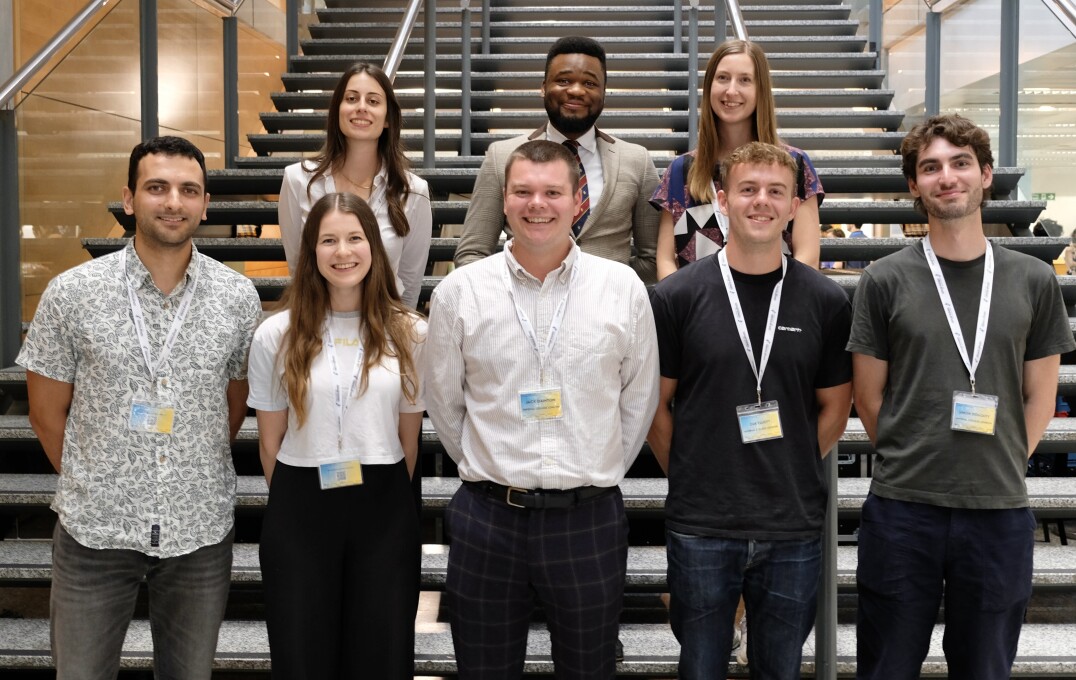
The ICB CDT Student Conference Organising Committee
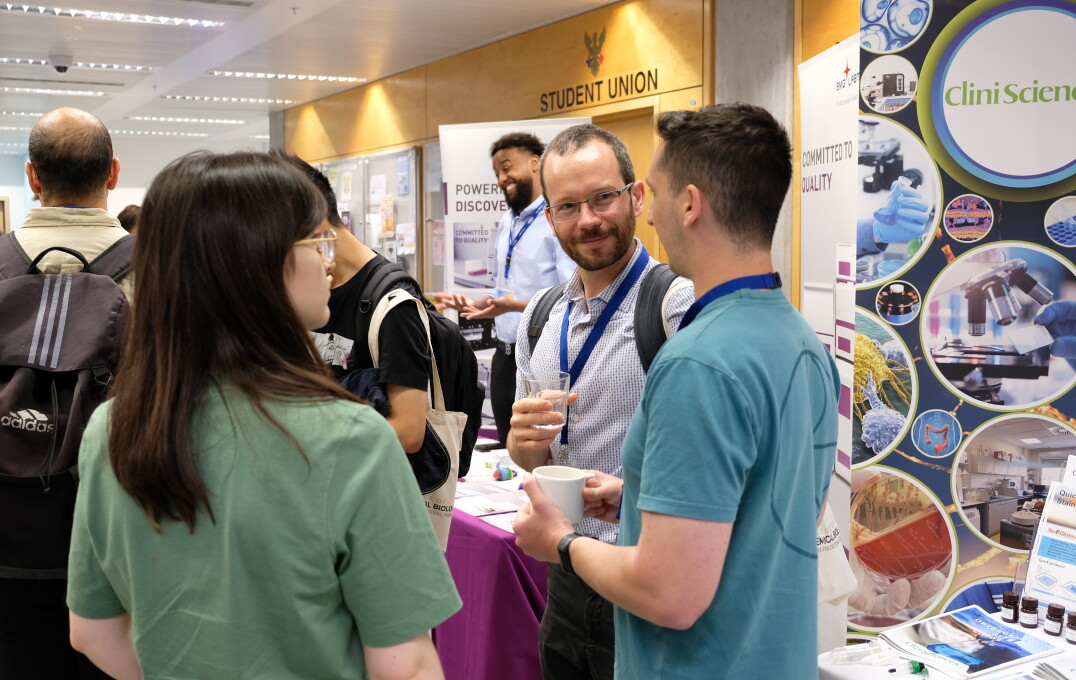
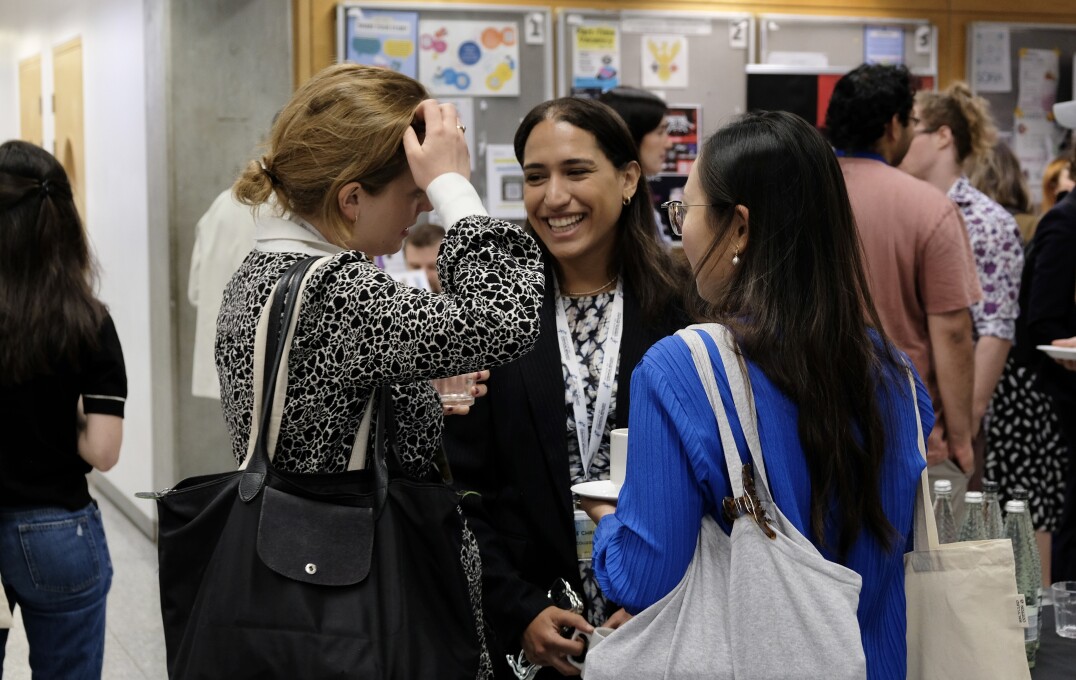
The ICB Symposium provided an excellent networking opportunity.
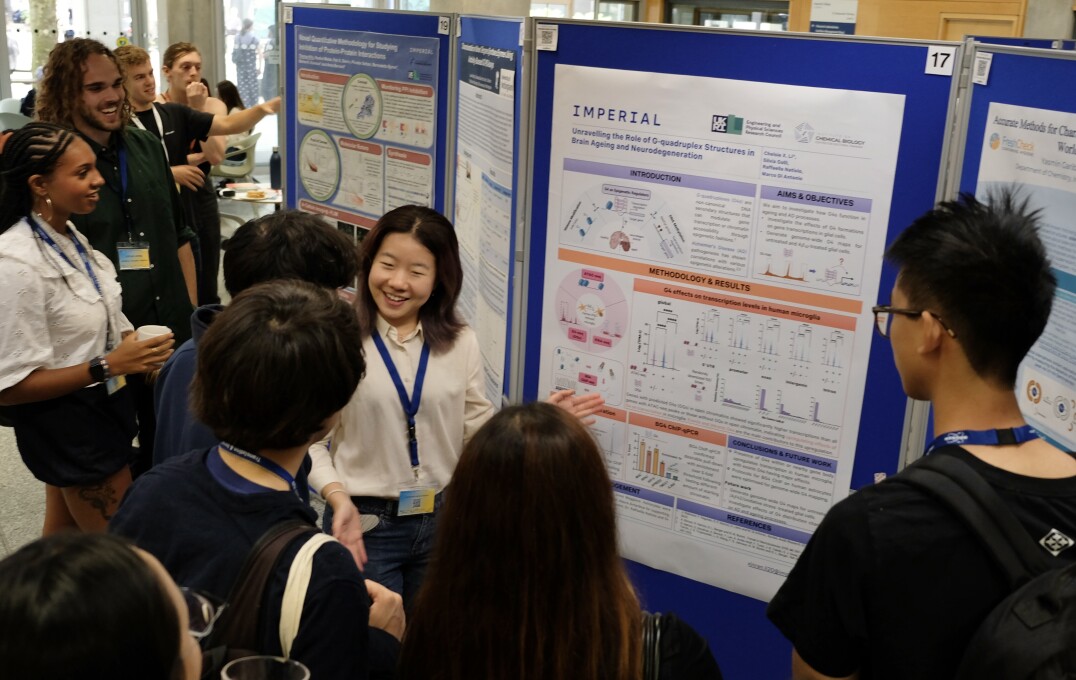
The Symposium featured a vibrant poster session that showcased cutting-edge research from emerging scientists.
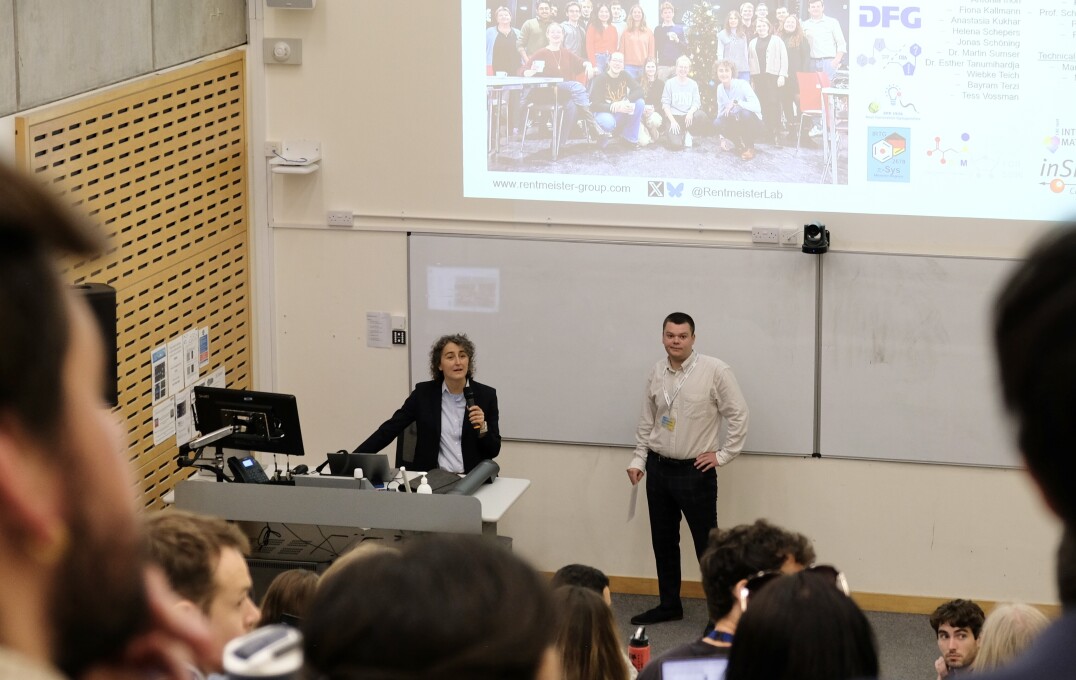
Prof. Andrea Rentmeister delivered an engaging and insightful talk at the ICB Summer Symposium
With themes spanning drug discovery, bioorganic chemistry and interdisciplinary innovation, the day sparked lively discussion and new connections across academia and industry.
Jack Dainton, ICB CDT PhD student and Chair of the Conference Organising Committee, reflected on the event's success: "the conference was hard work to organise, but it was very rewarding seeing it all come together," he said. "It was a great event with plenty of exciting science; the talks from all the speakers, from early career to keynotes were excellent. In particular, Andrea's was really interesting, and she was very entertaining!"
The Symposium featured a vibrant poster session, generously sponsored by Syngenta, that showcased cutting-edge research from emerging scientists. The session provided an excellent platform for attendees to engage directly with researchers and learn about their work in detail. The high quality of the presentations made the judging process particularly challenging; ICB CDT student Angeliki Chatziathanasiou was awarded the Judge's Choice prize for her poster: "Evaluating the binding of inhibitors in the quinone binding site of photosynthetic complex I". Her work, which delves into a fundamental aspect of photosynthesis, impressed the judges with its rigor and potential impact. The People's Choice award went to Dr Ohm Prakash from the Francis Crick Institute for his poster: "Targeting co-translational folding intermediates with cyclic peptides". His research, which explores a novel approach to drug discovery by focusing on the folding process of proteins, resonated with the symposium's attendees, who voted his work the most compelling of the session.
With themes spanning drug discovery, bioorganic chemistry and interdisciplinary innovation, the day sparked lively discussion and new connections across academia and industry. The ICB Summer Symposium solidified its reputation as a key event on the chemical biology calendar, fostering collaboration and innovation at the intersection of academia and industry.
The ICB CDT are very grateful for the sponsorship received for the event from the EPSRC, Syngenta, Cytiva, BMG Labtech, Apollo Scientific, Shimadzu, CliniSciences, Thermo Fisher Scientific and Lab Coats & Lagers: The Podcast.
Article text (excluding photos or graphics) © Imperial College London.
Photos and graphics subject to third party copyright used with permission or © Imperial College London.
Reporter
Emma Pallett
Department of Chemistry
