Imperial celebrates €10million European grant success

Imperial is celebrating significant European grant success with nine highly prestigious funding awards from the European Research Council (ERC).
The awards are among the most competitive grants in science. Imperial’s latest grants cover a range of research areas and aim to solve major challenges such as understanding how the body responds to viruses, developing more sustainable computing and discovering new materials.
In the latest waves of funding, six Imperial researchers have been awarded ERC Starting Grants – €1.5 million awards to support outstanding researchers establish their own teams - and three researchers have won ERC Proof of Concept awards – which enable researchers to take their research to the next stage and explore the commercial or societal potential.
The UK is fully associated to Horizon Europe and Imperial researchers can participate in and lead projects across the programme. Participation in the EU research framework programmes is a springboard to productive partnerships across the world – strengthening the influence and impact of UK research.
Blocking emergent viruses

Dr Laura Sancho-Martin, Department of Infectious Disease, is trying to better understand how the body responds to viruses that jump from animals and how it can stop them establishing infection.
Viruses that jump from animals to humans, like dengue, influenza or SARS-CoV-2, need to first overcome the body’s frontline antiviral defences. For years, these defences were thought to rely on special proteins called interferon-stimulated genes, which are only active after infection has spread.
Dr Sancho-Martin, who is collaborating with Oxford University Clinical Research Unit (OUCRU) in Vietnam on the project ReThink, explained: "My research has identified an unrecognized set of antiviral proteins that are always active in our cells and thus can block viruses before they establish infection. This project will uncover how these antiviral proteins work, and how they can stop viruses from spreading into humans."
Dr Sancho-Martin added: "Being awarded an ERC grant is one of the highest recognitions a scientist can receive. It means that our ideas are seen as bold, innovative, and capable of changing the current dogma of viral immunity.”
Sea-level forecasts and cloud computing

Academics from the Faculty of Engineering won two awards in the latest wave of grants.

Dr Frederick Richards, Department of Earth Science and Engineering, is aiming to improve the accuracy and reliability of sea-level forecasts by uncovering how deep Earth processes affect ice-sheet stability. The Earth2Sea project will explore how mantle flow — slow movements deep beneath Earth’s surface — can influence the rise and fall of sea levels over time.
The project will involve collaborations with researchers in Australia, Canada and the UK. Dr Richards said: “Earth2Sea aims to address this worrying knowledge gap by developing data-driven computational models to reconstruct the history of Earth’s mantle flow from 50 million years ago to the present-day. The end product will be reliable and location-specific sea-level projections that are urgently needed by decision-makers to better protect the 700 million people living along flood-threatened coasts and their critical infrastructure.”
Dr Richards added: “This grant will allow me to double the size of my group so that we can deliver much-needed improvements to sea-level forecasts far faster than would otherwise be possible.”

Dr Marios Kogias, Department of Computing, is aiming to design and implement the next generation of cloud infrastructure.
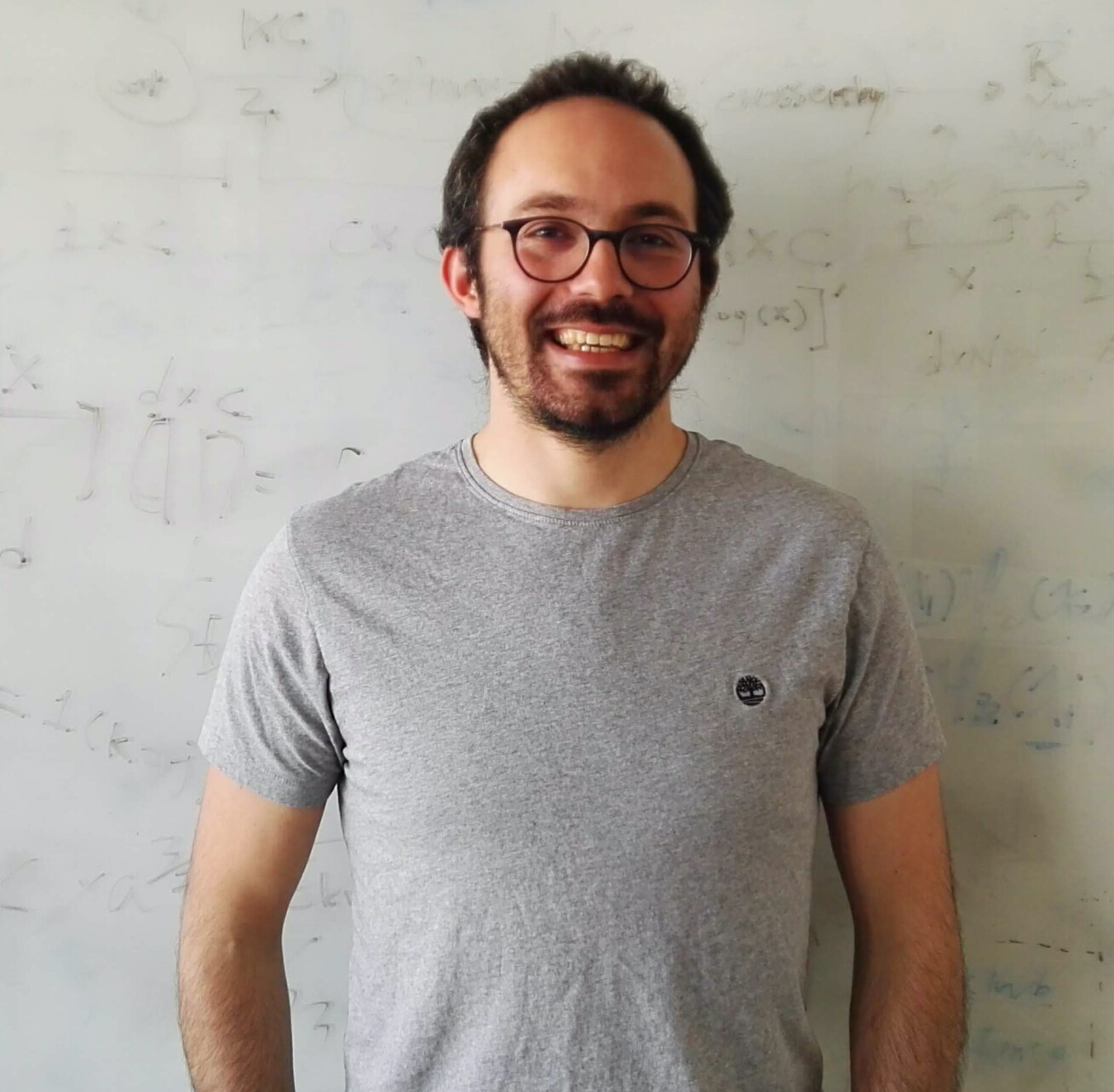
The project, CloudNG, aims to seamlessly encapsulate innovation in datacenters and introduce a novel cloud architecture that offers superior performance, performance predictability, and measurable sustainability.
Dr Kogias said: “This project builds on a line of work that I did during my PhD studies and with my group at Imperial on building microsecond-scale, fault-tolerant infrastructure for the datacenter.”
Dr Kogias added: “Being awarded this grant is a great honour and a huge opportunity to deliver cutting-edge systems research in Europe. Boosting academic research and innovation has become vital to maintain a strong foundation for breakthroughs and to nurture the next generation of ideas, and ERC plays exactly that role.”
Low carbon computers, new materials and plant-microbes
Three academics from the Faculty of Natural Sciences were successful in the latest wave of ERC Starting Grants.

Dr Jack Gartside, Department of Physics, is pioneering a new way to build brain-inspired computers that learn using light instead of electricity — offering a low-carbon alternative to today’s energy-hungry AI systems.
Current light-based systems are fast and efficient but struggle to mimic the complex behaviour of real neurons, which is key to powerful AI.
The project MORPHON will develop tiny chip structures that guide light through intricate paths, mimicking how our eyes process visual information—already beating some advanced AI models.
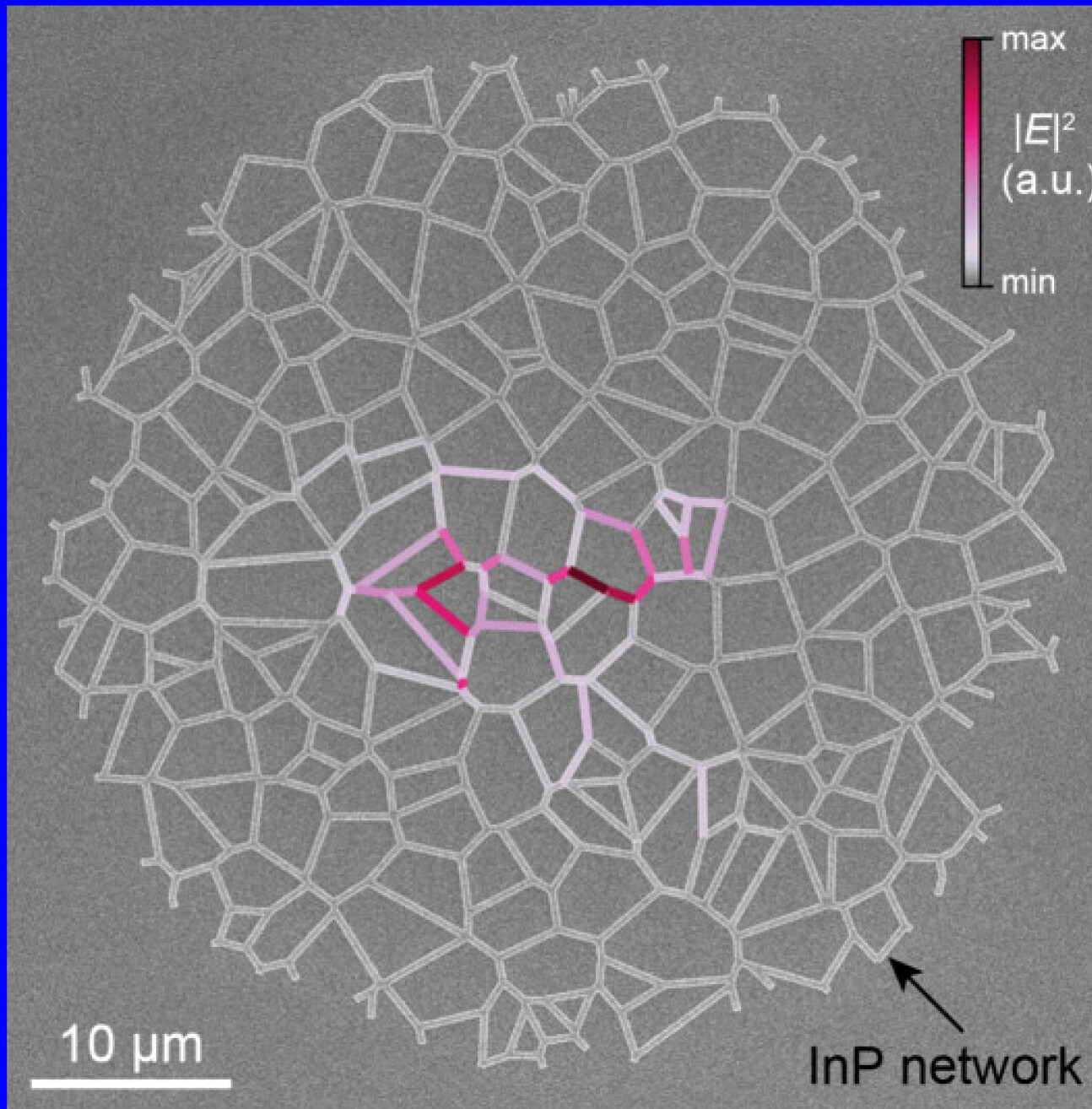 Dr Gartside explained: “We know that biological brains are by far the most efficient computers on Earth, the question is how can we truly create a light-based computer that works on the same powerful blueprints which nature has provided us?
“Over the next five years, we’ll develop these systems to adapt and learn like real brains, helping reduce the soaring and unacceptable threat of AI energy use.”
Dr Gartside said the funding will enable the team to build a bespoke new lab, buy equipment and train new PhD students to become experts in this developing new field.

Dr Alexander Ganose, Chemistry, aims to discover new energy materials by using machine learning to accelerate the modelling of defects in semiconductors. Defects are often the leading cause of efficiency losses in solar absorbers, thermoelectrics, and transparent conductors, but predicting their behaviour is notoriously challenging and computationally expensive.
Emerging machine learning approaches could greatly accelerate this process and help material discovery.
Dr Ganose, who leads the project MATERIALISE, said: “This is an incredibly exciting time for materials science research, with AI and machine learning accelerating the pace of advancements in the field. I am motivated by understanding the impact of defects in energy materials, but this work will provide a blueprint to optimise the behaviour of a wide range of semiconductor devices.”
Dr Jiorgos Kourelis, Department of Life Sciences, is working on the project PREDESIGNX, which is investigating plant-microbe interactions.
Proof of Concept Awards
Three Imperial academics also won ERC Proof of Concept awards earlier this year.
The three successful academics were;
- Dr Huai Ti Lin, Department of Bioengineering. Dr Lin’s research focuses on neuromechanics and studying insects in flight.
- Dr Qilei Song, Department of Chemical Engineering. Dr Song is working on a membrane that separates lithium from salt water by filtering it through tiny pores.
- Professor Bernhard Kainz, Department of Computing. Professor Kainz’s research will advance the early detection of congenital heart disease (CHD) through artificial intelligence. The project, titled CHARMS (Congenital Heart Anomaly Representation and Machine-learning for Screening), will build on Professor Kainz’s ERC Consolidator Grant MIA-NORMAL, which pioneers new algorithms for normative representation learning in medical imaging.
Horizon Europe at Imperial
To find out more about opportunities in Horizon Europe, please get in touch with the Research Office and the Enterprise Research Impact Management Office.
Article supporters
Article text (excluding photos or graphics) © Imperial College London.
Photos and graphics subject to third party copyright used with permission or © Imperial College London.
Reporter
Stephen Johns
Communications Division
