Research, education and leadership: celebrating EEE’s latest staff promotions
by Jane Horrell
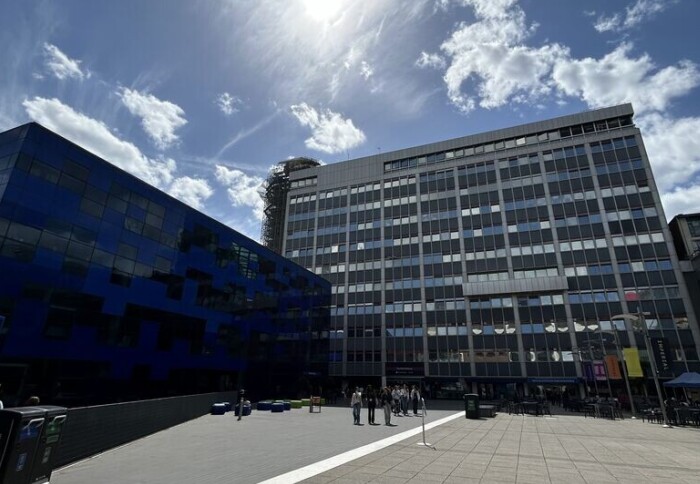
Imperial's 2025 promotions round has seen eight members of EEE staff promoted in both academic and learning and teaching roles.
Yunjie Gu, Chen Qin, and Stefan Vlaski have been promoted to Associate Professor (the new academic title for Senior Lecturer).
Giordano Scarciotti, Oleksiy Sydoruk, and Fei Teng are promoted from Senior Lecturer to Reader / Associate Professor (the new academic title for Reader).
Balarko Chaudhuri has been made Professor of Power Systems, and Zohaib Akhtar becomes Principal Teaching Fellow.
Head of Department Professor Tim Green said: “It is a real privilege to see our colleagues progress through their careers and to celebrate the achievements that have brought them to this point. Each promotion recognises years of dedication to research, education and leadership across Imperial and beyond. We are hugely proud of them and look forward to following their continuing success.”
Find out more about our newly promoted staff:
Dr Zohaib Akhtar
Principal Teaching Fellow
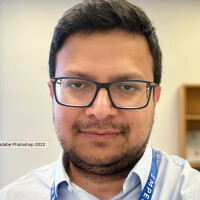 Zohaib joined EEE as a PhD student in power systems and became a Teaching Fellow in 2017.
At undergraduate level, Zohaib leads the core module Analysis and Design of Circuits, combining lectures, problem classes and laboratories to give students a strong foundation in electrical engineering. His teaching philosophy centres on creating an engaging, inclusive and adaptive learning environment that supports diverse learners. He co-designed the Professional Competencies Portfolio for final-year students, which equips them with essential professional skills, and also supervises MEng and MSc student projects in power systems.
Zohaib’s leadership extends across education in the Department: as Digital Learning Lead he has overseen the growth of online teaching tools and digital infrastructure, while as Assessment and Feedback Champion he introduced digital mid-term tests and developed multi-step feedback systems for lab modules. He has also piloted the use of large language models (LLMs) to support GTAs in delivering clearer, student-centred feedback.
Recognised as a Senior Fellow of Advance HE, Zohaib completed an MEd in 2024 specialising in digital learning and assessments. His SFHEA case studies highlighted inclusive teaching and innovative online examination practices during the Covid-19 pandemic. He has also received the Department’s Citizenship and Community Award and the Inspiration Award for his contributions to teaching and student support.
Professor Balarko Chaudhuri FIEEE FIET
Professor of Power Systems
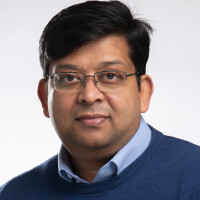 Balarko came to Imperial in 2006 after completing his PhD here and a short period with General Electric.
A Fellow of IEEE and IET, his research tackles the stability of power grids as we move towards 100% renewable generation, designing control and stability tools to make inverter-dominated systems reliable and cost-effective.
He is UK Director of the Global Centre in Electric Power Innovation for a Carbon-Free Society (EPICS) and co-leads workforce development for the Global Power System Transformation consortium, driving efforts to build a diverse and inclusive workforce able to plan and operate zero-carbon electricity systems. This year saw the launch of a multi-million-pound Stability Assurance Program supported by the National Energy System Operator in Great Britain and initiated a strategic collaboration with GE Vernova.
Balarko also contributes strongly to the Department through his teaching and service roles. He leads undergraduate and MSc courses including Stability of Low Carbon Power Systems and HVDC Technology and Control, and has served as Course Director of our MSc in Future Power Networks. Supervising PhD and master’s students has been especially rewarding, with many going on to leadership roles in academia and industry worldwide.
He is also EEE's REF 2029 champion and sits on our PhD scholarship and academic integrity committees.
Dr Yunjie Gu
Associate Professor in Power Systems
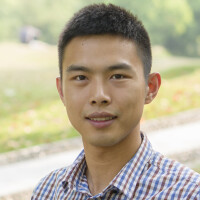 Yunjie joined us in 2016 as a postdoctoral researcher after completing his PhD at Zhejiang University. He was awarded a UKRI Innovation Fellowship in 2018, after a period in Bath he returned to Imperial in 2023 as Lecturer (Assistant Professor).
His research develops enabling technologies for low-carbon energy systems, from power-electronic devices to system analysis for power-electronics-dominated grids. He works closely with industrial partners including NESO, SSEN, GE Vernova and Hitachi Energy, translating research into practical technologies for grid control and monitoring to suppress oscillations and enhance reliability of electricity supply.
Alongside this, Yunjie contributes to teaching and programme leadership. He lectures on power electronics and power systems for undergraduates and teaches MSc modules on stability and control of low-carbon grids. He also redesigned MSc laboratory classes using the “Power Lego” concept, enabling students to construct and control experimental power systems through plug-and-play modules. He is Director of our MSc in Future Power Networks.
Yunjie serves externally as Associate Editor of IEEE Transactions on Emerging and Selected Topics in Industrial Electronics, co-leads a CIGRÉ working group on grid-forming storage, and will chair the Power Electronics, Machines and Drives Conference in 2026. His recent funding includes £2M from NESO and SSEN and a £225k Royal Society grant for collaborative research with the University of Tokyo on the stability market for power grids.
Dr Chen Qin
Associate Professor
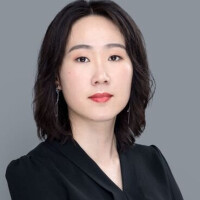 Chen rejoined Imperial as Lecturer (Assistant Professor) in 2022, having completed her PhD here in 2020 before starting her academic career at the University of Edinburgh.
Her research sits at the intersection of machine learning and medical imaging, with a vision to enhance medical imaging workflows through intelligent algorithms that have tangible clinical impact. Her group works on deep generative models for inverse problems and on multimodal learning that integrates imaging and non-imaging data, aiming to create robust, clinically meaningful insights from complex biomedical datasets.
Chen teaches Deep Learning to undergraduates and MSc students, and leads an MSc module on Trustworthy AI in Medical Imaging. She supervises interdisciplinary student projects in collaboration with clinicians, providing students with valuable experience at the interface of research and clinical practice. She also serves on Department committees for system support strategy and for diversity and inclusion, and co-leads the Imperial-X PhD ‘Startupship’ Programme.
Her recognition includes an EPSRC New Investigator Award, an EPSRC Early Career International Collaboration Grant, and Janssen-Imperial Research Collaboration funding. These support projects on accelerated MRI reconstruction, improving the robustness of fMRI in studies with infants, and multimodal biological data. Together, these grants provide a strong foundation for growing her team and pursuing more ambitious ideas at the interface of AI, imaging and biomedical science. Chen is also Associate Editor for Pattern Recognition and the SPIE Journal of Medical Imaging, and serves as an area chair for MICCAI.
Dr Giordano Scarciotti
Associate Professor in Control Theory
 Giordano first came to Imperial as an Erasmus student in 2010, an experience that convinced him he wanted to become a professor here after courses with Professors Richard Vinter and David Angeli left a lasting impression. He returned as a PhD student, was awarded a Junior Research Fellowship in 2016 and appointed Lecturer (Assistant Professor) in 2017.
His research focuses on modelling, analysis and control of complex systems, including complexity reduction methods for large-scale power system models and data-driven control methods where models are not available. In 2023 he received the IEEE Transactions on Control Systems Technology Outstanding Paper Award for work on nonlinear control of wave energy converters, supported by a Royal Society–Royal Irish Academy Cost Share grant.
Giordano has introduced teaching innovations including team-based learning, flipped classrooms and peer assessment. He teaches Control Engineering and Applied Advanced Optimisation and is Director of the MSc in Control and Optimisation, and has been recognised at Imperial with a President's Award for his classroom practice.
Beyond Imperial, he has organised major conferences including the European Control Conference 2022, and he serves in editorial roles for leading journals. His next major role will be General Co-Chair of the European Control Conference in 2029, to be held in Malta. He also runs a YouTube channel on science and engineering topics which has gained international attention.
Dr Oleksiy Sydoruk
Associate Professor
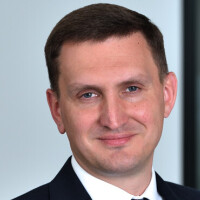 Oleksiy’s Imperial career began in 2009 as a Royal Society Newton International Fellow, later receiving an Imperial Junior Research Fellowship and appointment as a Lecturer (Assistant Professor) in 2014.
His research in applied electromagnetism spans frequencies from HF to optical, with recent work on near-field sensing using NFC principles to power and interrogate sensors.
Oleksiy teaches second-year Electromagnetism, a core undergraduate module that runs across two terms, combining lectures, classes, laboratories and coursework to introduce students to electromagnetic theory and applications. He also contributes to the specialist Sensors module for fourth-year undergraduates and MSc students, where students design and build inductive position sensors.
He is Course Director of the new MSc in Sensor Systems Engineering. The course launches this October and will prepare graduates to meet the growing demand for experts able to design and optimise complete sensor systems across healthcare, energy, manufacturing and AI.
Dr Fei Teng
Reader in Intelligent Energy Systems
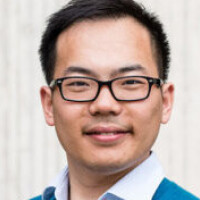 Fei first came to Imperial as an MSc student, continuing through PhD and postdoctoral research before a period as Assistant Professor at École des Mines de Paris. He rejoined the Department as Lecturer (Assistant Professor) in 2017.
His work focuses on transforming decision-making in power systems to enable a secure, reliable and affordable low-carbon future, developing methods to strengthen cyber-resilience and make better use of digital technologies and data.
Fei teaches Electrical Energy Systems for third-year undergraduates and Smart Grid and Data Science for the MSc in Future Power Networks. He supported the creation of the Imperial IEEE Power & Energy Society Student Branch, which won the 2023 IEEE PES High Performing Chapter Award. A memorable milestone was when the first ever paper from his own research group, co-authored with a student, won the Best Paper Award in IEEE Transactions on Power Systems. He has also supervised two PhD theses that won the Best PhD Thesis Awards from IEEE PES and IEEE IAS.
He has served for five years as Education Director at Imperial’s Energy Futures Lab, leading a cross-department MSc in Sustainable Energy Futures, and is co-director of the Imperial-Tsinghua Joint Research Centre on Intelligent Power and Energy Systems.
An Associate Editor of IEEE Transactions on Power Systems and IEEE Power Engineering Letters, Fei has won Best Paper Awards from the former journal, and from IEEE Transactions on Power Electronics. He is the recipient of the Royal Society Kan Tong Po International Fellowship, and the IEEE TC-SDM Early Career Award.
Dr Stefan Vlaski
Associate Professor
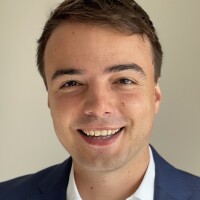
Stefan joined Imperial in 2021 following undergraduate studies at TU Darmstadt, a PhD at UCLA, and a postdoctoral position at EPFL.
His research develops algorithms for distributed optimisation and learning, enabling networks of sensors, devices or vehicles to collectively learn and solve problems more effectively than individual agents.
Stefan is First-Year Organiser for our undergraduate programme and teaches second-year Probability and Statistics, taking students from basic probability theory through to the statistical foundations of machine learning. He also delivers a fourth-year/MSc module on Distributed Optimisation and Learning, closely tied to his research.
Externally, he serves on the IEEE Signal Processing Society Board of Governors, its Technical Committee on Signal Processing Theory and Methods, and as chair of its Young Professionals Committee. He is also an editorial board member of IEEE Transactions on Signal and Information Processing over Networks and Elsevier Signal Processing.
In 2024 he received the Best PhD Award from EURASIP, the European Association for Signal Processing, and has presented keynote talks at international conferences. His work has been supported by EPSRC and DSIT.
Article text (excluding photos or graphics) © Imperial College London.
Photos and graphics subject to third party copyright used with permission or © Imperial College London.
Reporter
Jane Horrell
Department of Electrical and Electronic Engineering
