Mathematics reveals hidden architecture of life using 3D protein structures
by Emily Govan
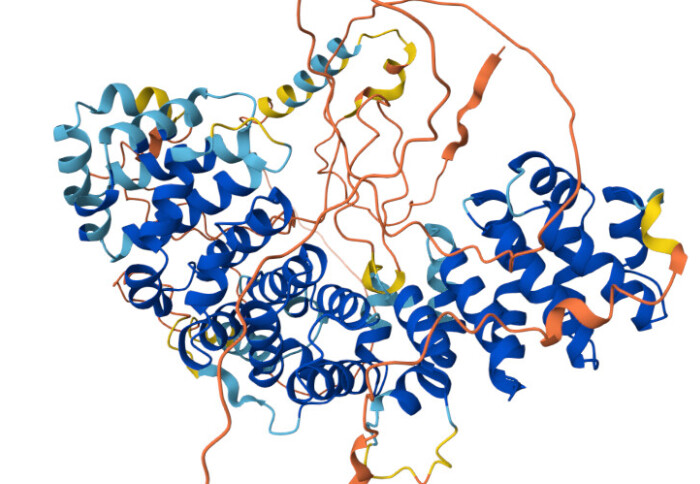
New research has shown that topology, the mathematical study of shapes and spaces, can uncover universal rules governing life at the molecular level.
The international collaboration between systems biologists and mathematicians, which includes the Department of Life Sciences and Centre for Integrative Systems Biology and Bioinformatics, including Professor Alessia David, analysed more than 214 million protein structures generated with the AlphaFold algorithm and revealed mathematical patterns that distinguish simple and complex organisms, adaptations to extreme environments, and regions prone to disease-causing mutations.
The research, led by Professor Michael Stumpf from the University of Melbourne, is published in Nature Communications.
A new way of seeing proteins
Proteins are the building blocks of life, carrying out nearly all cellular functions. Until recently, the focus has been on predicting their structures. Advances like AlphaFold have revolutionised this field, but researchers lacked tools to interpret what those shapes mean across biology.
Professor Stumpf said: ‘Instead of just looking at what proteins are made of, we can now study their actual architecture – the holes, loops, and cavities in their 3D structures. For the first time, we’ve looked not at hundreds, but essentially the entire protein universe.’
The approach uses topological data analysis (TDA) - a mathematical method that examines connectivity and voids within protein shapes. This uncovers features invisible to traditional methods.
Mathematical patterns of life
The study revealed several key principles:
- Complex life forms, such as humans, have more intricate protein architectures than simpler organisms.
- Heat-loving microbes have tighter, more compact proteins than organisms at normal temperatures, allowing them to withstand extremes.
- Disease-linked mutations tend to appear in specific topological regions, enabling prediction of functional weak points.
"Sophisticated mathematical analyses of protein structures can open new frontiers in our understanding of life. The results will be crucial for deciphering how DNA variability leads to adaptation, biodiversity, and disease. They also provide powerful tools for identifying harmful genetic mutations." Professor Alessia David
Professor Stumpf said: ‘These insights give us a mathematical language for life’s complexity, It’s like going from studying individual houses to analysing the architecture of every building on the planet.’
Professor David said ‘This study is a clear example of how sophisticated mathematical analyses of protein structures can open new frontiers in our understanding of life. The results will be crucial for deciphering how DNA variability leads to adaptation, biodiversity, and disease. They also provide powerful tools for identifying harmful genetic mutations.’
Implications for health, biotech and evolution
By quantifying how protein structure encodes biological complexity, the work has wide-ranging implications:
- Medicine: Better prediction of disease-causing variants, drug targets, and personalised treatments.
- Biotechnology: Design of more stable proteins for industry and synthetic biology.
- Evolutionary biology: New insights into how structural complexity evolved across species.
Professor Stumpf said: ‘This is a step change. We can now mathematically quantify what makes complex organisms like humans different from bacteria at the protein level. Biological complexity is written into the geometry of life’s machinery.’
Next steps
The team will now explore how protein topology connects to specific biological functions, drug design, and diagnostic tools. They also plan to apply their methods to evolutionary studies, tracing how complexity arose at the molecular level.
“This isn’t just academic curiosity,” added Professor Stumpf. “It provides a universal blueprint for understanding, diagnosing, and engineering life.”
Topological data analysis of protein structures reveals universal principles of molecular architecture by M. Stumpf, A. David, C. D. Madsen, A. Barbensi, S. Y. Zhang, L. Ham, and D. E. V. Pires is published in Nature Communications.
Article text (excluding photos or graphics) © Imperial College London.
Photos and graphics subject to third party copyright used with permission or © Imperial College London.
Reporter
Emily Govan
Department of Life Sciences
