RSC CBIC Leadership Retreat Empowers Next-Gen Chemical Biologists
by Emma Pallett

RSC CBIC delegates
The 2nd RSC CBIC Leadership Retreat for ECRs sponsored by the ICB left a cohort of scientists further supported in their independent research careers.
Held over three days at 58 Princes Gate, the 2nd Royal Society of Chemistry (RSC) Chemistry Biology Interface Community (CBIC) Leadership Retreat for Early Career Researchers (ECRs) concluded on Friday, 12th September, and successfully blended high-level scientific exchange with crucial leadership and career development training.
The Royal Society of Chemistry event, sponsored by the Institute of Chemical Biology, gathered ECRs from across UK academia and industy to discuss the future of their interdisciplinary field, foster new collaborative networks, and receive mentorship from senior academic and industry leaders.
The retreat kicked off with a dedicated focus on Research. Attendees showcased the breadth of chemical biology with fast-paced, 3-minute research presentations covering topics from advanced targeted protein degradation techniques to innovative biocatalysis for sustainable chemistry.
The day culminated in a Plenary Talk delivered by Professor Ed Tate GSK Chair in Chemical Biology at Imperial College London / Francis Crick Institute). Professor Tate shared insights into his career journey and discussed the future of chemical probe development and chemical proteomics, prompting an engaging discussion session.
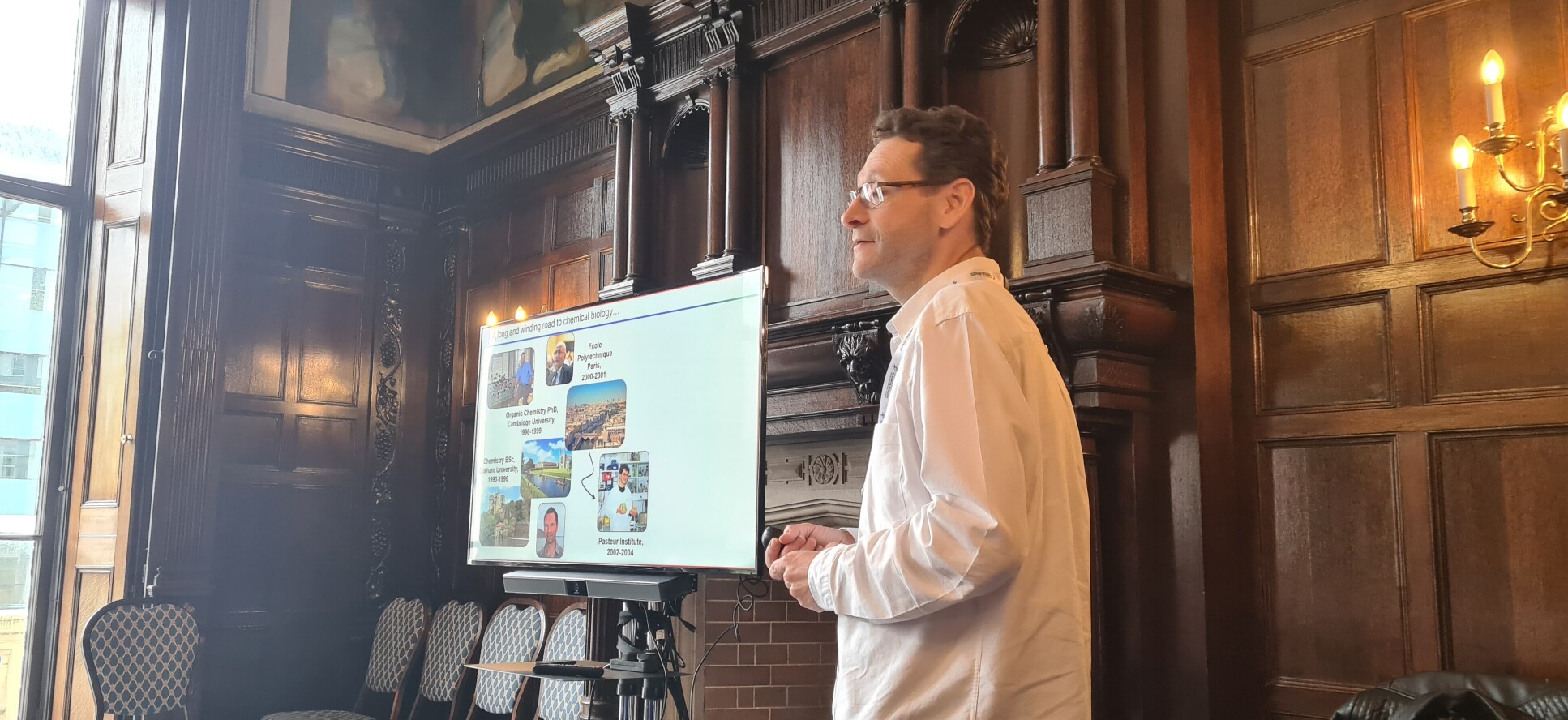
The mid-point of the retreat shifted the focus entirely to Leadership. Facilitated by experienced coach and consultant Dr. Elizabeth Adams (Scafell Coaching Ltd.), the day was structured around intensive workshops aimed at developing personal and professional resilience.
I would like to thank the chemical biology community and the RSC for their support for this event. I am exceptionally grateful to Anna Barnard, Andrew Truman and Gavin Miller, to Imperial College London and to all those who have worked together to develop, champion and coordinate this exciting event. Prof Mark Bradley Queen Mary, University of London, President of the RSC Chemical Biology Interface Community
Participants engaged in sessions covering essential skills such as strategic career planning, effective grant writing for competitive Fellowships, and critical reflections on advancing research culture. A particularly resonant topic was the implementation and strategic use of narrative CVs, which Dr. Adams guided the ECRs in mastering to better communicate the impact of their diverse research journeys.
The day concluded with a Plenary Talk given by Dr. Nadia Luheshi, Executive Director and Global Project Leader in Oncology R&D at AstraZeneca.
Dr. Luheshi's talk, titled "Discovery and development of new therapies for cancer patients," provided a strategic overview of the oncology pipeline, discussing how fundamental chemical biology research translates into life-saving therapies. Her session emphasized the importance of intellectual agility and strong communication skills when building successful, mutually beneficial collaborations between academic labs and pharmaceutical companies.
The final day concentrated on Innovation & collaboration, with a day of “chalk-and-talk” sessions described as “really good fun!” by delegates.
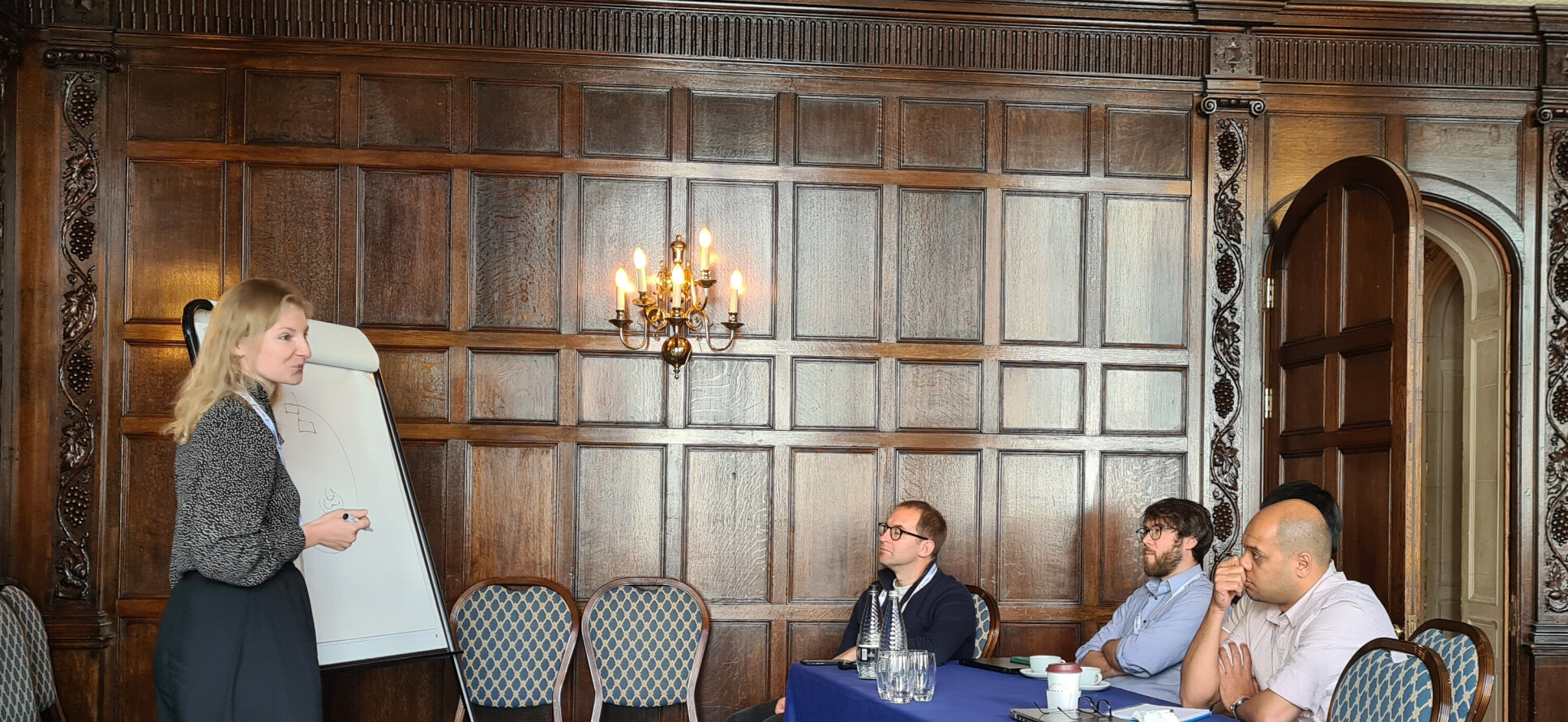
The retreat’s format—which included a welcome dinner dedicated informal networking slots—was highly successful in achieving the organisers' goal of fostering community.
The ICB was delighted to be given the opportunity to support the CBIC retreat, and looks forward to continuing to support these researchers as they continue in their career path, confirming the retreat as a critical stepping stone in the careers of future scientific leaders.
Prof Mark Bradley, Queen Mary, University of London, President of the RSC Chemical Biology Interface Community, had this message of the RSC CBIC Leadership Retreat: “I would like to thank the chemical biology community and the RSC for their support for this event. I am exceptionally grateful to Anna Barnard, Andrew Truman and Gavin Miller, to Imperial College London and to all those who have worked together to develop, champion and coordinate this exciting event.”
Article text (excluding photos or graphics) © Imperial College London.
Photos and graphics subject to third party copyright used with permission or © Imperial College London.
Reporter
Emma Pallett
Department of Chemistry