MYC deregulation makes cancer cells vulnerable to NMT inhibitors
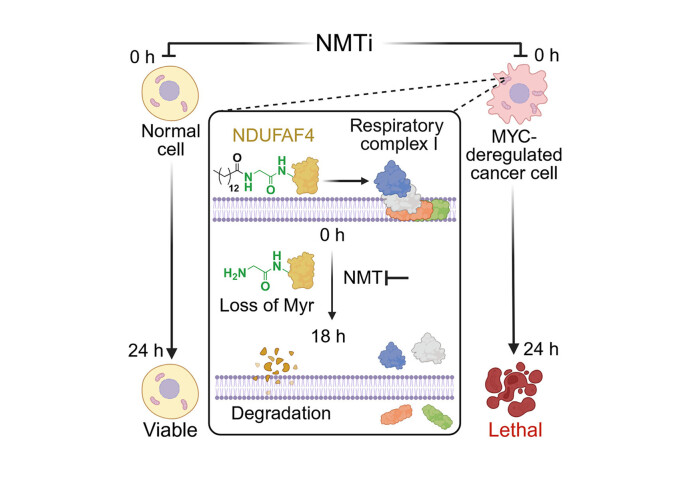
A compelling rationale to target NMT in cancer in our latest paper "MYC deregulation sensitizes cancer cells to N-myristoyltransferase inhibition"
MYC is deregulated in >50% of cancers, and NMT inhibition provides the first example of targeting a co-translational modification in cancers driven by this critical oncogene. Screening 100s of cancer cell lines led us to identify MYC deregulation as a key factor sensitising cancers to NMT inhibitors through synergistic impacts on protein turnover and metabolic stress.
This work, published in Cell Reports, adds another mechanism to the growing range of reasons to target NMT in diverse cancers, in addition to established roles in growth factor signalling, maintaining senescence, and supressing ferroptosis.
Myricx Bio is now on the path to clinical trials for the first NMT inhibitor ADCs, targeting the potent pharmacology of NMT to benefit the large number of people with cancer who currently have limited treatment options.
Many thanks to Cancer Research UK (CRUK) for their support of our work, and to all the collaborators and scientists who joined us to complete this journey at Imperial College London and The Francis Crick Institute, with leading contributions from Gregor Lueg, James Zhang, Andrii Gorelik, Monica Faronato, Wouter Kallemeijn, Francesco Falciani, Josephine Walton, Evon Poon, Roberto Solari, Robin Carr, Andy Bell, Louis Chesler, and Dinis Calado.
Article supporters
Article text (excluding photos or graphics) © Imperial College London.
Photos and graphics subject to third party copyright used with permission or © Imperial College London.
Reporter
Edward Bartlett
Department of Chemistry
