Reviewing the climate in 2010

Image supplied by: xedos4/FreeDigitalPhotos.net
The US National Climatic Data Center of NOAA (National Oceanic and Atmospheric Administration) has released its preliminary global analysis of the weather and climate in 2010.
See also:
Data indicates a continuing trend of global warming
Preliminary findings of the National Oceanic and Atmospheric Administration (NOAA) show that 2010 was the warmest period on record, tied with 2005:
- Combined global land and ocean surface temperatures were 0.62°C above the 20th century average of 13.9°C.
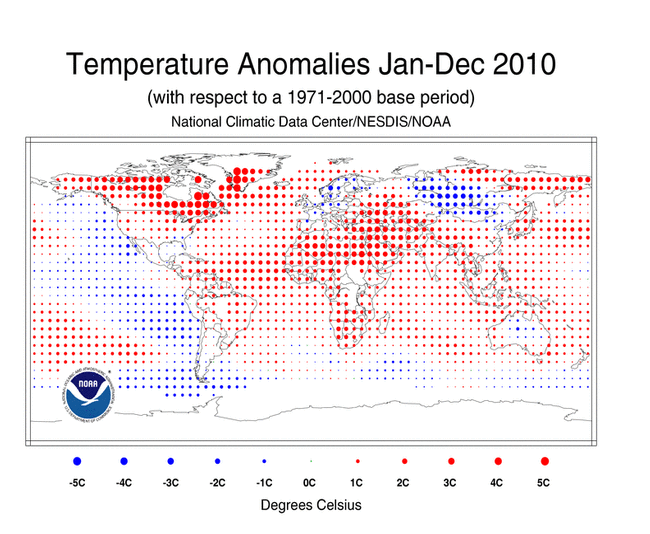
January–December 2010 Blended Land and Sea temperatures
- The Northern Hemisphere's combined global land and ocean surface temperature was the warmest on record, at 0.73°C above the 20th century average. In comparison the Southern Hemisphere was the sixth warmest year on record, at 0.51°C above the 20th century average.
- Global land surface temperature's were the second warmest on record (tied with 2005), at 0.96°C above the 20th century average. The warmest period on record occurred in 2007, at 0.99°C above the 20th century average.
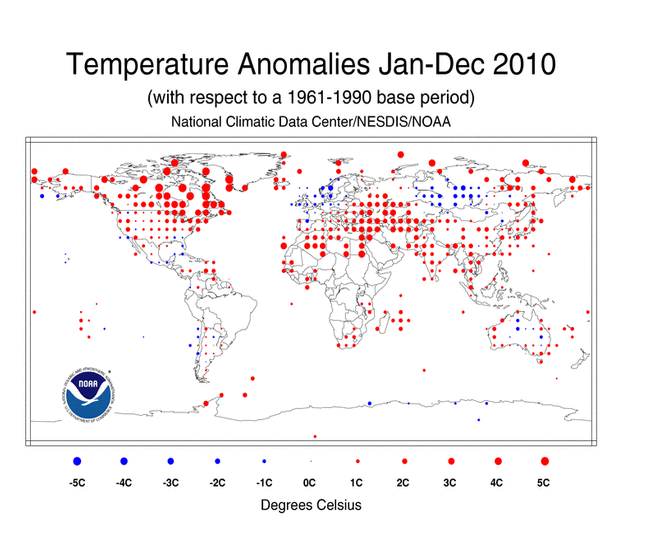
January–December 2010 Land Surface Temperature
- Global ocean surface temperature's were the third warmest on record (tied with 2005), at 0.49°C above the 20th century average.
- 2010 also saw a dramatic shift in the El Niño Southern Oscillation, which influences temperature and precipitation patterns around the world. A moderate-to-strong El Niño at the beginning of the year transitioned to La Niña conditions by July. At the end of November, La Niña was moderate-to-strong.
This information is an extract from the NOAA National Climatic Data Center, State of the Climate: Global Analysis for December 2010, published online January 2011.
Article text (excluding photos or graphics) © Imperial College London.
Photos and graphics subject to third party copyright used with permission or © Imperial College London.
Reporter
Press Office
Communications and Public Affairs
- Email: press.office@imperial.ac.uk