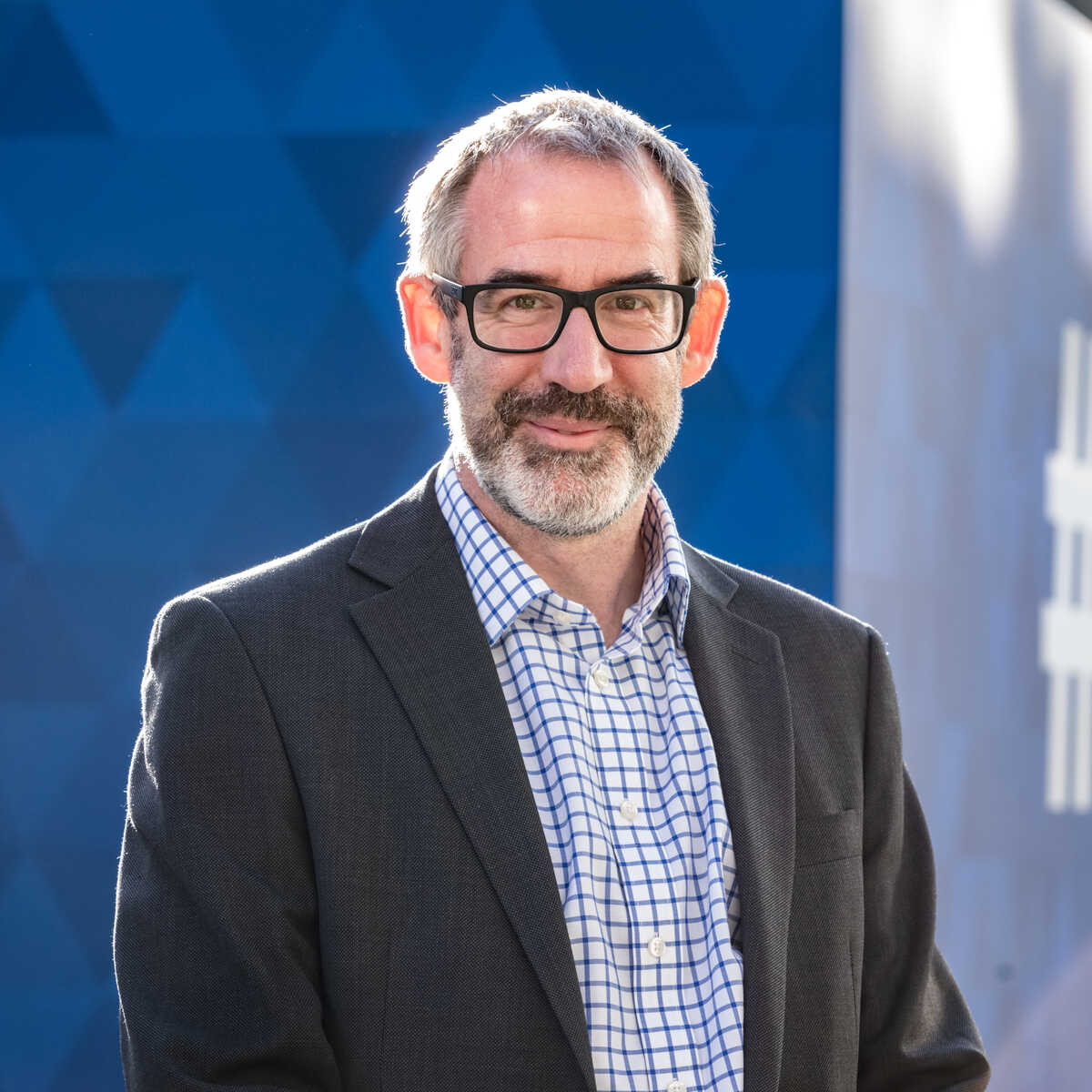
As the International Year of Quantum draws to a close, Provost and Deputy President Professor Peter Haynes celebrates Imperial’s efforts in advancing quantum research, training, and enterprise throughout 2025.
To celebrate a century since quantum mechanics was first described, the United Nations declared 2025 as the International Year of Quantum Science and Technology (IYQ).
The transformative power of quantum technologies is undeniable – and our world-class talent, facilities, partnerships and vision means Imperial is uniquely placed to lead this revolution as we begin to harness quantum’s vast potential.
Looking back over the past 12 months, it is thrilling to see Imperial’s impact on the field – through our Centre for Quantum Science, Engineering and Technology (QuEST) and beyond: delivering scientific breakthroughs, international collaborations and industry engagement.
.jpg)
Professor Peter Haynes, Provost of Imperial College London
Breakthrough science
- Imperial's Quantum Measurement Lab, led by Professor Michael Vanner, demonstrated a counter-intuitive world-first in March: how to cool objects by detecting an absence of light. This fundamental discovery may one day be used to cool quantum systems at the heart of quantum computers and networks.
Driving impact
- Imperial teamed up with UCL and King’s College London to launch the London Quantum Cluster (LQC) in May, backed by the Greater London Authority. It aims to be a unifying force for quantum innovation in the capital - uniting research, innovation, investment and diverse talent across London to accelerate the quantum economy. Imperial is leading on initiatives including a quantum-for-health workshop with Innovate UK, and an investor masterclass highlighting the potential of quantum startups.
- PsiQuantum – an international company co-founded by Imperial academic Professor Terry Rudolph – raised $1 billion in its September funding round at a valuation of $7 billion. Meanwhile, the UK’s National Quantum Showcase welcomed over 2,500 attendees, including demonstrators from Imperial’s quantum community.
- QuEST hosted a quantum for healthcare workshop at our Hammersmith Hospital campus in November, demonstrating new opportunities to Department of Health and Social Care officials, including quantum sensing for medical applications.
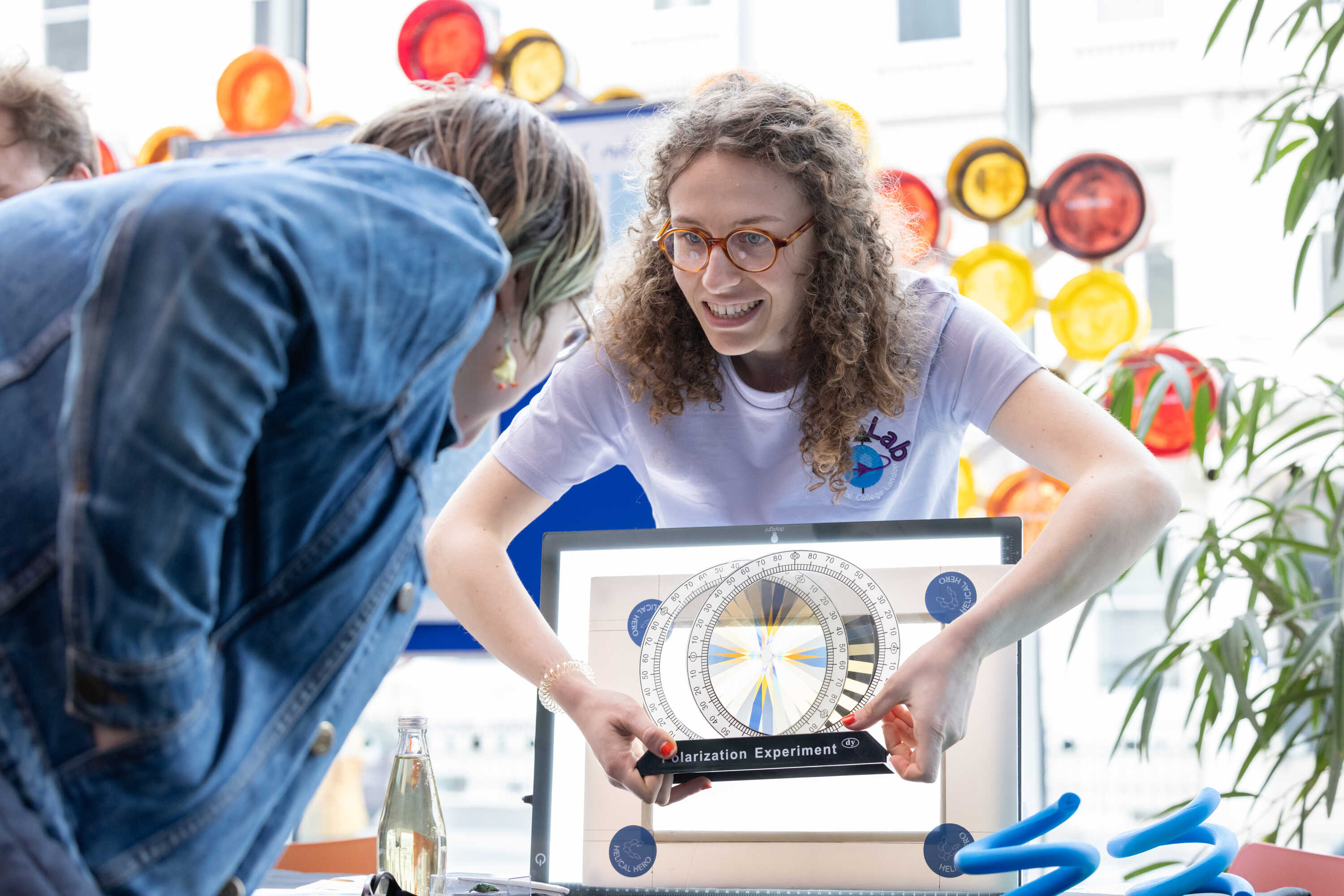
Researchers showcased the latest developments in quantum science at Imperial's South Kensington Campus for World Quantum Day
Policy engagement and skills
- QuEST and Imperial Policy Forum launched Quantum Fundamentals, an eight-week quantum training course for UK government officials, which I was delighted to contribute to. Over 15 government departments joined in April, with policymakers wanting to better understand quantum science and the quantum ecosystem, highlighting the UK Government’s ongoing commitment to the sector.
- Imperial’s then-Provost Professor Ian Walmsley and Assistant Professor in Functional Materials Dr Jess Wade were appointed to the UK Quantum Strategic Advisory Board in May – supporting the UK Government quantum drive. Dr Wade also served on the Quantum Skills Taskforce, whose report in April advocated for more quantum opportunities for engineers.
- Training future quantum leaders is a key goal, so it was wonderful to see a student-led workshop to support postgraduate students exploring quantum careers in October. Two of our quantum PhD researchers, Josephine Hunout and Shey Dylan Lovett, worked with QuEST to map the UK’s quantum job market.
- We’re launching new modules and courses; from Materials for Quantum and Semiconductor Technologies to an interdisciplinary Quantum i-Explore, and a new MSc in Sensor Systems Engineering.
- In October our second Quantum Fundamentals course welcomed another enthusiastic group of civil servants temporarily swapping Whitehall for South Kensington.
- Dr Jess Wade gave evidence before the House of Commons Science, Innovation and Technology Committee in December, where she discussed the UK quantum ecosystem and Imperial’s research, education, advocacy and leadership.
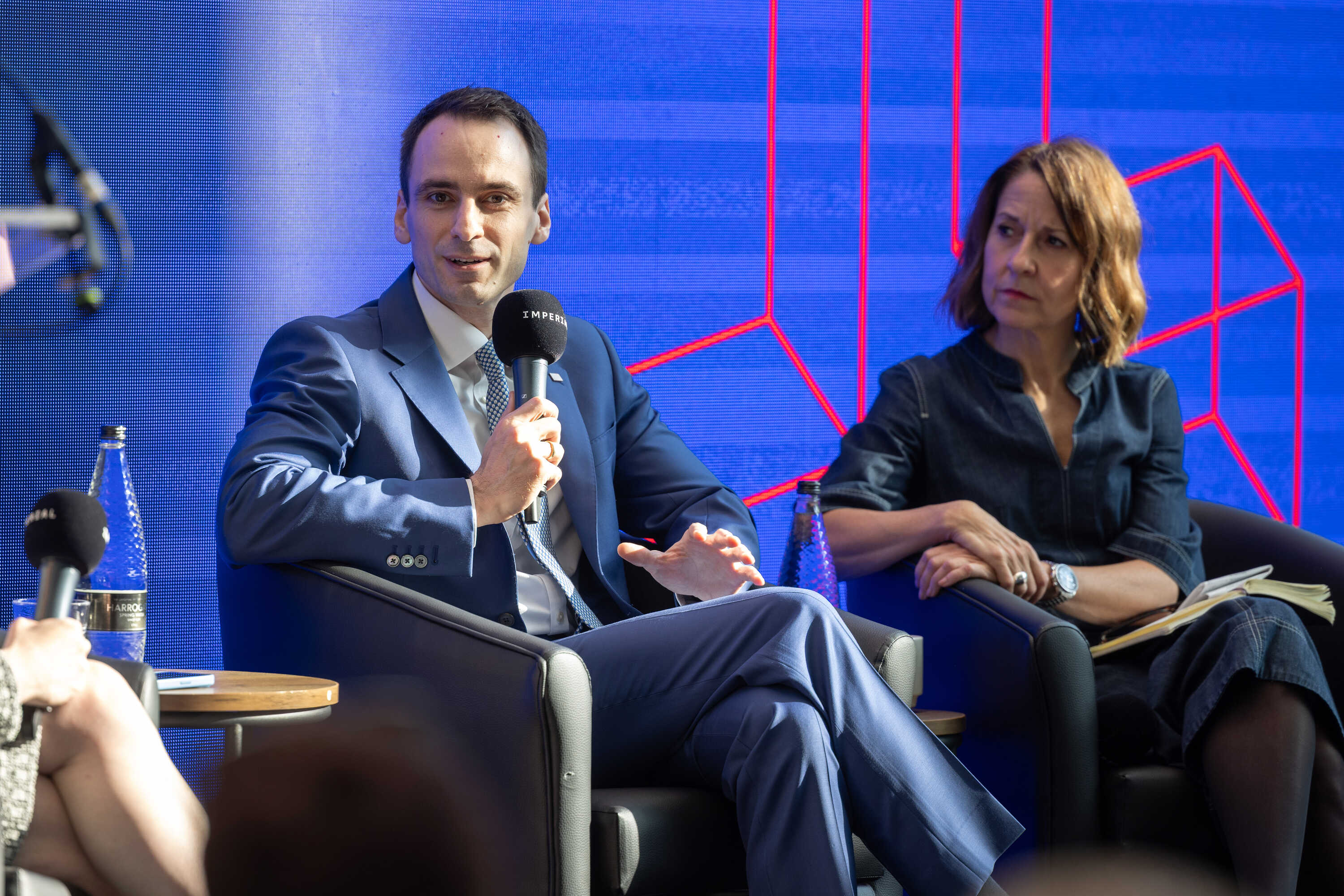
US Science Advisor Michael Kratsios and UK Science Secretary Liz Kendall speaking at Imperial for an event on the UK – US Tech Prosperity Deal
Global connections
- Our ICoNYCh transatlantic quantum collaboration – a UK/US collaboration funded by the Department for Science, Innovation and Technology - saw QuEST researchers visiting the Chicago Quantum Exchange in March, where they met quantum innovators, and touring the Superconducting Quantum Materials and Systems Center (SQMS) at Fermilab. Imperial then hosted an inspiring workshop uniting quantum experts from London, New York, and Chicago - aligning with the ambitions of the UK-US Tech Prosperity Deal.
- International conversations continued in May, with the Danish Science Minister visiting Imperial to explore closer quantum ties, while a South African delegation visited QuEST to identify potential partnerships. Former Provost Professor Ian Walmsley and Dr Jess Wade took part in the IYQ celebrations in Ghana - the AIMS Quantathon and the Africa Regional Conference and Exhibition on Education and Skills Development - where we’ve recently launched one of our Global Hubs.
- At the Global Fintech Fest in Mumbai, Prime Minister Sir Keir Starmer and Indian Prime Minister Narendra Modi discussed the India-UK Technology Security Initiative, with quantum as a key pillar. Ahead of the September event, we showcased a research collaboration between Imperial and the Indian Institute of Technology Bombay using quantum computing and biotech to help farmers grow climate-resilient crops.
- Back in London, Imperial welcomed Liz Kendall, Secretary of State for Science, Innovation and Technology, Dr Peter Kyle, Secretary of State for Business and Trade and Michael Kratsios, Director, White House Office of Science and Technology Policy, who discussed the UK – US Tech Prosperity Deal signed in September, promoting transatlantic quantum partnerships. QuEST also took part in the NYC Quantum Summit and SPIE’s Quantum Catalyst in Colorado, identifying new opportunities for collaboration and enterprise.
- The year closed with Imperial Global India hosting a roundtable on emerging technologies at the Bengaluru Tech Summit in November. It followed Singapore’s Senior Minister Lee Hsien Loong visiting some of Imperial's quantum facilities in October, including Dr Joseph Cotter's quantum inertial sensing lab, which develops future navigation systems that don’t rely on satellites, with the tech already trialled on a Navy ship around the Arctic Circle.
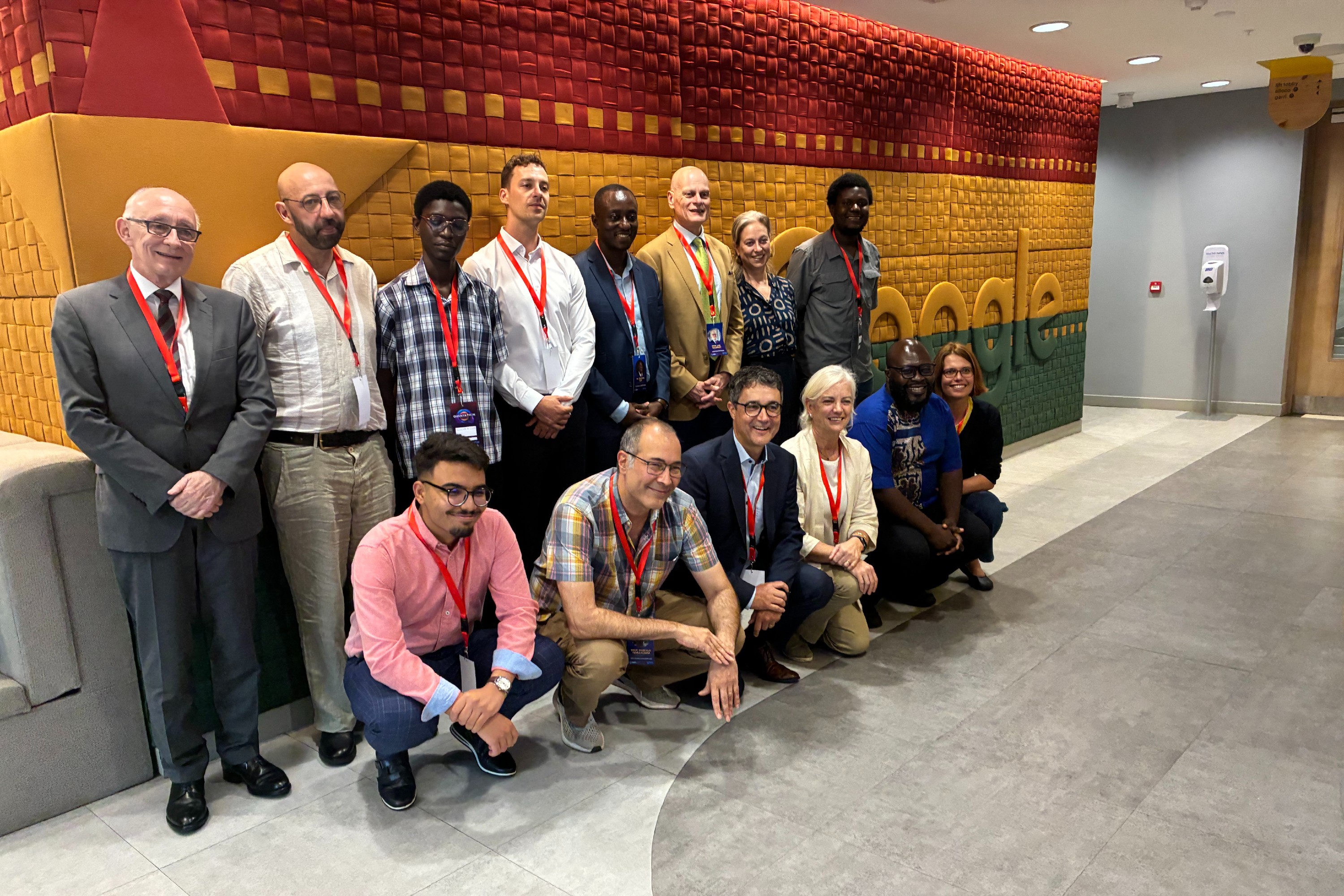
Former Provost Professor Ian Walmsley joined the AIMS Quantathon in Accra, Ghana, this year
Quantum power to the people - engaging the public
- IYQ kicked off with members of QuEST showcasing their latest findings (and discussing their favourite bizarre quantum phenomena) at the Weird Science themed Imperial Lates. Hot on the heels of the Weird Lates, we partnered with the London Centre for Nanotechnology for the largest UK celebration of World Quantum Day on April 14th (the reduced Planck’s constant is 4.14 eV fs). Through talks, poetry, live demos and quantum-inspired dance, QuEST made quantum come to life.
- At the Great Exhibition Road Festival in June, Imperial created a Quantum Zone, including artworks from Imperial’s atom interferometry experiments by Studio Above and Below, an interactive Schrödinger equation by Imperial graduate and artist Robin Baumgarten, a children’s quantum dance party with our neighbours at the Goethe Institut, and a discussion on Art and Quantum at the V&A.
- EntangleCam – an entanglement-based quantum camera Imperial researchers are developing to improve cancer diagnosis – was centre stage at the Royal Society’s Summer Science Exhibition in July.
- We explored the quantum nature of light at Imperial’s Diwali-themed Lates in October, and quantum clocks – which keep time by measuring the reliable vibrations (or ticks) of atoms – at the Imperial Lates on Time in November.
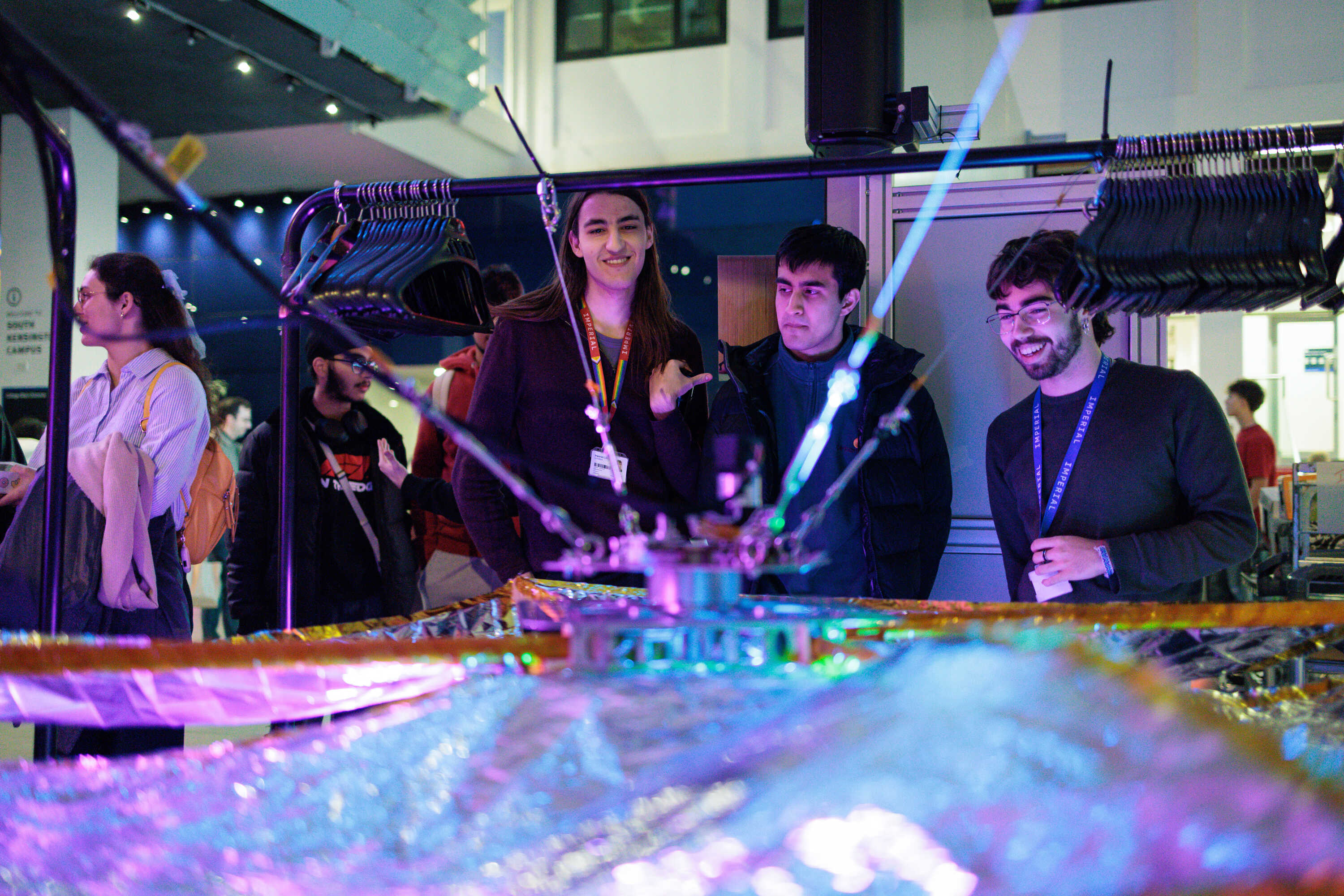
The Imperial Lates 'Weird Science' event at Imperial in February 2025
The future is bright, the future is quantum
Throughout the International Year of Quantum, Imperial's contributions have spanned elegant fundamental quantum science, practical demonstrations of “real world” quantum technologies, and meaningful engagement with investors, policymakers and the public.
As quantum technologies reshape our world, Imperial – and its brilliant community - will remain at the forefront of these life-changing discoveries.

/prod01/channel_4/imperial-news/media/images/landscape-3000X2000/250414_DG_QuantumDay2025-045.jpg)