Campus and community
by Cleo Bowen
/prod01/channel_4/imperial-news/media/news-images/3000X2000-main-article-images/Talk-3k2k-(1).jpg)
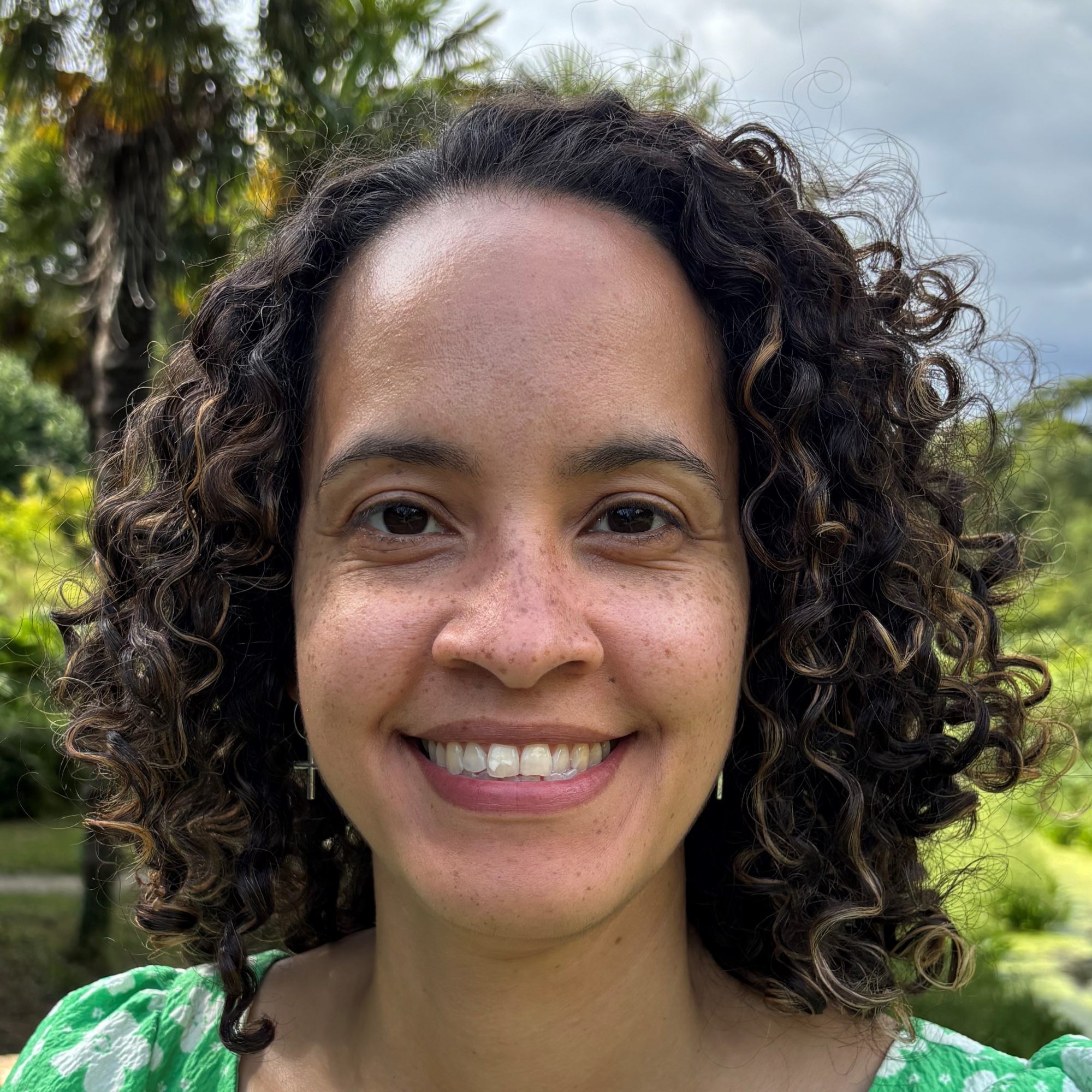
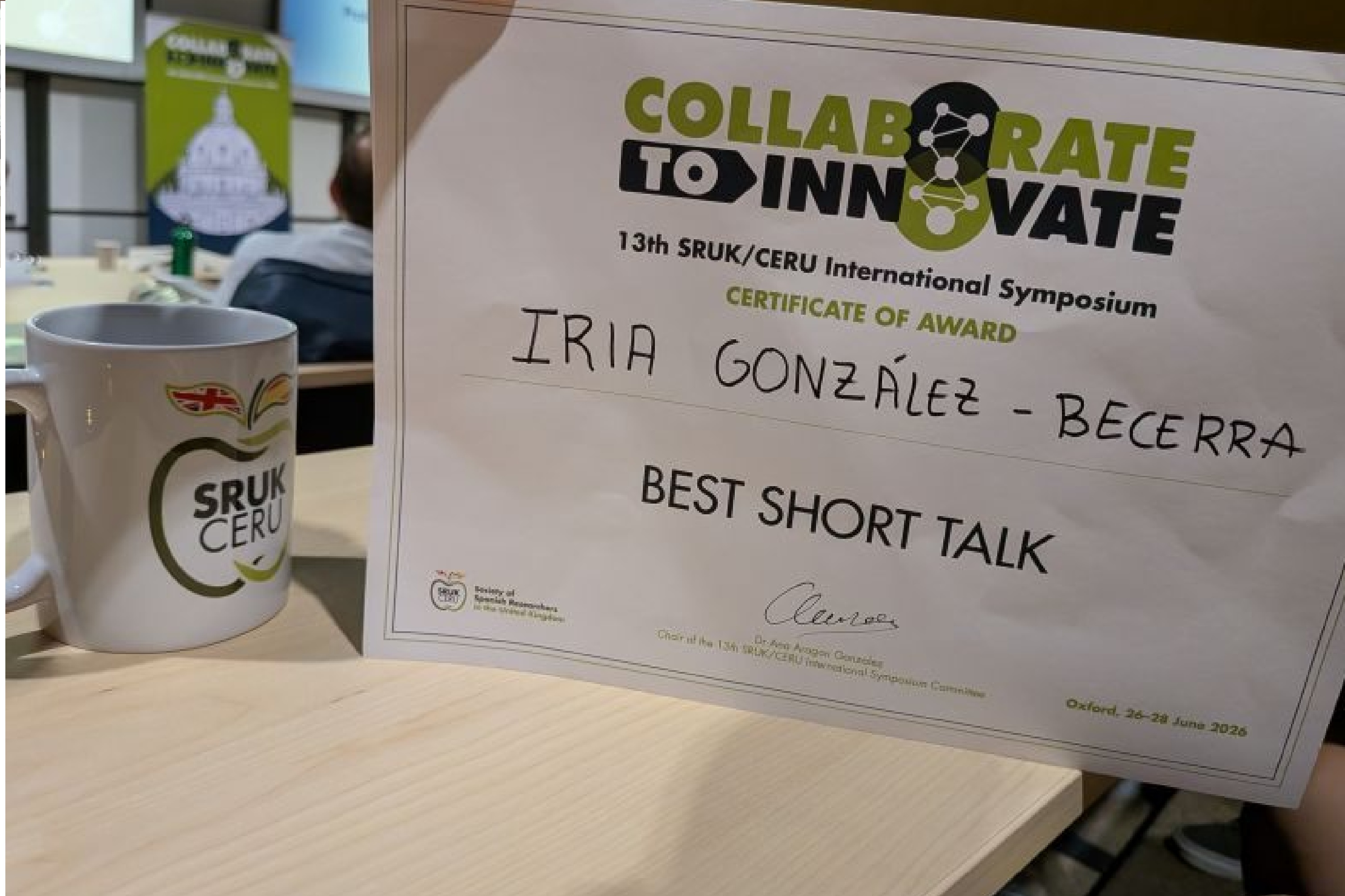
Dr Iria Gonzalez-Becerra awarded Best Short Talk at the CERU International Symposium 2026
'Collaborate to Innovate' was the theme of the 13th SRUK/CERU International Symposium, held in the Oxford Museum of Natural History this June.
Dr Iria Gonzalez-Becerra, Languages Field Leader, presented "Raising the Profile of Spanish as a Language for Science, One Student at a Time" at the event.
The talk posed an increasingly pressing question: in a world where English operates as what Swales (1997) memorably called a "Tyrannosaurus Rex" - a dominant force consuming the linguistic diversity of scientific communication - why would STEM undergraduates invest in other languages, and why should their institutions care?
Drawing on two institutional studies conducted at the Centre for Languages, Culture & Communication at Imperial College London, Iria contextualised Imperial's Institution-Wide Language Programme (IWLP), identifying trends in student motivations and the value of language learning for a STEMB-focused education. She argued that IWLPs are instrumental in absorbing the "lost" Spanish learner pipeline in the UK – students who wish to continue Spanish but have chosen STEM careers over other degrees – and that developing 'global graduateness' is essential in a VUCA and BANI world where intercultural agility is no longer optional.
Joining Dr Gonzalez-Becerra for the talk, as a guest, was Imperial's Dr Paula Ordonez Suarez, representing the university's recently formed Latin-America STEMB Network. Paula demonstrated how collaborative ecologies such as the STEMB Network or SRUK can be key to advocate for greater diversity in the world of Science.
Iria argued that CLCC Languages provision represents a key contribution to Imperial College London's Science for Humanity strategy. This is precisely because not all of humanity speaks English, and modules create the conditions in which English-speaking STEM students can begin to imagine themselves as part of a plurilingual, and thus richer, scientific world. She concluded with a call for action: language teachers, cultural bodies, and scientific networks must work together to ensure that science is understood as culture, and that the right to do science with an accent – in Spanish, in all its Spanishes – is protected, amplified, and heard.
The talk, which Dr Gonzalez-Becerra posted about on LinkedIn, received the CERU International Symposium's Best Short Talk award, as voted for by the symposium delegates.
Article text (excluding photos or graphics) © Imperial College London.
Photos and graphics subject to third party copyright used with permission or © Imperial College London.
Administration/Non-faculty departments