
Health
by Ian Mundell
/prod01/channel_4/imperial-news/media/news-images/3000X2000-main-article-images/2026-01-21-sleeping-woman-with-CPAP-mask.jpg)
Imperial researchers are here to help sleep apnoea patients take to, and stick with, their new continuous positive airway pressure (CPAP) machines, necessary to manage their condition.
Obstructive sleep apnoea, in which patients have brief pauses in breathing during sleep, is a potentially serious condition that can have life-threatening consequences if untreated. The most common way to manage the condition is for patients to use a continuous positive airway pressure (CPAP) machine while they sleep.
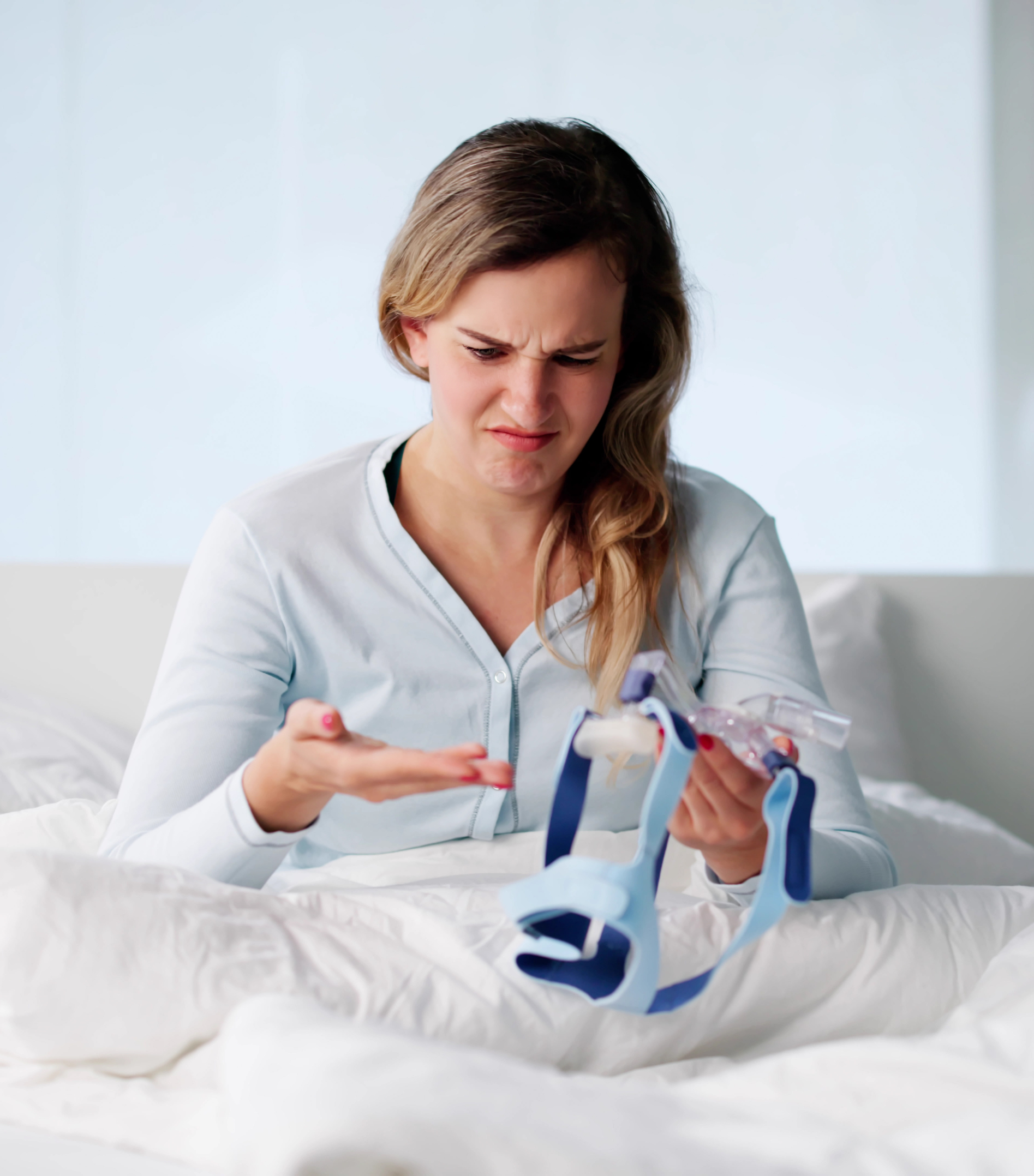
A mask is worn over the nose or nose and mouth, connected to a pump that creates air at a low pressure that keeps their airways open throughout the night. This works, but patients frequently fail to use CPAP machines adequately, due to the discomfort they cause and beliefs that sabotage their commitment, for example the mistaken idea that sleep apnoea symptoms have other causes.
We’re churning out CPAP machines, but patients aren’t being supported in the right way to use them, and as a result are still having heart attacks and strokes as consequences of the condition. Dr Amanda Sathyapala National Heart and Lung Institute
A previous multi-centre study by researchers at the National Heart and Lung Institute (NHLI) at Imperial found that only 38% of people prescribed CPAP machines for sleep apnoea use them for the relatively short periods considered necessary for patients to be considered adherent just three months after starting treatment.
“We’re churning out CPAP machines, but patients aren’t being supported in the right way to use them, and as a result are still having heart attacks and strokes as consequences of the condition,” said the principal investigator Dr Amanda Sathyapala, an associate professor in the NHLI and consultant respiratory physician at Guys and St Thomas' NHS Foundation Trust.
Dr Sathyapala and her team are now working on a smartphone app called CPAP Buddy that will provide sleep apnoea patients with videos and activities designed to motivate them and support their use of CPAP machines.
This builds on the Group Education and Training with Enhanced Support and behavioural Therapy (GrEaTEST-OSA) intervention, which deploys 28 behaviour change techniques, leveraging principles such as capability, opportunity and motivation. A combination of behavioural and implementation science, the intervention project involved extensive consultation and co-design with patients and other stakeholders.
Development work on the app will be supported by a grant from the Medical Research Council, worth £2.2 million once a contribution from Imperial is taken into account. This is in partnership with Fisher & Paykel Healthcare, a leading global manufacturer of CPAP masks and devices, which has provided further funding.
CPAP Buddy will be designed to target sabotaging beliefs, and help users set personal goals, rewards and coping strategies. It will include pop-up reminders, education, and will have the ability to interact with other patients for peer support.
As a potentially scalable and cost-effective intervention, the app could save lives and free up resources for the NHS by reducing the need to treat complications of sleep apnoea, and reduce the workload for sleep staff in providing education and support. “There’s no treatment for non-adherence to CPAP at the moment. Non-adherence is costly to the NHS, and apps aren’t expensive to implement,” said Dr Sathyapala.
The current project will bring together a multidisciplinary team including clinicians, academic experts in psychology and sleep physiology, alongside animators, translators and coders. “We’ve teamed up with really fantastic app designers who have worked with Google, Fitbit, Samsung, and coders with experience working on big projects for the NHS,” she added. Fisher & Paykel Healthcare will support the team with its experience as well as its funding.
The team will be assisted by a patient advisory group representing a range of ethnicities, genders and levels of technical literacy. The project will culminate with a feasibility study comparing the app to standard care. The team then aims to work with commercial partners to bring the app through the next stage of clinical trials, regulatory processes, and so to the NHS market and other health systems worldwide.
Pictures: Getty Images
Article text (excluding photos or graphics) © Imperial College London.
Photos and graphics subject to third party copyright used with permission or © Imperial College London.
Administration/Non-faculty departments

Health

Health

Cross-faculty

Engineering
Health
Health
Health
Discover more Imperial News
Search all articlesDiscover more Imperial News
Search all articles