
Engineering
by Ian Mundell
/prod01/channel_4/imperial-news/media/news-images/3000X2000-main-article-images/2026-02-02-Polaron-desktop.jpg)
The Manchester Prize-winning company will use the new investment to accelerate deployment of its AI-driven materials design software, which promises to drive improvements in electric vehicle batteries, metals and ceramics.
Less than a year after winning the first Manchester Prize in artificial intelligence for the public good, Imperial spinout Polaron has raised $8 million in seed funding. This will help speed the uptake of its software for advanced materials design in sectors such as batteries for electric vehicles, metal alloys and metallurgy, and ceramics.
It has been incredibly exciting to see what was once just research papers now being used by some of the biggest companies in the world to solve critical problems on the path of bringing new materials to market. Dr Isaac Squires CEO, Polaron
“A year ago, we were running early customer pilots and trials with the software, so proof-of-concept work,” says Dr Isaac Squires, co-founder and chief executive of Polaron, and an alumnus of the Dyson School of Design Engineering. “Since then, we have gone to full-fledged enterprise deployment with our customers.”
“Seeing how they are using our models in real industrial situations has involved a lot of learning for us, but it has also been incredibly exciting to see what was once just research papers now being used by some of the biggest companies in the world to solve critical problems on the path of bringing new materials to market.”
The conventional approach to designing improved materials still involves a mix of engineering instinct and rules-of-thumb about what works. However, these trial-and-error based methods can take years to complete.
Polaron’s approach is much faster. Its algorithms learn the relationship between the microscopic structure of a material and the way it is made, directly from image data. These models enable a rapid exploration of the possible designs, taking the design cycle down from hundreds of weeks to hundreds of hours.
The initial benefit comes in characterising materials, understanding their microstructure and how this relates to their function and the manufacturing process. “Our models add a lot of value immediately for our customers,” says Dr Squires. “They are able to understand much more quickly the way their materials are working and gain insights that they have never had before.”
Using that knowledge to design new materials is a slightly longer journey. “This is about helping them to make more informed decisions, accelerating the R&D process, reducing the number of iterations and cycles, and identifying higher performing materials.”
The initial signs are promising, with one project in the design of new battery electrodes yielding an energy density improvement above ten percent. And while batteries are an important focus for Polaron, its approach will have a much broader application.
“We work across different material types, including metal alloys and metallurgy, in ceramics, in concrete, and recently in pharmaceuticals,” Dr Squires says. “Anywhere the structure of the material changes the performance, that’s where Polaron can have an impact.”
The seed funding round was led by Serena, with co-investment from Speedinvest and Futurepresent, plus angel backing from senior figures across the industrial AI ecosystem. The capital raised will enable Polaron to expand its engineering team, accelerate rollout of its generative design tools and support growing demand from customers across the automotive and energy sectors, and beyond.
In materials, AI is commoditising atomistic discovery. The winners will be the ones who can predict real-world industrial manufacturability. No one but Polaron knows how to do this today. Alix Trébaol Investor, Serena
“The more we learn about what’s going on inside industrial materials science, the more opportunity we see and the more we want to build,” says Dr Squires. “Our plan for this money is to accelerate our technology to market, and maintain our pace in developing new models and new ideas.”
"In materials, AI is commoditising atomistic discovery,” said Alix Trébaol, a senior associate at Serena. “The winners will be the ones who can predict real-world industrial manufacturability. No one but Polaron knows how to do this today."
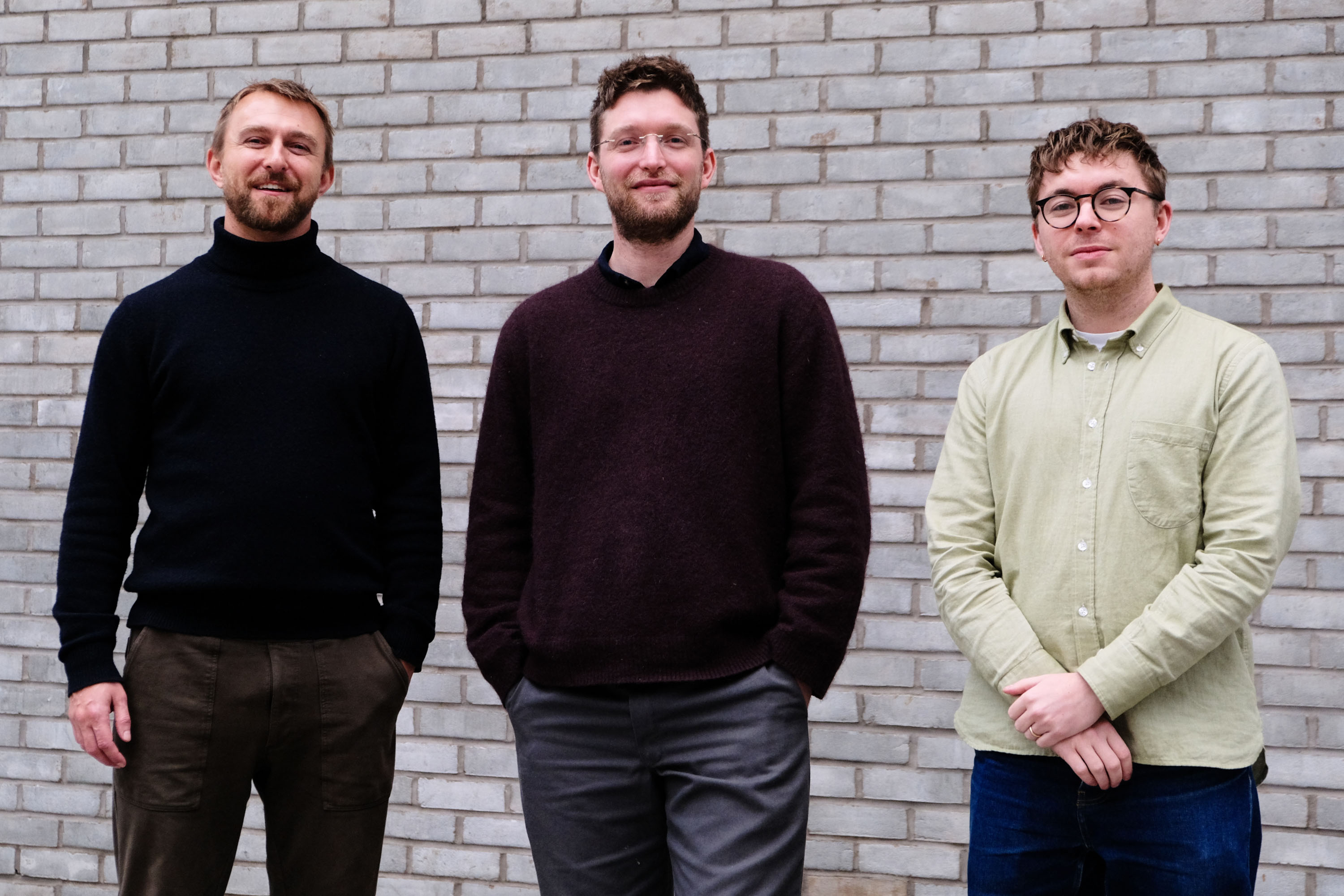
Polaron was set up in 2024 by a team working in Imperial’s Dyson School of Design Engineering. In addition to Dr Squires, the co-founders included Dr Steve Kench, who is the company’s chief technology officer, and Dr Sam Cooper, its chief scientist, who is also still an Associate Professor in Artificial Intelligence for Materials Design at Imperial. Links with Dr Cooper’s group have remained strong.
“We collaborate with quite a few of his PhD students and postdocs, who work for Polaron part-time while they are doing their research,” Dr Squires says. “The school has also been a great source of incredibly high-quality interns for the company, people at the intersection of design, science and programming, who can do a little of everything.”
Imperial will also be a first port of call as Polaron expands its team, currently based in East London, from nine at present to 18 or so within a year.
“We will be looking for exceptional people to join the team,” Dr Squires says, “the scientists and engineers who want to do their life’s work building the systems that will define how materials are made in this next chapter of AI-enabled industrial manufacturing. These are some of the highest impact applications of AI today, and at Polaron we are building a world-class team to take on this grand challenge.”
Article text (excluding photos or graphics) © Imperial College London.
Photos and graphics subject to third party copyright used with permission or © Imperial College London.
Administration/Non-faculty departments


Engineering

Health

Health

Health
Science
Science
Campus and community
Discover more Imperial News
Search all articlesDiscover more Imperial News
Search all articles
