

Health
/prod01/channel_4/imperial-news/media/images/landscape-3000X2000/Santa-sleigh-3000-x-2000.png)
If Santa ever swapped reindeers for an electric sleigh, the first challenge would be one Imperial scientists know very well - could a battery deliver reliable power in extreme winter conditions?
Researchers in Professor Magda Titirici’s group in the Department of Chemical Engineering have taken a festive look at how sustainable batteries could keep Santa flying through the night.
We look at how to make batteries that are sustainable, affordable and able to perform in real-world conditions. Magda Titirici Professor of Sustainable Energy Materials, Department of Chemical Engineering
“Santa is not the only one who needs to get around in sub-zero temperatures, which are a genuine challenge for today’s electric vehicle technologies, as well as smartphones and anything else powered by a lithium-ion battery,” says Professor Titirici. “We look at how to make batteries that are sustainable, affordable and able to perform in real-world conditions".
This research is led by Zhenyu Guo, Department of Chemical Engineering, who is working on the Faraday Institution funded Nexgenna project, with a focus on advancing Na ion battery developments in the UK.
Zhenyu's research develops Na-ion battery cells with own designed anodes and sustainable cathodes (free of critical metals), as well as testing these at different temperatures in pouch cell configurations with different electrolytes and additives to optimise performance across a wide range of temperatures (currently 10-60degrees). Future research aims to improve stability and capacity in low-temperature environments (potentially to -60degrees).
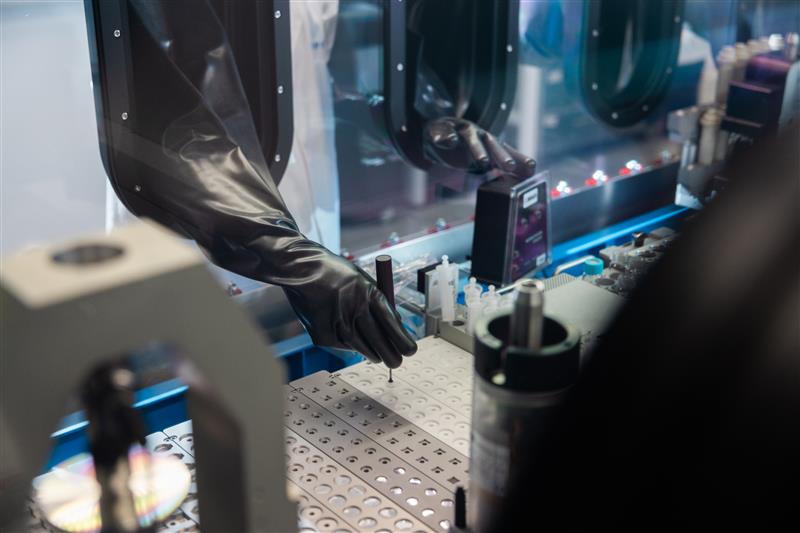
To further advance battery research, Zhenyu is working with DIGIBAT, which enables the rapid optimisation of complex battery formulations through an autonomous battery discovery laboratory. The facility combines robotic systems that can manufacture and test batteries with AI-driven optimisation algorithms, enabling faster experimentation and supporting the discovery of next-generation battery materials.
As the world transitions towards cleaner energy systems, the team’s research highlights how innovative materials, circular-economy principles and non-critical elements could reshape the future of battery storage.
Whether powering homes, vehicles or imaginary sleighs, sustainable batteries could help deliver a greener festive season for everyone.
Image: Hush Naidoo Jade Photography/UnSplash
Article text (excluding photos or graphics) © Imperial College London.
Photos and graphics subject to third party copyright used with permission or © Imperial College London.
Faculty of Engineering

Administration/Non-faculty departments

Health

Business

Health

Health
Health
Imperial Global
Imperial Global
Discover more Imperial News
Search all articlesDiscover more Imperial News
Search all articles