
Engineering
/prod01/channel_4/imperial-news/media/imperial-college/faculty-of-engineering/civil/public/news-images/Imperial_Engineering_Alumni_Event_by_John_Cairns_3rd_December_2025-15-copy.jpeg)
After 142 years, history was made as our alumni came together for the first time in a truly unforgettable celebration. The Skempton building was alive with laughter and conversation as graduates from across the decades returned to reconnect, reminisce, and see how far we have come. It felt like a family reunion.
The day opened with a warm welcome from the Head of Department, Professor Washington Yotto Ochieng CBE, who shared updates on our research and reminded everyone of the department’s ambitious plans for the future. Professor Chris Johnson CBE, Chief Scientific Adviser at the UK Department for Science, Innovation and Technology, followed with a keynote that had everyone leaning in. His talk explored the idea of a “digital embrace” between the built and natural environment, urging civil engineers to lead the way in integrating technology with infrastructure. He spoke candidly about lessons from Grenfell, showing how resilience and safety depend on bridging the gap between engineering and digital systems. It was a powerful call to action for the next era of our profession.
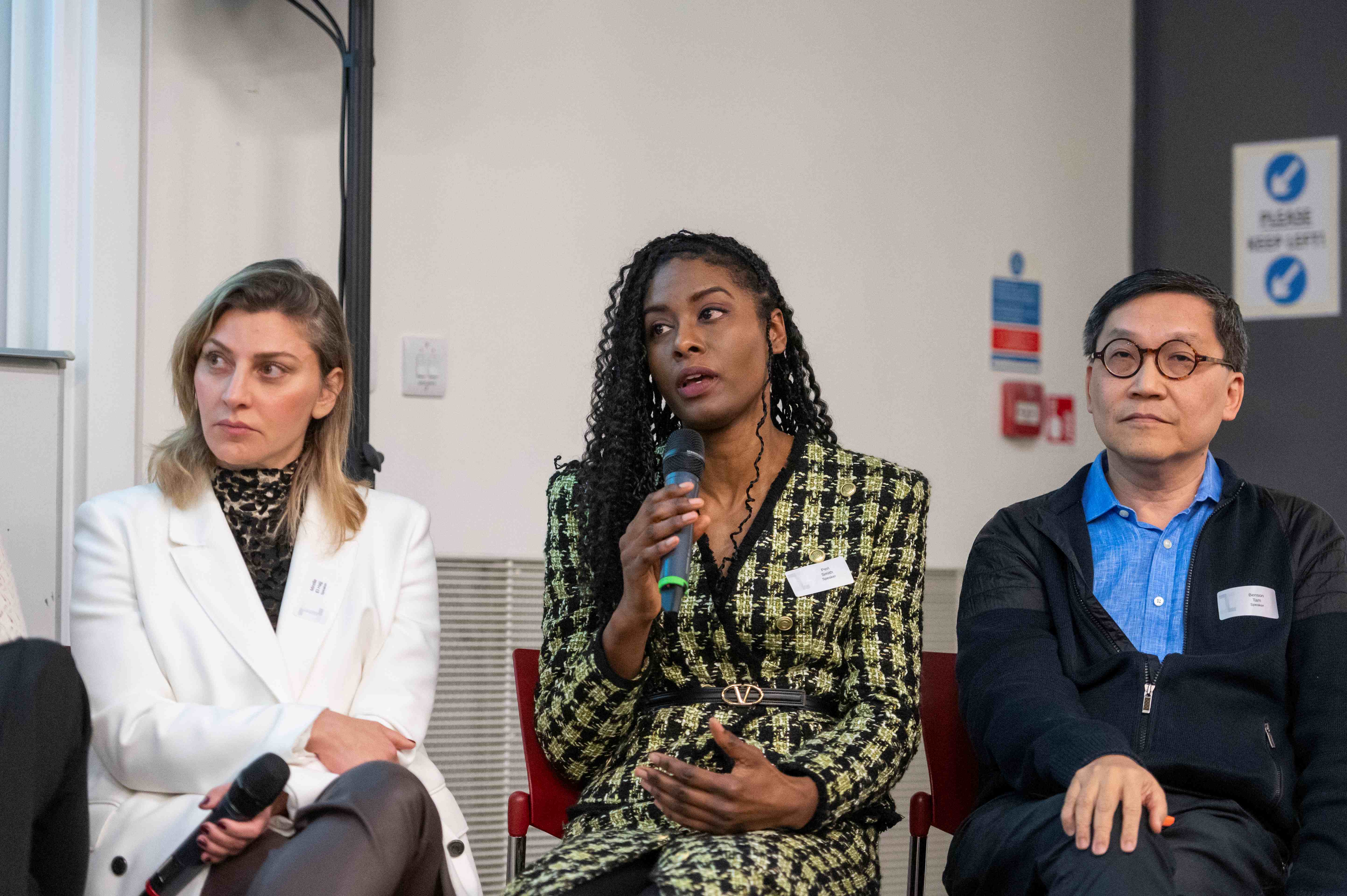
The alumni panel (which is available to listen to online) brought the day to life with fresh ideas, showing the incredible impact our graduates are making around the world. Chaired by Professor Jean Venables CBE (Class of 1969), the panel featured Roger Bailey (Class of 1981), Caroline Field (Class of 1999), Mireille El Hajj (Classes of 2010, and 2017), Peri Smith (Classes of 2007 and 2017), and Benson Tam (Class of 1984).
The discussion ranged from sustainability and resilience to AI and the human side of engineering. Caroline reminded us that “we need to think in systems, not silos. Resilience is not just about structures, it is about people, processes, and the interconnected risks that shape our world.” Benson looked ahead with optimism, saying “civil engineering will become the coolest science in the next five years. We are adding digital to the physical world, creating a layer of data and intelligence on top of everything we build.” Peri added a human perspective: “technology and human factors cannot be separated. Every system needs to consider how people interact with it, because that is where safety and efficiency succeed or fail.” It was a conversation that felt both visionary and practical, with plenty of questions from fellow alumni in the audience as it left the room buzzing with ideas.
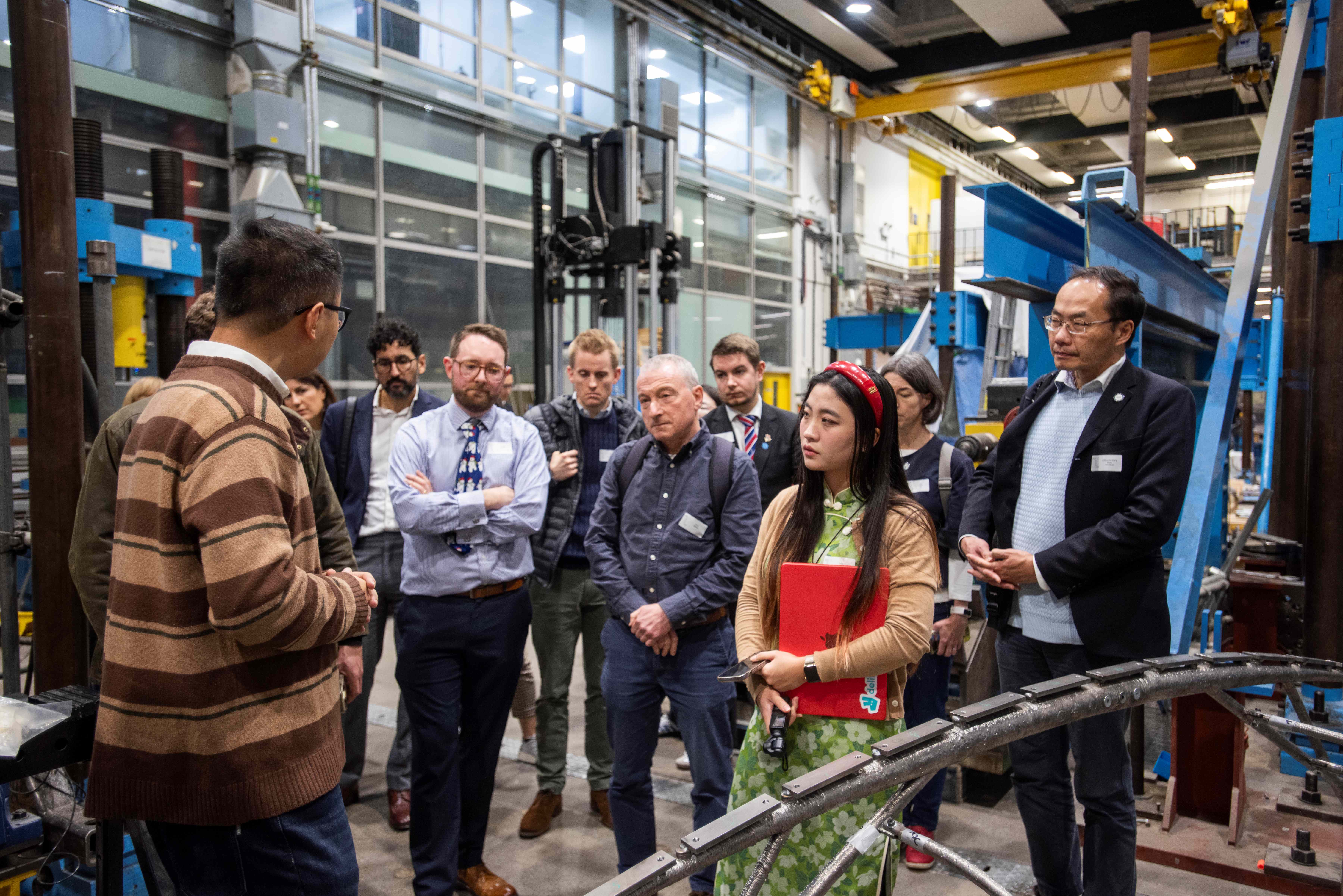
From there the event shifted into full celebration mode. Alumni explored our research, met our current students, and toured three of our state-of-the-art labs, all while catching up with old friends over drinks and canapés. One of the most exciting announcements of the day was the launch of our Alumni Board, a volunteer-led group that will help shape the department’s future and strengthen ties between alumni, students, and staff. If you would like to get involved, you can express your interest to be part of something truly impactful.
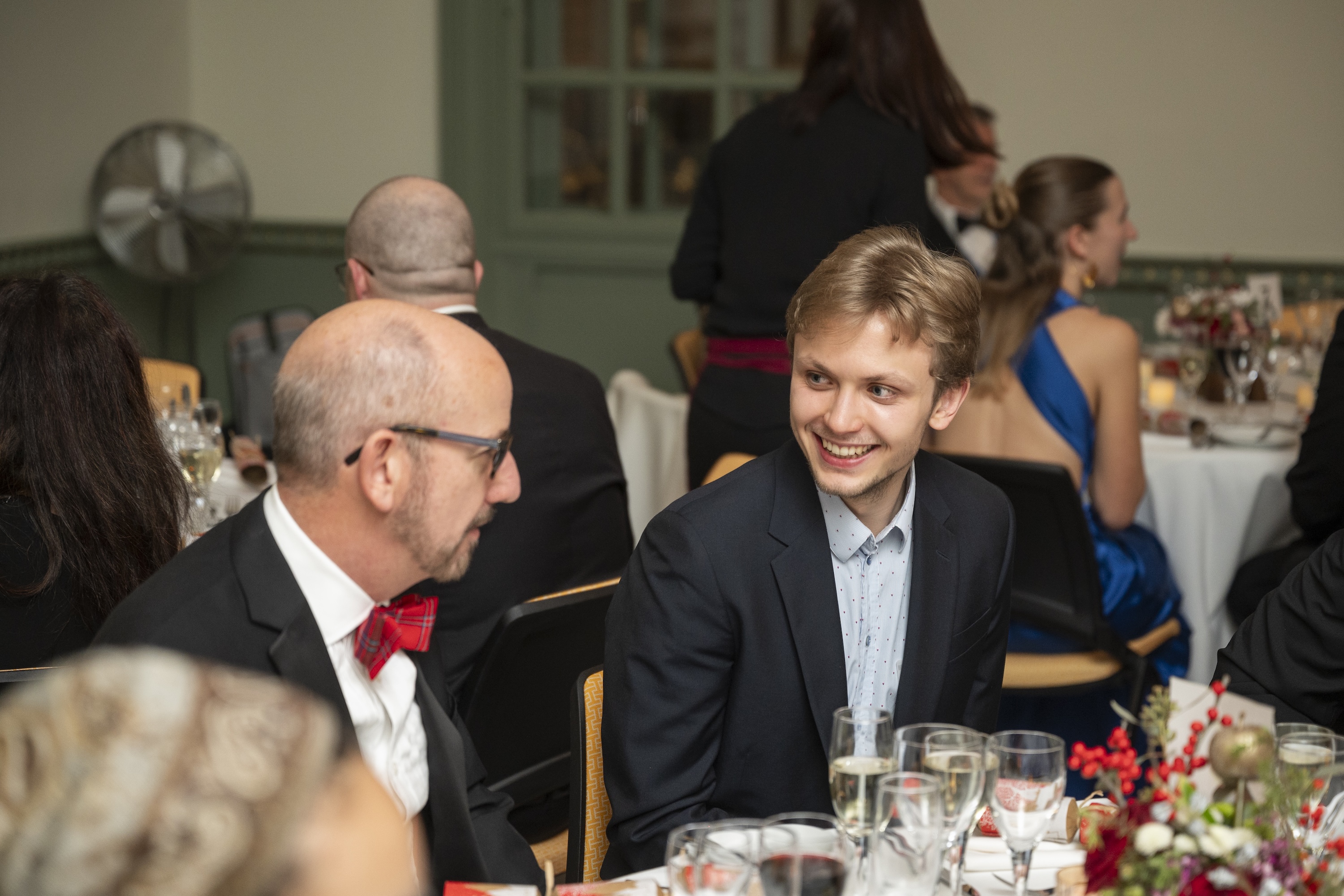
Later into the evening, a black-tie dinner with live music set the stage for heartfelt moments as alumni stood up to share their stories, where life had taken them since graduation, the projects they have led, and the lessons learned along the way. The room was filled with achievements that made us proud and hopeful for what is next. It was a night of laughter, nostalgia, and the perfect way to close a day that reminded us why this community matters.
A huge thank you to everyone who made this event special: Professor Johnson for his keynote, Professor Venables and our incredible alumni panelists for their insights, and Professor Ochieng for hosting. Thanks to Dr Sunday Popo-Ola for leading auction, our laboratory staff for managing the tours, and our staff and students for presenting their work and research. Thanks also to all alumni who joined us in person as well as our alumni in Hong Kong who tuned in to a livestream with support from the Imperial College Alumni Association of Hong Kong.
Here is to many more moments like this.

Head of Department, Professor Washington Yotto Ochieng, CBE gives the welcome address

Alumni enjoying the keynote and panel sessions

Alum Benson Tam speaking during the panel session

Alumni mingling during the networking session

Professor Chris Johnson CBE gives the keynote talk

Profesor Jean Venables CBE moderates the alumni panel
Visit our Flickr album to see all event photos (additional photos coming soon).
All photo credits: John Cairns
Article text (excluding photos or graphics) © Imperial College London.
Photos and graphics subject to third party copyright used with permission or © Imperial College London.
Faculty of Engineering

Engineering

Health

Health

Health
Science
Science
Campus and community
Discover more Imperial News
Search all articlesDiscover more Imperial News
Search all articles