EEE's biggest ever Great Exhibition Road Festival
/prod01/channel_4/imperial-news/media/news-images/3000X2000-main-article-images/festnews2026.jpg)
This year’s Great Exhibition Road Festival saw EEE researchers bring six very different strands of our work to the public.
Around 57,000 visitors attended this year's Festival – the largest and most ambitious to date. Celebrating 175 years since the original Great Exhibition in the summer of 1851, the programme spread across more of South Kensington than ever before, with over 100 Imperial teams sharing their work through talks, interactive exhibits, workshops and demonstrations.
The Department of Electrical and Electronic Engineering marked the occasion with our biggest festival presence by far. We showcased research that takes us beneath the surface of great paintings and the interior of Mars, to the seabed around offshore wind turbines and the energy arriving in our homes, to the living rooms of people with dementia, to a revolutionary question at the heart of every digital device.
Electricity of Tomorrow
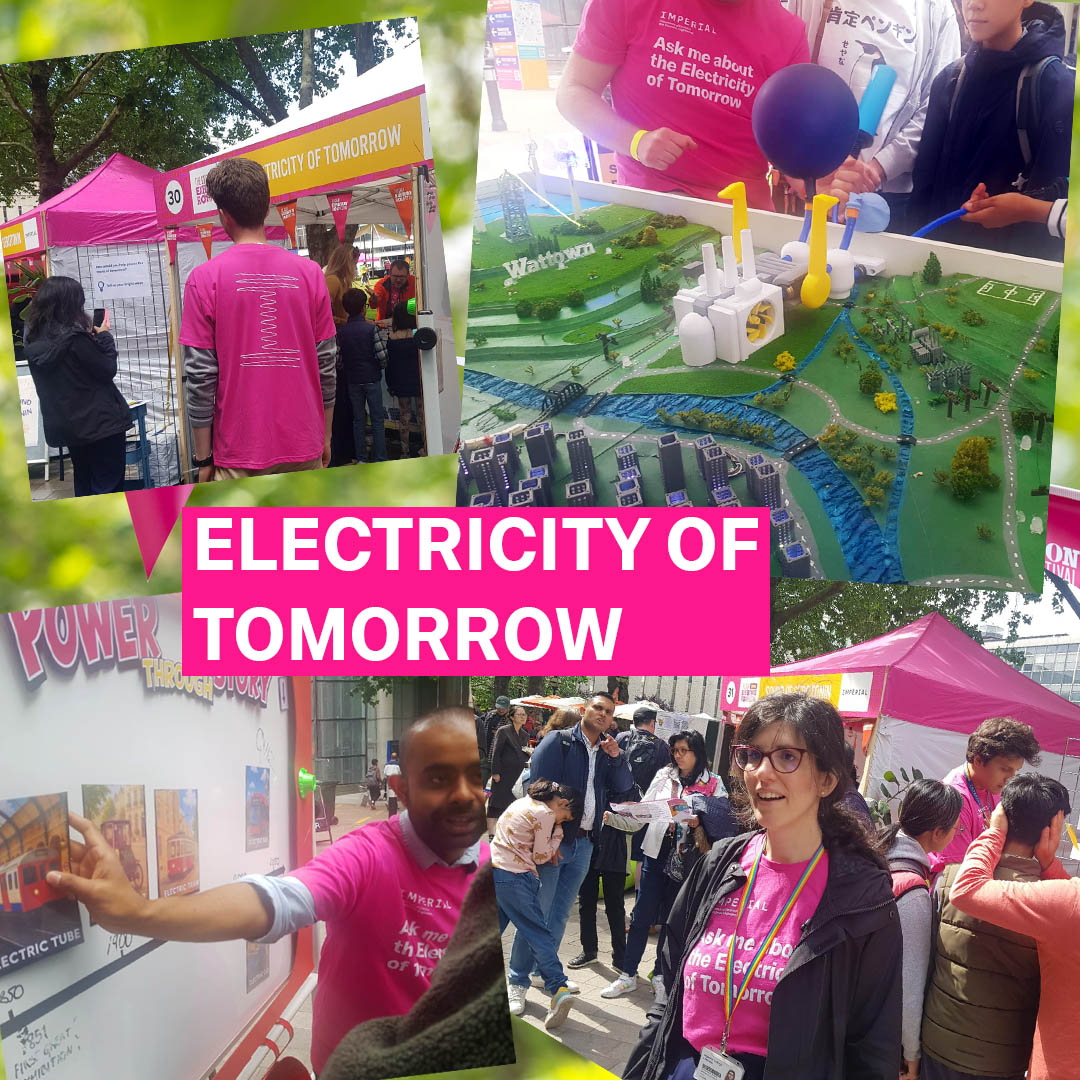 On Imperial College Road, Dr Elina Spyrou, Dr Phil Clemow and a team of researchers and PhD students demonstrated the net-zero grid in miniature with Wattown – a model town complete with hydro, solar and wind energy and a day/night cycle, the system storing energy and responding to shifting demand in real time. A playful look at the serious grid challenges our research addresses and how our we are designing the technology to manage our future energy needs.
A quiz running alongside traced the history of some surprising power innovations back to 1850s – electric cars in the early twentieth century, hydro dams in the nineteenth – a timely reminder of the original Great Exhibition which first brought industrial and scientific innovation to this corner of London in 1851. Visitors were also invited to share their own ideas for powering the future.
Underwater Robot Detectives
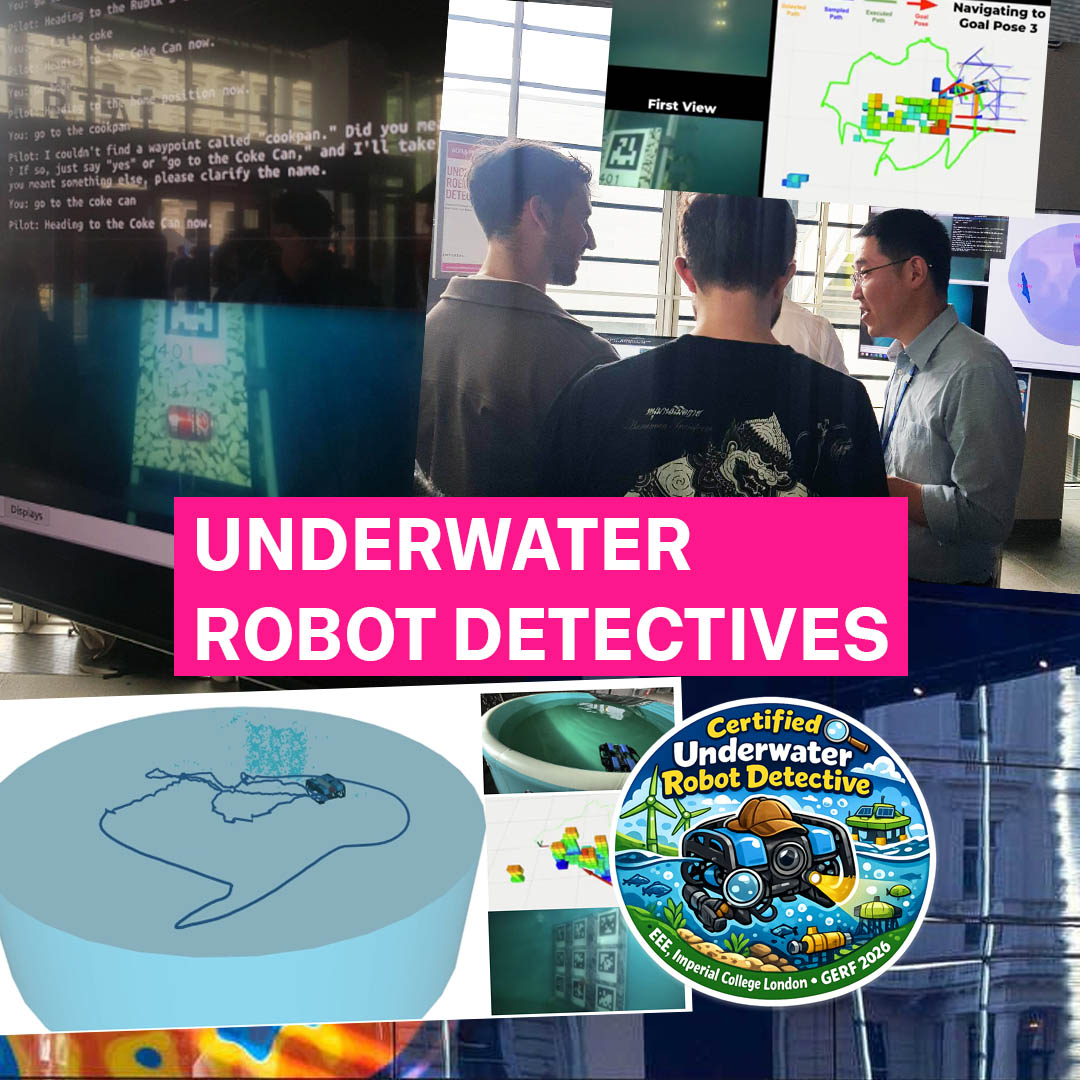 In the World Science Zone in the Main Entrance festival-goers explored one of the less visible challenges of the renewable energy transition: keeping offshore wind turbine foundations in good repair, in conditions where human inspection is hazardous and expensive.
Dr Sen Wang and his team are developing the AI that programmes autonomous underwater robots to inspect turbine foundations – recording high-quality visual inspections, building 3D reconstruction models, and monitoring the build-up of algae and marine organisms that can degrade structures over time. The robots process what they see in real time, making decisions autonomously.
Visitors could watch one in action, controlled remotely in a pool at Imperial's White City campus.
Radar Pong
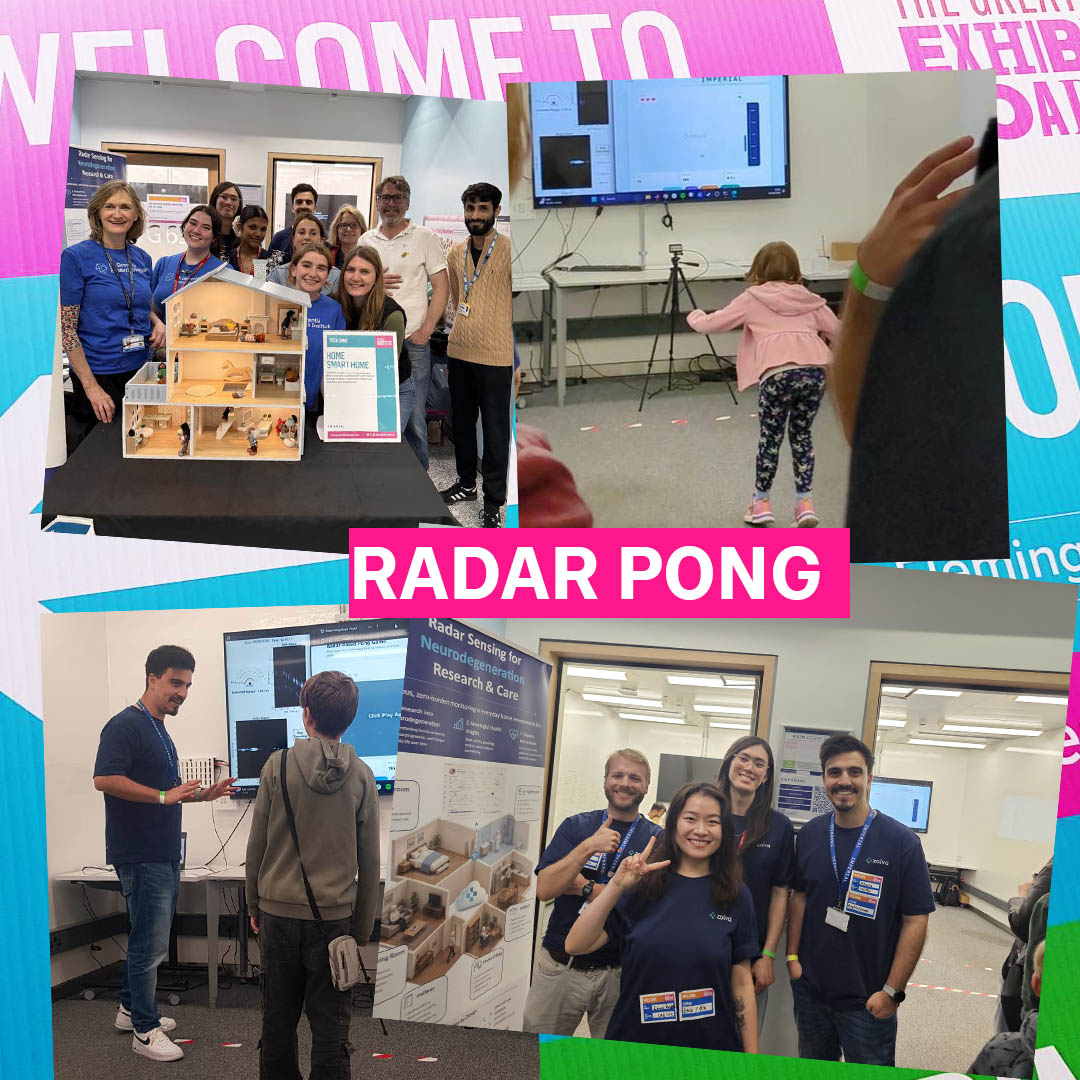 Closer to home – the Home Safe Home stand in the Festival's Tech Zone – Dr Charalambos Hadjipanayi and a team from Professor Tim Constandinou's Next Generation Neural Interfaces Lab were showing how radar technology could transform home care.
The radar sensors being developed by the NGNI Lab are designed to monitor the movement, sleep quality, gait and physiology of people living with dementia or Parkinson’s – with no cameras, microphones or recordings of any kind.
Visitors could experience the underlying sensing technology first-hand through a game of Radar Pong, a hands-on demo of contactless movement detection.
Algorithms developed by the team extract clinically useful information from radar signals: walking patterns, sleep cycles, even the number of bathroom visits that might indicate an infection. The system is designed to be unobtrusive, affordable and scalable to millions of homes.
Digital Revolution in 2026
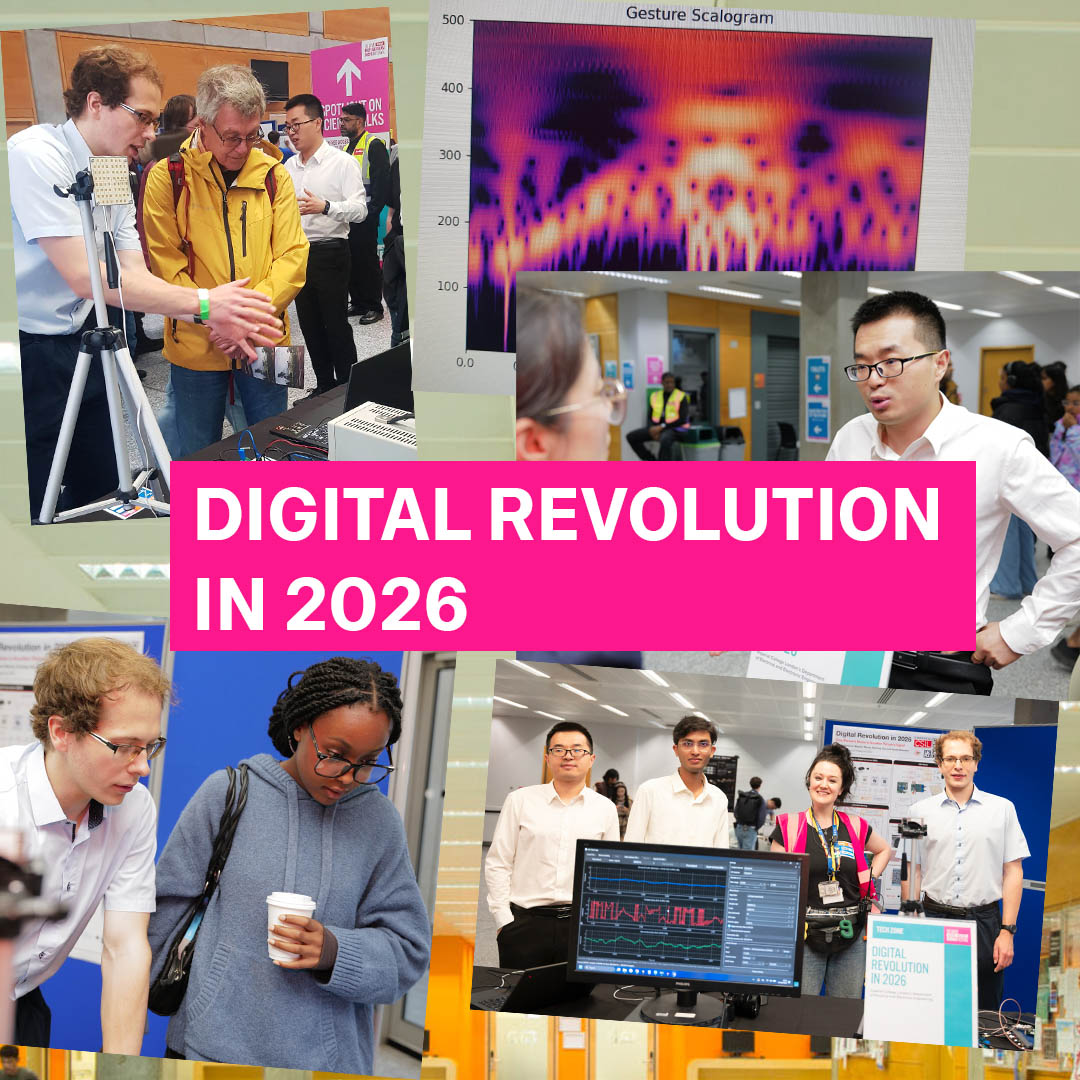 Also in the Zech Zone, visitors to Digital Revolution 2026 could see hand gestures read and classified in real time by a radar-based sensing architecture, and take a serious look at the future of digital sensing. Dr Ayush Bhandari's team of researchers were on hand to answer a question: is the information lost when an analogue signal is converted to digital really gone for good?
Every analogue to digital signal conversion – such as from fingers touching a touchscreen, sound entering a microphone, or light entering a digital camera – involves rounding a continuous range of values to a finite set of levels, and what gets discarded in that rounding has always been treated as irretrievable noise. The Unlimited Sensing Framework developed by Ayush reframes that noise as structured, recoverable information, opening the possibility of breaking a tradeoff between dynamic range, resolution and power consumption that has constrained digital sensing for decades.
Heritage Science: Seeing the Unseen
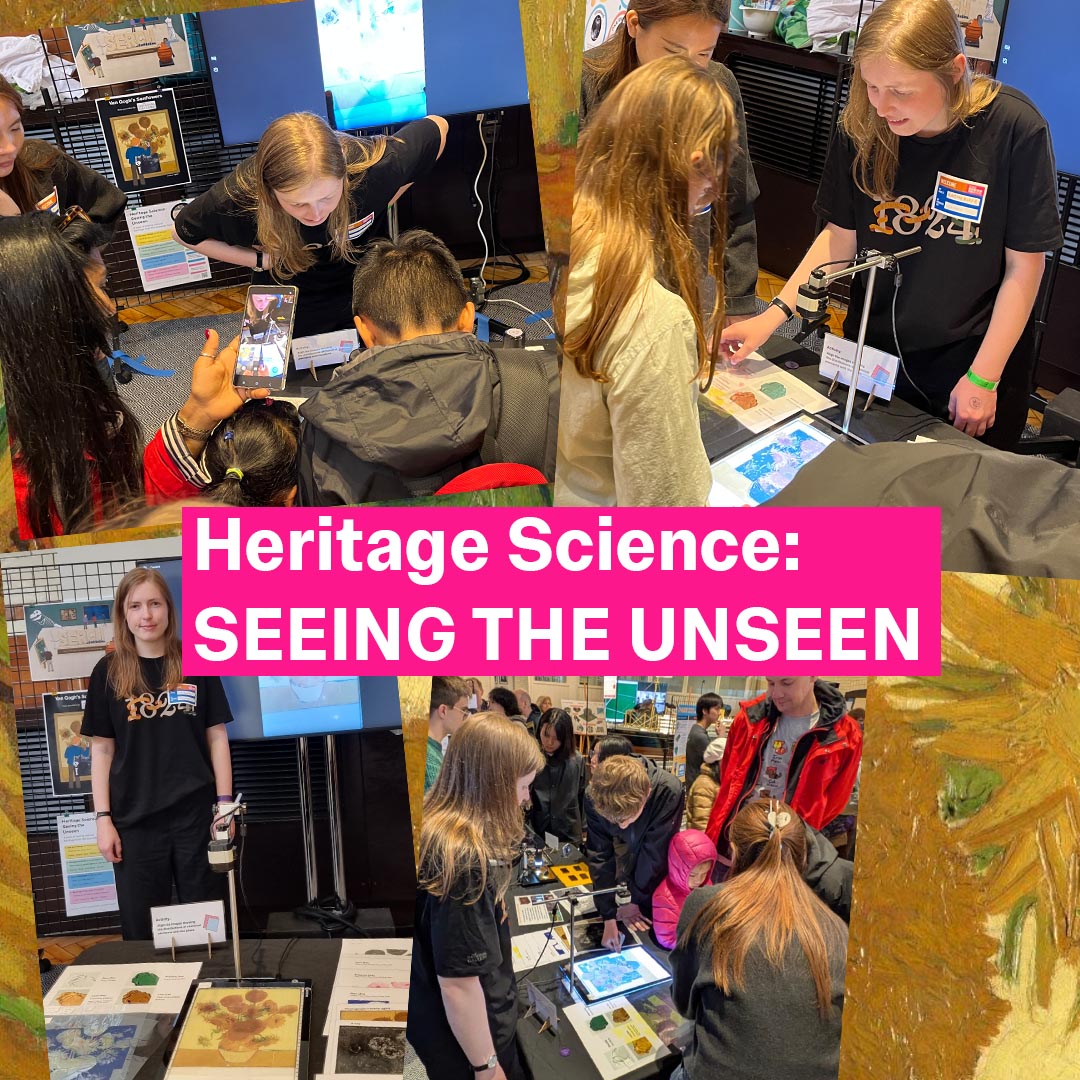 PhD researcher Katherine Sephton's research with Professor Pier Luigi Dragotti uses machine learning to align the X-ray and X-ray fluorescence scans taken of works in the National Gallery’s collection, allowing heritage scientists, conservators and art historians to compare them with precision.
In the Science Museum Next Gen Zone, visitors to Katherine's demo could test their observation skills against AI, examine artefact surfaces under a microscope, and explore what non-invasive scanning techniques reveal beneath the surface of paintings.
Van Gogh’s Sunflowers proved a rich subject: many young visitors were quick to spot that chemicals visible in the paint, including arsenic and lead, would not be used today because they are toxic, opening up conversations about how that knowledge can help date a painting or identify a forgery.
Taste the inside of Mars
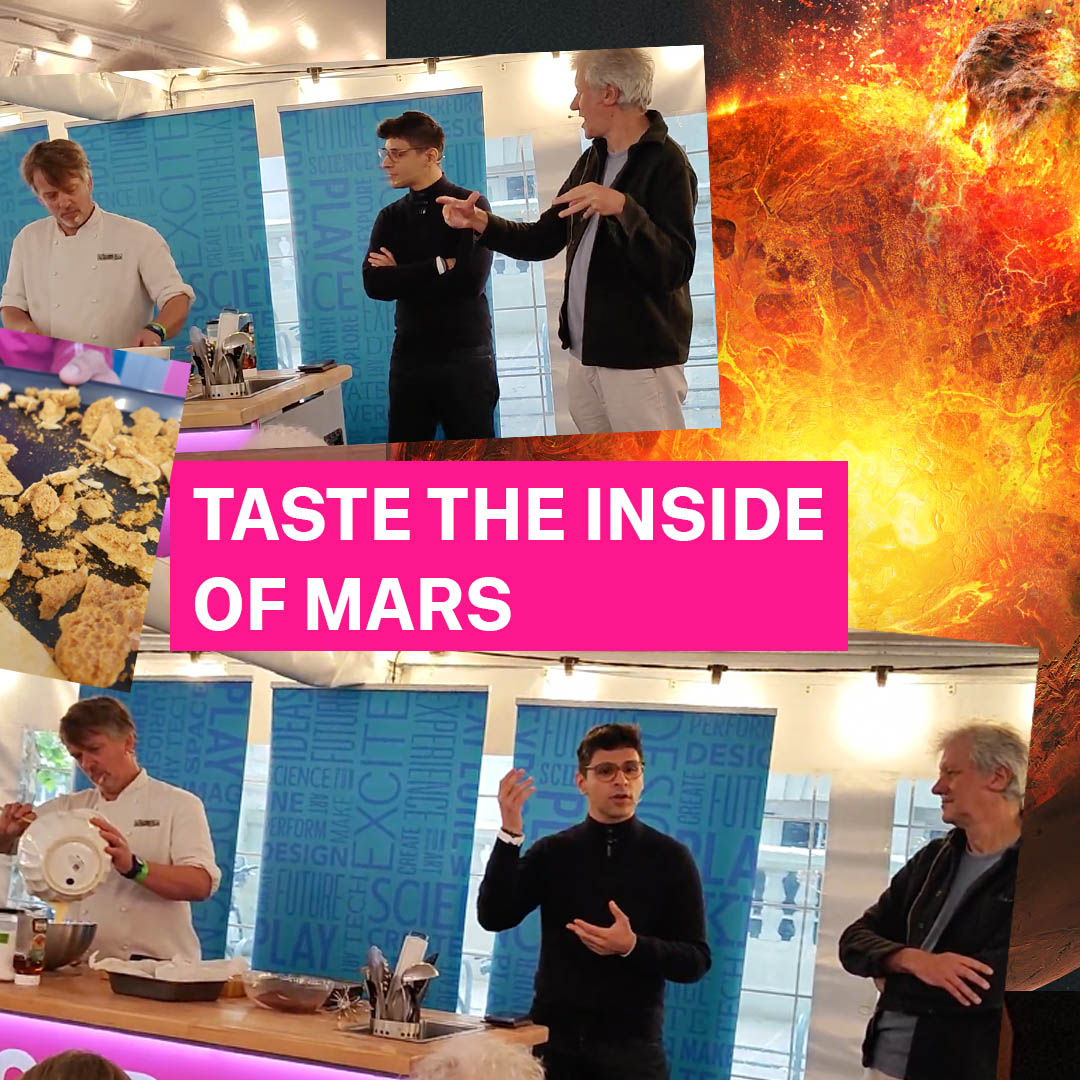 As part of the The Future Food Live show, Dr Constantinos Charalambous and Professor Tom Pike cooked up a science demonstration with a brownie recipe. The baking was handled by chef Jethro Carr, the hosting by Khalil Thirlaway, and the science by NASA's InSight mission.
The tiny seismometer used to detect and measure the vibrations and movements on the planet planet caused by "marsquakes" and meteorite impacts was developed here in EEE. The picture that emerged of Mars' deep interior is of a planet that cooled fast, trapping its rocky chunks in place. Earth, by comparison, never stopped cooking – its plate tectonics keep the interior in constant motion – more chocolate fondue than chunky brownie.
Visitors had a taste of Jethro's brownies and rocky honeycomb shards, and asked plenty of questions about the possibility of human – and other – life on Mars.
Six stands, two days, and more curious visitors than we could count. It was inspiring to see so many people discovering how varied electrical and electronic engineering is and the surprising places it can take us.
A huge thank you to everyone who came, and to all our brilliant researchers who made it such a special weekend.
See you in 2027!
Article text (excluding photos or graphics) © Imperial College London.
Photos and graphics subject to third party copyright used with permission or © Imperial College London.
Article people, mentions and related links
Jane Horrell – Department of Electrical and Electronic Engineering
Faculty of Engineering
