WiEE hosts Tech for Good Challenge for London school students
/prod01/channel_4/imperial-news/media/news-images/3000X2000-main-article-images/hackathon26_banner.jpg)
Imperial’s Women in Electrical Engineering Society (WiEE) returned for a second year to host the Tech for Good Challenge, a schools’ outreach event aimed at encouraging young women to explore STEM.
This year’s event welcomed 80 enthusiastic Year 9 students from 11 schools across London to the Department of Electrical and Electronic Engineering for a full day of talks, activities and hands-on engineering challenges, supported by Apple’s outreach team.
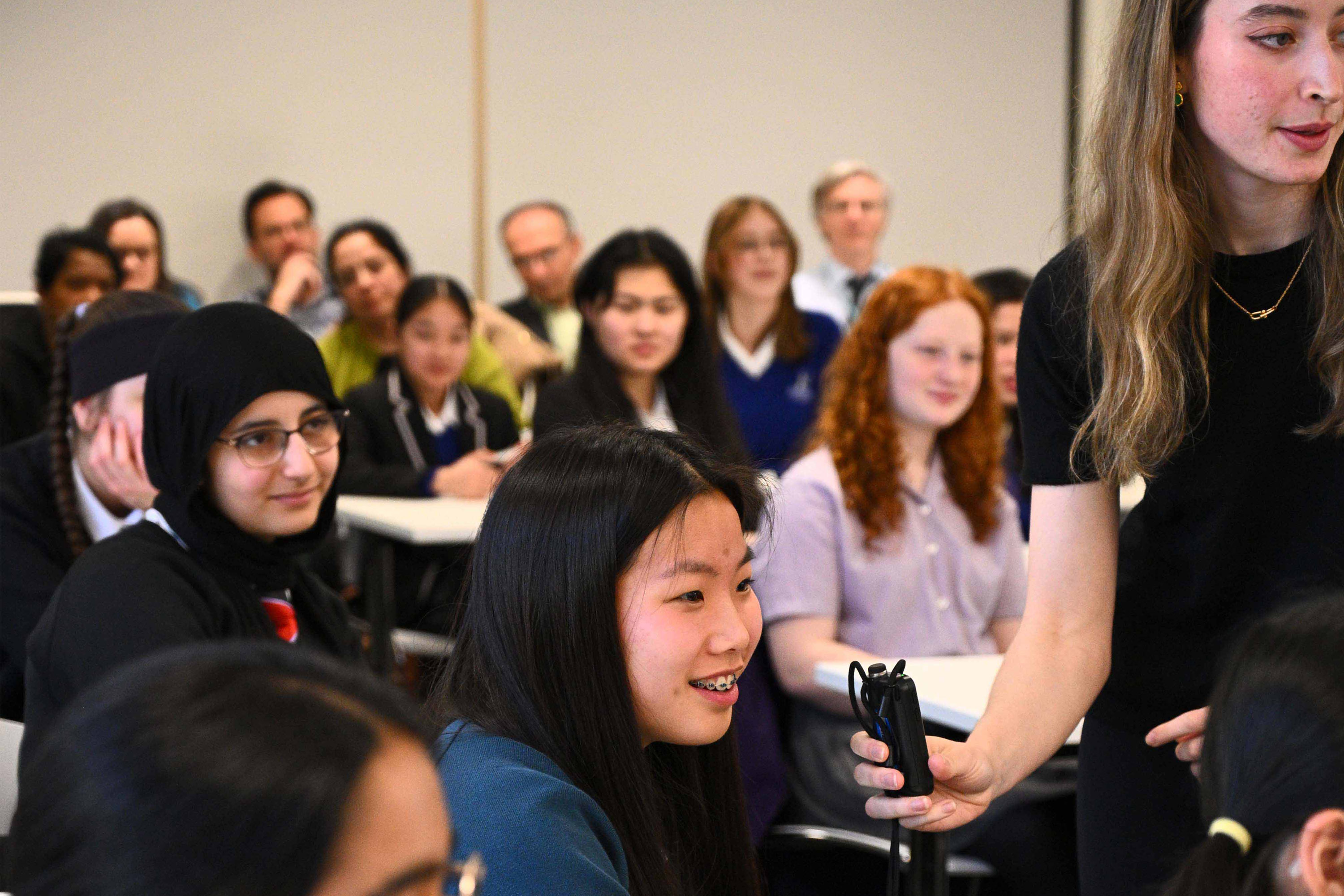 Proposed and organised by WiEE student volunteers, the programme was designed to spark curiosity about engineering as an exciting application of maths and physics, and to help students see themselves as future innovators who can make a positive impact in the world.
Introducing engineering ideas
The day began with a presentation from Lorenza and Levine, who introduced different types of engineering and led interactive activities exploring simple logic gate circuits.
Students were also introduced to John Searle’s Chinese Room thought experiment, prompting an animated group discussion about whether computers, which operate solely on syntax (rules), can possess true understanding. The session ended with a fast-paced Kahoot quiz where the students could test what they had learned.
Student engineering in action
The morning continued with an impressive presentation from First Order Robotics, an Imperial student-led robotics team that competes in a 6-vs-6 football game with a fleet of fully autonomous robots. Students gained insight into the kinds of practical engineering problems the team tackles daily, and how different system components work together to create a fully autonomous “Cristiano Ronaldo bot”.
During lunch, fourth-year EEE student Alex Karapetyan brought along his gesture-controlled robotic dinosaur. The demonstration proved hugely popular, with students queuing up for the chance to wear the control gloves and direct the robot’s movements.
Panel discussion: Women in Engineering
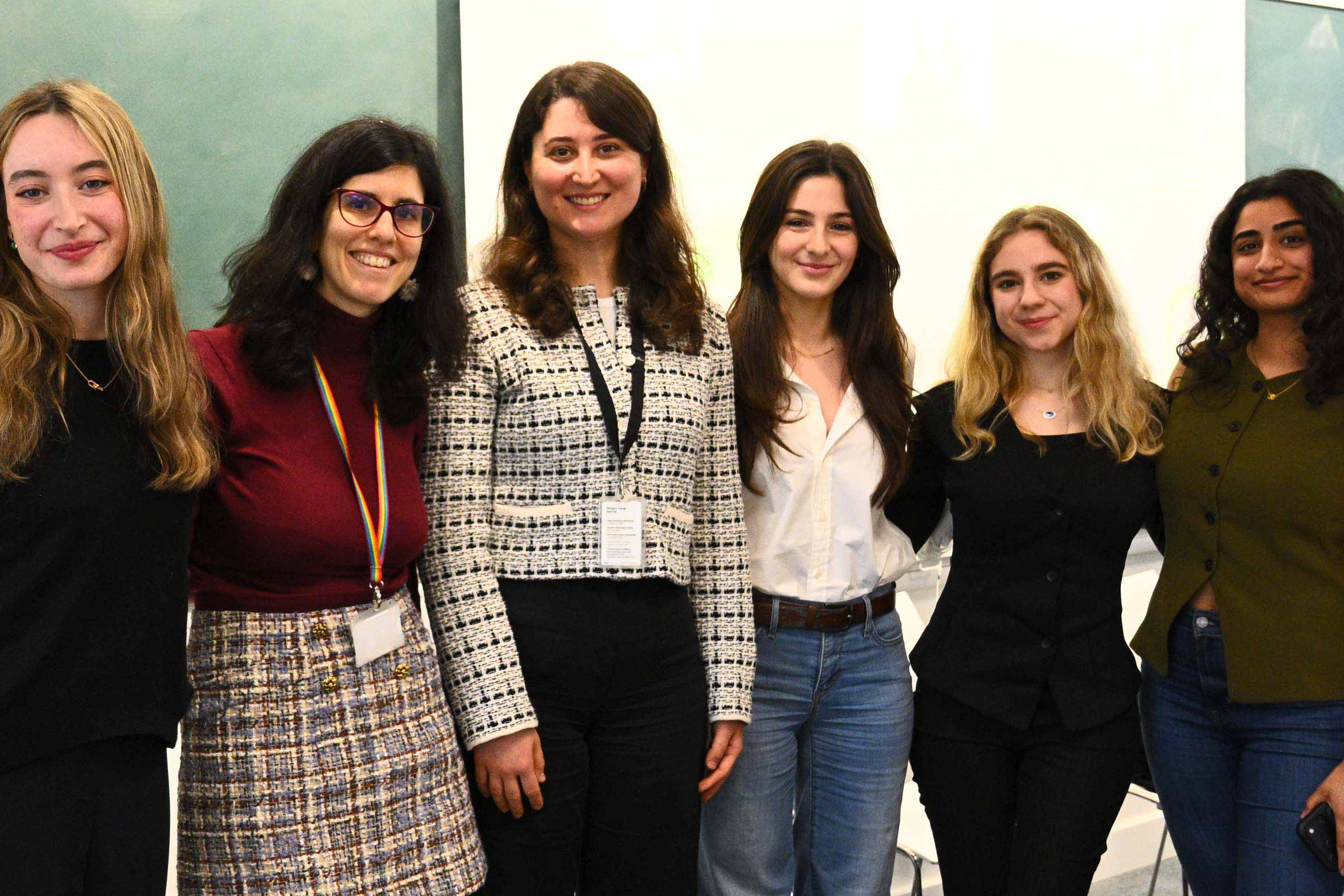 Charlotte and Shreeya led a panel session featuring women Apple engineers, professors, alumnae and students. The discussion ranged widely, covering questions about GCSE choices, career pathways, and what it really means to design technologies “for good”.
As Felix societies writer Claire Heimgartner noted in her coverage of the event, one message from the panel was especially clear: young women interested in engineering should “look past their own self-doubt, and push past imposter’s syndrome.”
Hands-on electronics
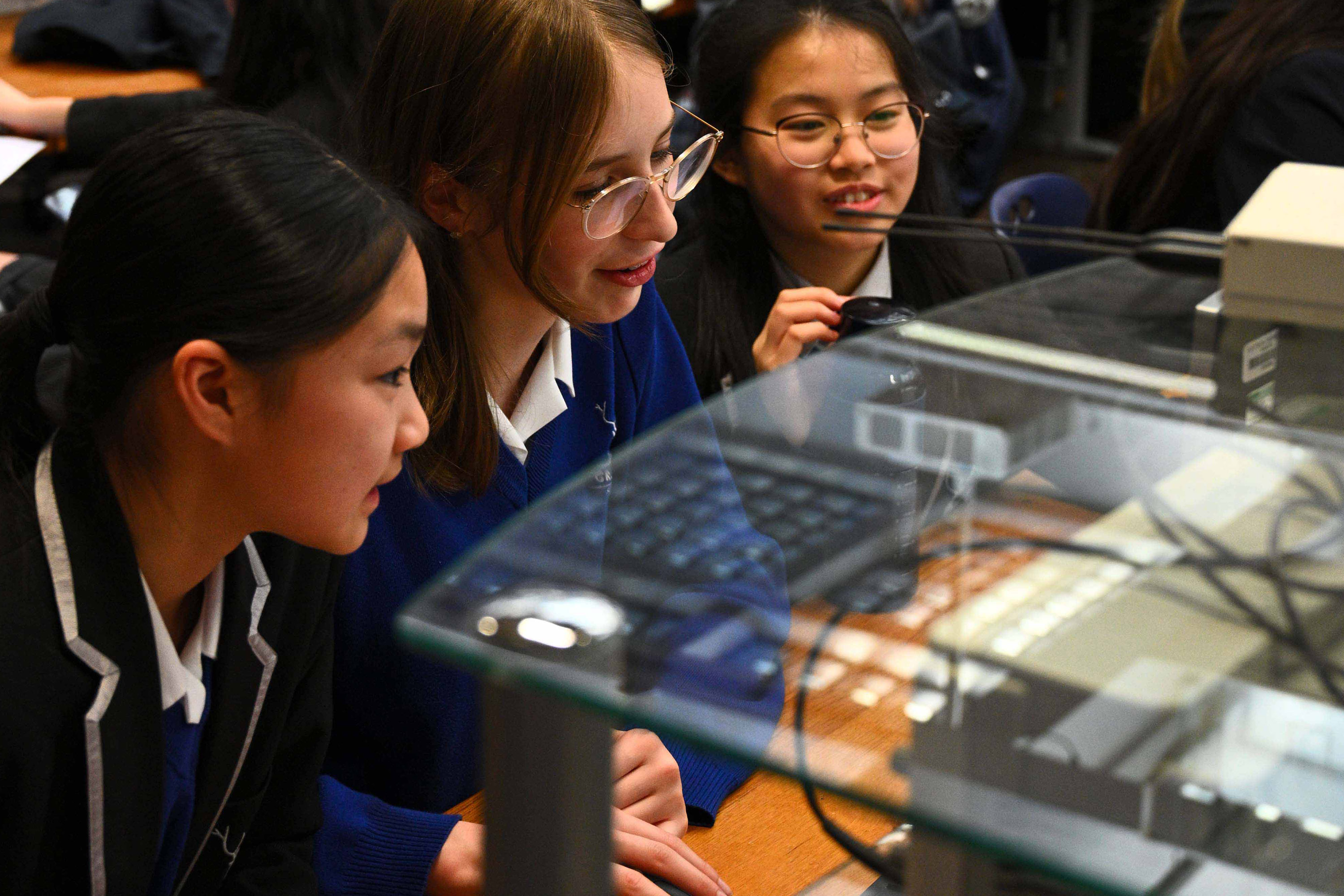 Students also had the opportunity to try what many consider a highlight of the early EEE curriculum: building an electronic circuit.
The challenge was to follow a circuit diagram – something most students had never encountered before – to build a triangle-wave generator that slowly flashes an LED on and off.
Although the task initially seemed daunting, with guidance from volunteers and support from EEE lab technicians Vic and May, many students successfully built and tested their circuits and proudly took them home.
“The panel was excellent and the two activities were great – at first I thought the circuit challenge was too hard but there was enough support from the experts circulating for all the participants to get the triangle wave working.” – Year 9 Teacher
The Tech for Good Challenge
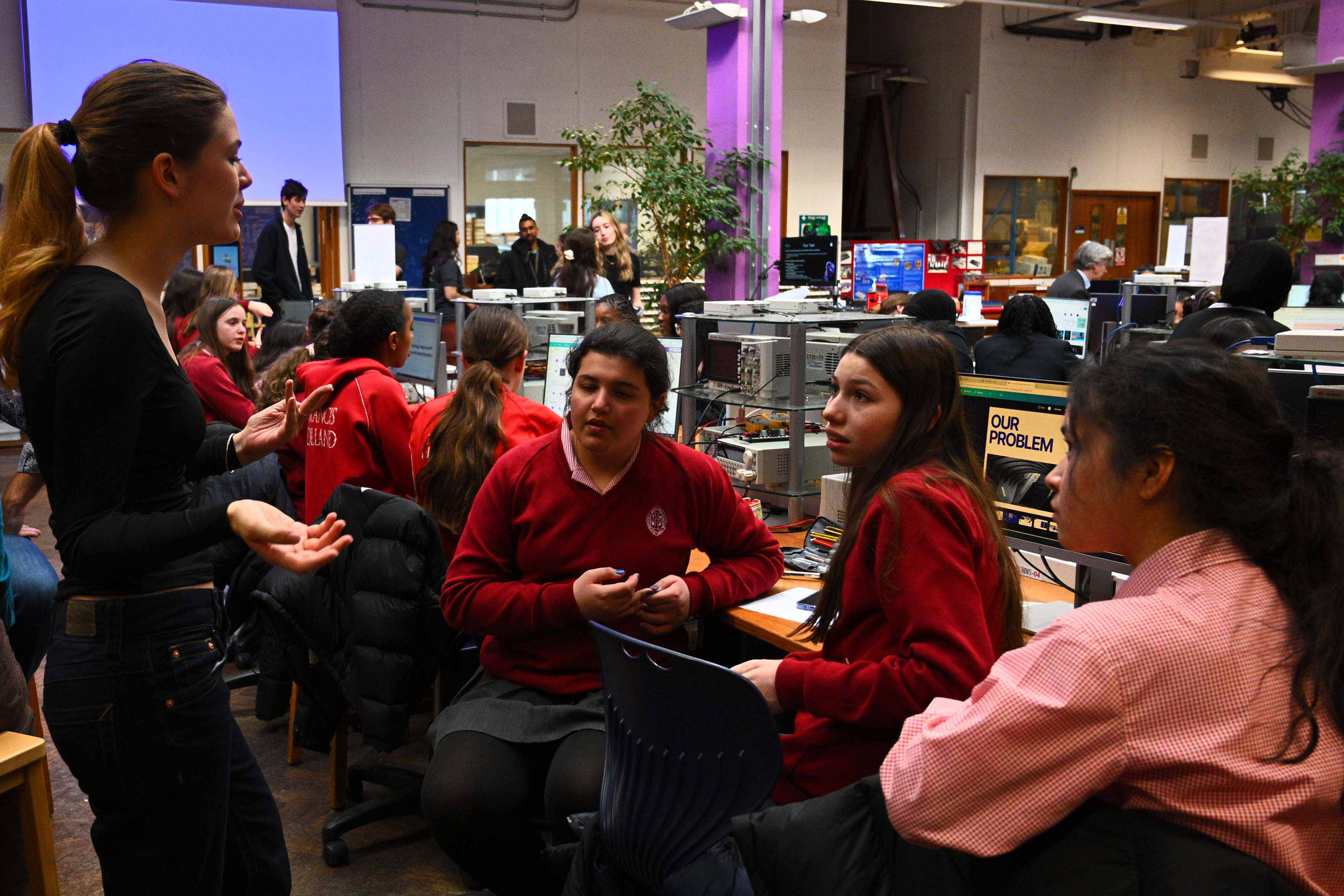 Alongside the workshops, students worked in teams on the Tech for Good Challenge. The intentionally broad brief encouraged students to think creatively about how engineering and technology could help tackle large societal challenges.
As reported in the Felix article, the first-floor labs were “buzzing with energy” as teams developed ideas for apps and hardware solutions tackling issues such as global warming, world hunger and environmental pollution.
The choice of Year 9 students is deliberate. As Claire writes, this age can be “crucial but turbulent,” when many young people are beginning to form a sense of identity and confidence in their own abilities. Hands-on experiences like this can help students recognise interests and pathways they may not previously have imagined.
“The students leading the event were excellent role models.” – Year 9 teacher
Prizegiving
The WiEE committee and Apple engineers judged the Tech for Good Challenge submissions which featured a range of thoughtful ideas, including concepts such as a digital platform to redistribute unwanted fast-fashion textiles, and a designs exploring the relationship between technology and sleep disruption.
The winning team proposed Remorise, an interactive touchscreen pad designed to support people living with dementia.
Prizes included Apple AirPods, Imperial crew necks and tote bags, water bottles and stationery, and all students received an Apple T-shirt to mark their participation in the day.
Apple partnership
Apple’s outreach team and sponsorship played an important role in supporting the event, providing prizes and contributing to both the panel discussion and the Tech for Good Challenge activities.
Following the success of this year’s event, the organisers hope to continue and expand the programme in future years, reaching even more schools and building on feedback from students and teachers.
A big shout out from the department
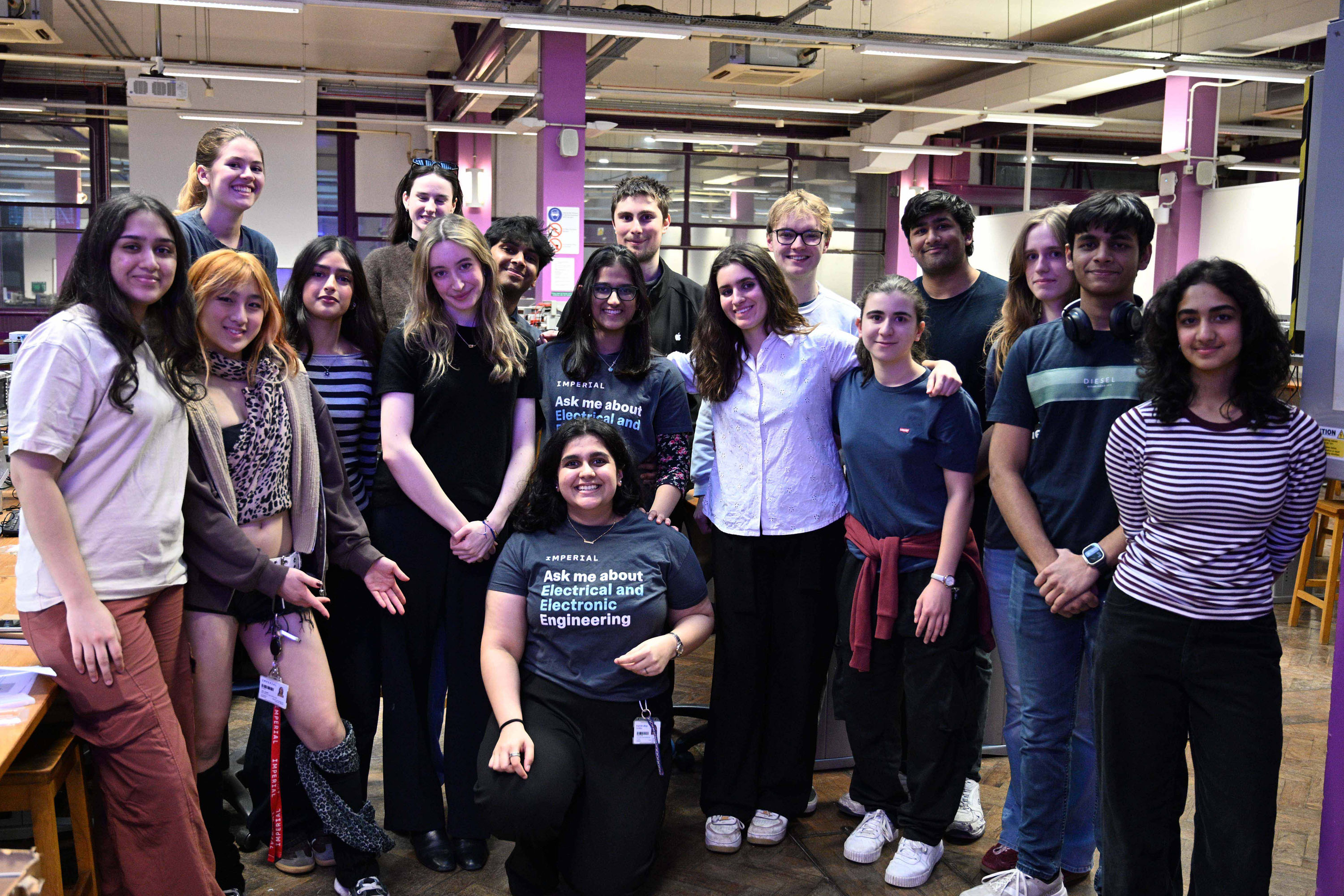
A great deal of dedication and teamwork from students delivered another brilliant and inspiring Tech for Good Challenge. We are extremely proud of the ways our students champion our department and share their passion for engineering.
Events like this are made possible by student leadership, and we would like to say a huge thank you to the WiEE organisers (Lorenza Giovannetti, Shreeya Agarwal, Charlotte Maxwell, Levine Salam, Beatrice Nield and Suzy MacAlister) and all our student volunteers who took part, and also the Apple outreach team for their enthusiasm and support for the initiative.
Article text (excluding photos or graphics) © Imperial College London.
Photos and graphics subject to third party copyright used with permission or © Imperial College London.
Article people, mentions and related links
WiEE President Lorenza Giovannetti (Undergraduate student - Electrical and Electronic Engineering)
Faculty of Engineering