.jpg)
Campus and community
/prod01/channel_4/imperial-news/media/news-images/3000X2000-main-article-images/radar-resized.jpg)
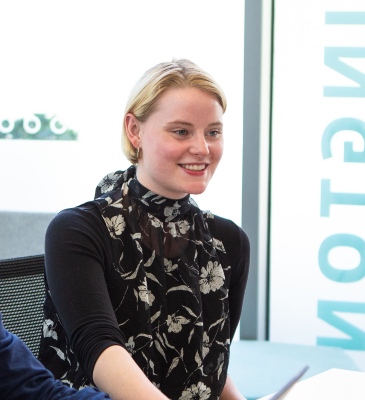
This summer, iCARE (Imperial Clinical Analytics, Research and Evaluation) was delighted to welcome Radamir Abdulle for a ten-week medical elective placement.
As a leading health data and analytics initiative, and home to Imperial's Secure Data Environment, iCARE enables secure access to linked health data to support research, innovation and improved patient outcomes.
Radamir joined iCARE through its growing community of healthcare professionals. This community brings together clinicians and other medical practitioners interested in exploring how digital technologies can be developed, evaluated and implemented with clinical expertise at their core.
Interested in joining the community? Find out more [here].
Radamir arrived at a time when conversations about artificial intelligence in healthcare are evolving rapidly, making questions of safety, regulation and responsible implementation more important than ever.
We spoke with Radamir about his placement, his exploration of AI regulation, and how the experience has shaped his thinking about the future of healthcare innovation.
I'm Radamir, a final-year medical student at the University of Liverpool. I spent my elective at iCARE, keen to see healthcare from the other side, where the technology and data live.
I had always been curious about where medicine was heading with AI and data, but I didn't have any real background in it, just an outsider's interest. A secure data environment holding millions of patient records felt like exactly the right place to learn properly and safely, rather than reading about it from a distance.
I built a framework mapping the regulatory pathway that a digital health tool must navigate before it can safely reach patients, then tested it against a real AI tool in development at iCARE through a detailed case study. I also began a scoping review exploring the wider evidence base.
That completely reframed [digital] safety for me. It's not a box you tick once; it's something that has to be actively maintained.
The same AI tool can receive different regulatory classifications depending on which part of its output you examine and who is using it. The evidence demonstrating that a tool is safe can also expire before the tool itself does, because it is tied to the model behind it rather than the clinical question it addresses.
I went in assuming regulation was something you dealt with once, near the end, when a product was basically finished. What surprised me was how early it starts to matter. Decisions made on day one of building a tool quietly shape what is possible later on.
Compliance isn't a hurdle at the finish line. It's a design constraint from the very first line of code.
Genuinely, it was the best part of the placement. Sitting alongside data scientists and engineers, and being trusted to contribute rather than simply observe, taught me as much as the project itself.
I learned how to translate dense regulatory language into something a developer could actually build from, without losing what mattered. It's not a skill medical school teaches you, but it's exactly what's needed to get a good idea safely in front of a patient.
That's the kind of work I want to keep doing, whether as a clinician, in policy, or building the next tool myself.
The moment that has stayed with me most was presenting the case study to the wider iCARE team. The presentation focused on applying my framework to a real AI tool in development that drafts clinical discharge summaries.
I walked the team through decisions the tool will genuinely need answered: whether different parts of its output count as a medical device depending on who reads them, why its safety evidence has a shelf life tied to the AI model behind it, and why, because it is being developed in-house, nothing external necessarily forces these questions unless the team builds those checkpoints into the process themselves.
Completely. I came in with a general curiosity about AI in healthcare and not much else. I'm leaving knowing exactly where I want to sit: in the space between building these tools and safely getting them to patients.
That's not a niche interest anymore; it's the direction I want my career to take.
Looking back, the thing I'll take away most is what it's like to genuinely work alongside data scientists and engineers within a secure environment handling millions of patient records. Being part of that, rather than simply observing it, is what will stay with me going forward.
Radamir's experience highlights the important role clinicians can play in shaping the future of digital health. As AI and data-driven technologies become increasingly embedded in healthcare, collaboration between clinicians, researchers and technologists will be essential to ensuring innovation is safe, effective and focused on improving patient care.
We are grateful to Radamir for his contributions during his time at iCARE and look forward to following his future career.
Article text (excluding photos or graphics) © Imperial College London.
Photos and graphics subject to third party copyright used with permission or © Imperial College London.
Faculty of Medicine
Campus and community

Engineering

Engineering

Engineering
Imperial Global
Cross-faculty
Campus and community
Discover more Imperial News
Search all articlesDiscover more Imperial News
Search all articles