£3.7 million project to unlock secrets of deep coral reefs
by Emily Govan
/prod01/channel_4/imperial-news/media/news-images/3000X2000-main-article-images/Dive22_Egmont_40m_March2020---coral-reef.jpg)
Researchers are launching a major new project to investigate the resilience of deeper coral ecosystems to future climate change.
Observations of the mesophotic coral reefs, which are found at depths of 30 m to 150 m in tropical oceans, suggest these communities may be vulnerable to warming seas. Until now researchers have had limited understanding of how these reefs respond to environmental stress.
The new five-year initiative will be a collaboration between marine biology and coral reef biodiversity experts from Imperial’s Department of Life Sciences, the University of Plymouth, and Plymouth Marine Laboratory aiming to provide the first comprehensive assessment of the response and resilience of these deeper coral ecosystems under future climate change scenarios. The work will be supported by a £3.7 million investment from the Natural Environment Research Council.
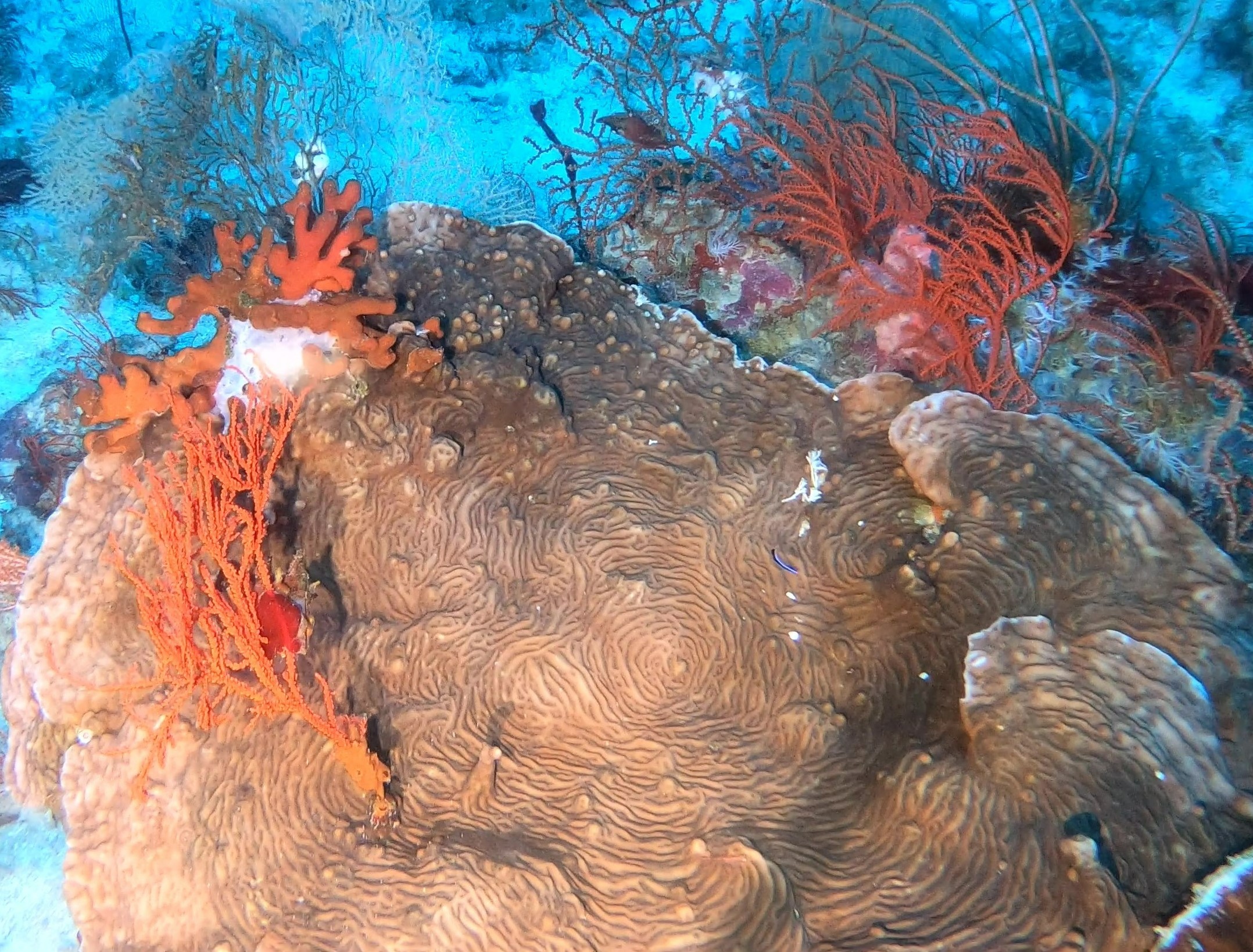
A healthy colony of the reef-building coral species, Pachyseris speciosa. Credit: University of Plymouth.
A new approach to understanding deeper reefs
The project will focus on mesophotic coral ecosystems in the Indian Ocean, combining field surveys, laboratory studies, and numerical modelling to map biodiversity, health, and environmental conditions across multiple locations.
Dr Emma Ransome, Associate Professor in the Department of Life Sciences and head of the Imperial team, said: ‘Coral reef research often focuses on a few charismatic species, leaving the vast majority of biodiversity understudied. By developing a comprehensive approach to monitor long-term changes in deep reef biodiversity, we aim to understand the role deep reefs could play in maintaining marine biodiversity under future climate scenarios and help protect that biodiversity for generations to come.’
"By developing a comprehensive approach to monitor long-term changes in deep reef biodiversity, we aim to understand the role deep reefs could play in maintaining marine biodiversity under future climate scenarios and help protect that biodiversity for generations to come." Dr Emma Ransome
The project will also examine mesophotic coral reproductive strategies and thermal tolerance in the Coral Spawning Laboratory at the University of Plymouth, with expertise and support from the Horniman Museum and Gardens in London. State-of-the-art survey technologies will enable in-situ measurements of reef health, biodiversity, and the physical environment, while high-resolution ocean models will uncover how internal waves, thermocline shifts and larval pathways influence reef resilience.
Dr Nicola Foster, Lecturer in Marine Biology at the University of Plymouth and project lead, said: ‘Coral reefs are vital for the health of our planet. But we know shallow water corals are extremely vulnerable, with predictions suggesting that they could be almost entirely lost as a result of future climate change. Until recently, we thought deeper coral reefs might be protected against similar threats, however our work in the Indian Ocean has challenged that assumption. This project aims to further our understanding of how resilient these deeper coral ecosystems are to warming waters, and the impact any changes in their structure and function could have on coral reef biodiversity in the Indian Ocean and globally.’
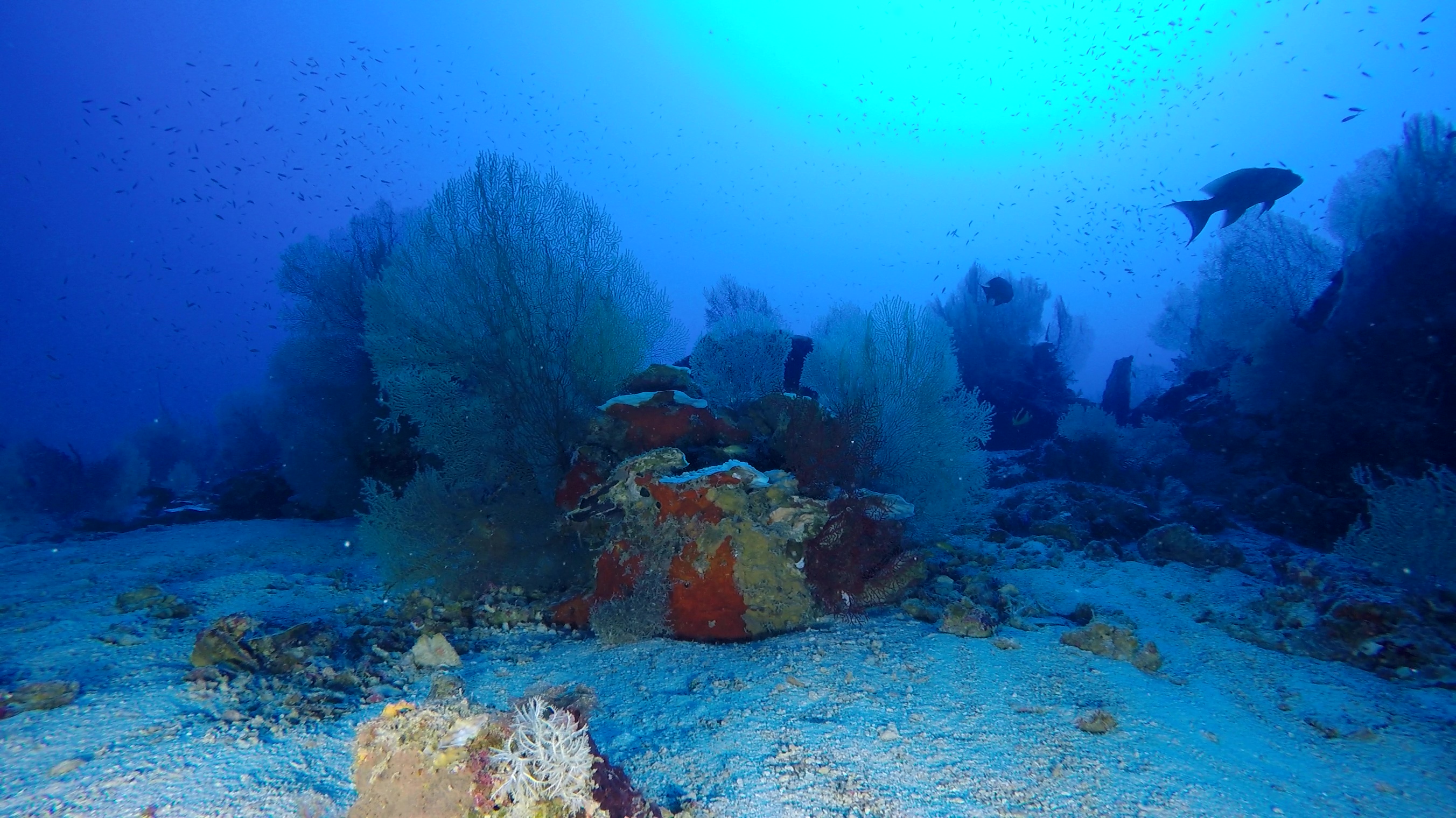
A mesophotic reef community composed of very large seafans and soft corals, some plate corals, sponges and a large abundance of reef fish in the background. Credit: University of Plymouth.
Collaboration across the Indian Ocean
The project will also see scientists collaborating with organisations across the Maldives, Seychelles and Mauritius, countries that rely on a healthy ocean for food, environmental protection and economic prosperity. Partner organisations include the Maldives Environmental Protection Agency, Maldives Marine Research Institute, Seychelles Island Foundation, Island Conservation Society (Seychelles) and the Government of Mauritius. Staff from these organisations will participate in fieldwork, long-term monitoring programmes, and Masters-level training at the University of Plymouth, building local capacity and providing essential information to support reef conservation across the region.
Mapping risk and resilience in deeper coral reefs
Through this initiative, researchers aim to identify the areas of greatest biodiversity and the reefs most at risk from climate change, helping to target protection where it can have the greatest impact.
The project represents an unprecedented opportunity to understand deep coral ecosystems in detail. Insights gained here have the potential to significantly advance the conservation of marine biodiversity worldwide.
Article text (excluding photos or graphics) © Imperial College London.
Photos and graphics subject to third party copyright used with permission or © Imperial College London.
Article people, mentions and related links
Emily Govan
Faculty of Natural Sciences