
Bias and positionality
Bias and positionality are essential considerations for any researcher when designing and conducting an educational research project. Bias refers to things that affect or have the potential to affect the accuracy and fairness of how the research is conducted and how findings are analysed and reported. Bias in educational research should not always be regarded as negative, however.
Positionality refers to you, the researcher, and what you inevitably bring to the research through your background, your prior knowledge and your experiences, and the influence this may have on how you conduct the research and how you interpret the data. The second part of our interview with Professor Kingsbury covers the importance of understanding positionality, common misconceptions and misunderstandings about positionality, and practical steps to engage with positionality when designing a project and when conducting the study.
Bias and Positionality in Educational Research (7’ 41”)

Bias and positionality in educational research: a quick guide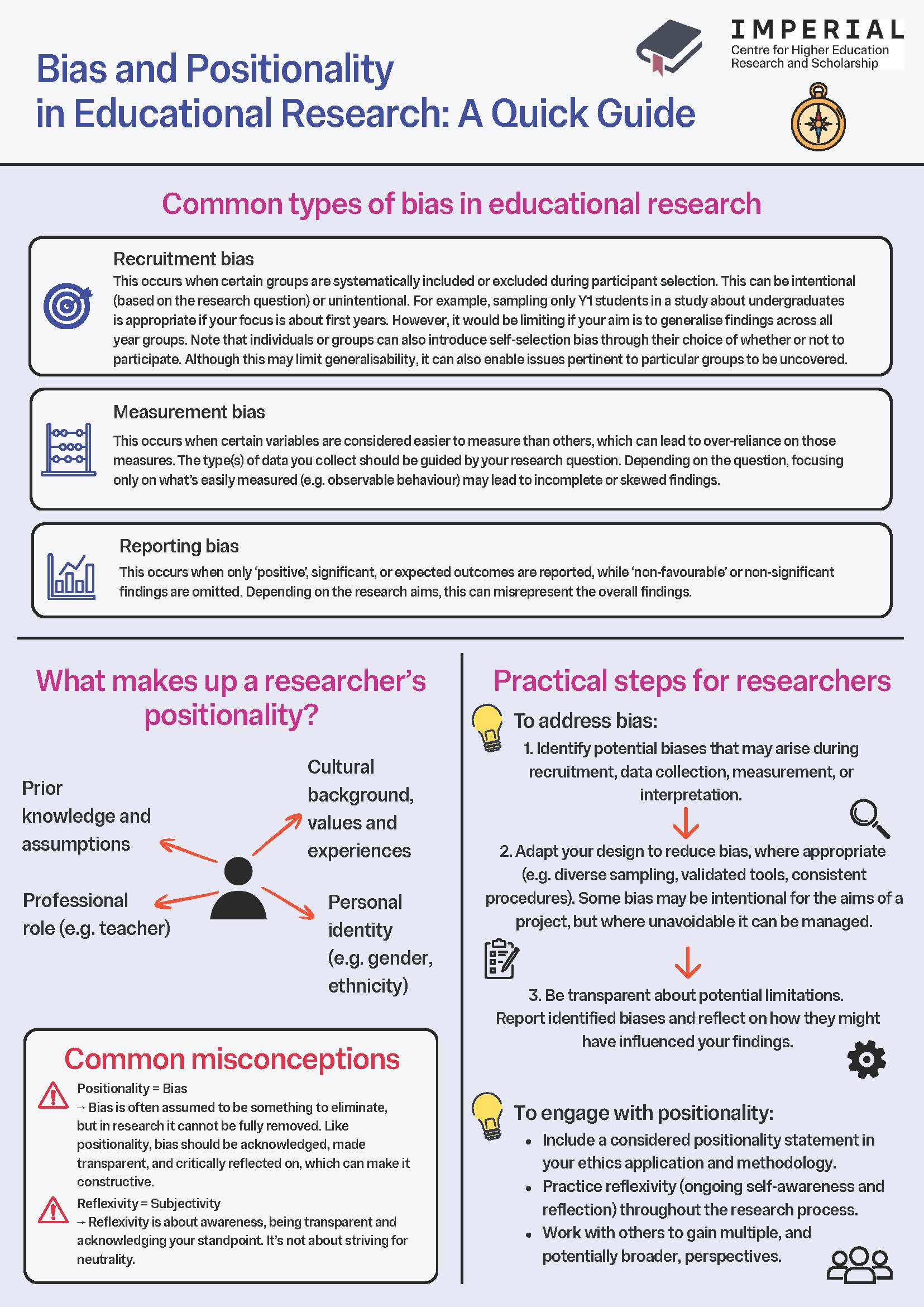
This bias vs positionality infographic provides an overview of common types of bias in educational research, the component parts of a researcher’s positionality, and practical guidance for how to work with bias and positionality in your study.