By Wensheng Huang, Prof. Gregory Offer Dr. Huizhi Wang
Electrochemical Science and Engineering Group
In recent years, safety concerns surrounding electric vehicles have intensified due to incidents involving lithium-ion battery thermal runaway (TR). TR that involves a series of uncontrolled, self-accelerating exothermic reactions triggered by mechanical, thermal and/or electrical abuse is a major cause of lithium-ion battery safety incidents[1]. Once initiated, it causes a rapid temperature increase, material decomposition and gas generation within a battery, accompanied by the ejection of high-temperature gases and solid debris through the battery's safety valve, a process known as venting[2]. Computational modelling has emerged as an effective tool for studying vented TR events. However, few studies have examined the behaviour of multiphase flow and heat transfer in vented ejecta within realistic confined battery module or pack environments. Understanding these processes is essential for accurately assessing thermal and gas related failure at the module and pack level.
At Imperial, we have developed and validated a numerical model for predicting the multiphase dynamics of vented ejecta in confined battery systems and for assessing the influence of particle related parameters on thermal and gas hazards. The model resolves both gas and solid particle phases and captures their interactions throughout the venting process. Validation against independently published experimental data demonstrates good agreement in predicting temperature evolution and ejecta dispersion behaviour.
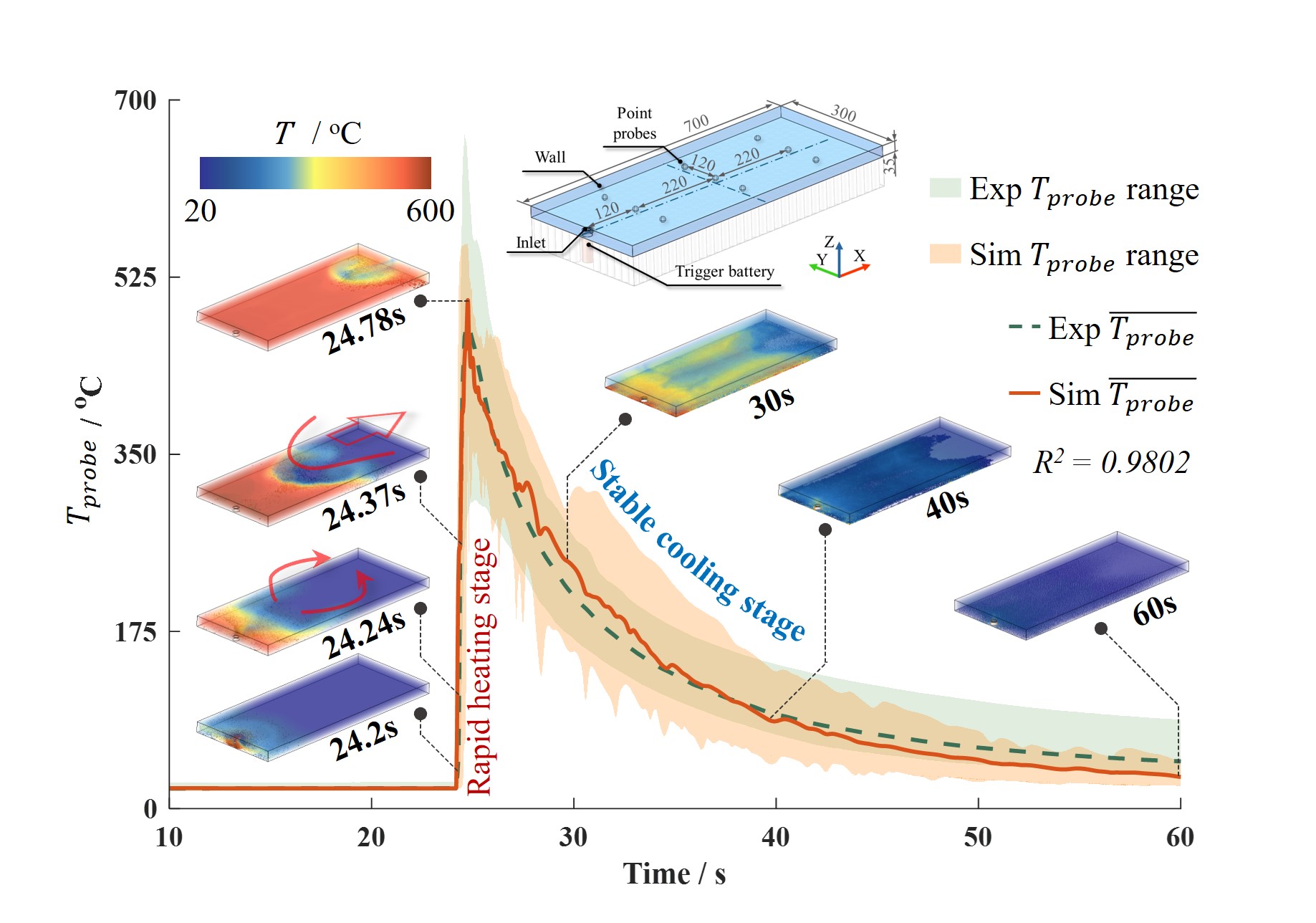
Figure 1. Multiphase venting ejecta behaviour and model-experiment comparison.
As shown in Figure 1, following venting, the ejecta undergoes a two-stage evolution. An initial rapid spreading phase strongly heats the internal void space within the module or pack, followed by a relatively stable cooling phase as mixing and heat dissipation progress. Solid particles are found to play a critical role in governing ejecta dispersion, temperature distribution and gas mixing. In particular, the presence of particles can affect the ejecta flow, temperature distribution and gas mixing, with residence time and dispersion distance critically dictating the thermal response within the confined space.
To quantify safety implications, a set of indices based on temperature rise and TR gas distribution is introduced. Sensitivity analyses are conducted on key particle-related parameters, including particle size, mass loading, specific heat-to-density ratio (Cp/ρ), restitution coefficient and wall stick probability. The results reveal competing effects between thermal and gas hazards. Larger particle size, lower Cp/ρ, higher wall stick probability and smaller restitution coefficient generally mitigate thermal impact. Lower Cp/ρ, larger particle size, larger mass loading, higher wall stick probability and smaller restitution coefficient reduce gas-related hazards. Conversely, smaller particle mass loading decreases thermal hazards but may intensify gas hazards due to enhanced gas dispersion.
The model provides a means to rapidly assess the safety implications of modifying particle properties or venting configurations at the module or pack level, reducing reliance on costly large-scale testing. The findings also suggest potential ejecta management strategies, such as modifying safety valve geometry to influence particle size, altering internal casing materials to enhance particle adhesion, and designing jellyroll structures to promote the formation of larger particles. This work advances the understanding of multiphase ejecta behaviour during vented TR in confined battery systems and provides guidance for safer battery design and the development of future safety standards.
Read more: Huang, W., Offer, G. Wang H. (2026). Modelling and understanding the role of particles in vented thermal runaway in confined battery modules and packs. Journal of Energy Storage, 141(A), 119235. https://doi.org/10.1016/j.est.2025.119235.
[1] Feng, X., Ouyang, M., et al. (2018). Thermal runaway mechanism of lithium ion battery for electric vehicles: A review, Energy Storage Mater. 10, 246-267. https://doi.org/10.1016/j.ensm.2017.05.013.
[2] Feng, X., Ren, D., He, X., Ouyang, M. (2020). Mitigating Thermal Runaway of Lithium-Ion Batteries, Joule, 4, 743–770. https://doi.org/10.1016/j.joule.2020.02.010.