
QuEST brings together researchers from all four faculties at Imperial College London to translate discoveries in quantum science into transformative quantum technologies.
Seed funding - quantum for health
In 2025, we are supporting seven short-term (12 week) research projects. This funding was targeted towards projects aligned with quantum for health care.
seed fund 2025 accordian widget
- Distributed Photonic Quantum Neural Networks for Distributed Learning in Medical Neuroimaging
- Understanding Severe Asthma Through Quantum-Powered Multi-Omics Analysis
- Using superconducting qubits to probe coherence in molecules
- Quantum Label-free Infrared Lifetime Imaging for Photodynamic Therapy Dosimetry
- TeraCam – Towards Terahertz Quantum Imaging with Undetected Light
- Quantum-Inspired Shaped Mid-Infrared Light for Spatially Controlled Tissue Desorption and Enhanced Mass Spectrometry
- Artefact-free quantum imaging for cell biology
Project leads: Louis Chen, Department of Electrical and Electronic Engineering
Shang Yu, Department of Physics
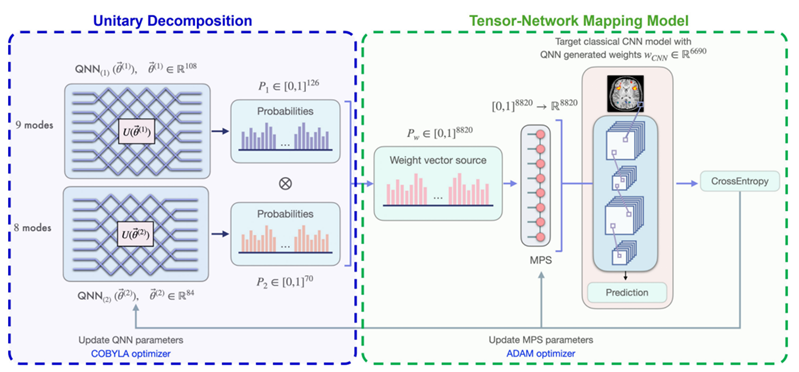
Our project focuses on the development of Distributed Photonic Quantum Neural Networks (dist-PQNNs), a new class of scalable quantum systems designed to harness the strengths of photonic hardware—low energy consumption, resilience to decoherence, and room-temperature operation. We utilize NVIDIA’s CUDA-Q platform to run GPU-accelerated simulations of large-scale quantum behavior with realistic photonic circuit parameters, while also testing our algorithms on real photonic quantum hardware provided by our collaborators. This combined theoretical, computational, and experimental foundation will enable robust distributed learning across multiple quantum nodes, while supporting fault-tolerant and secure architectures for quantum machine learning.
Building on this groundwork, we will apply dist-PQNNs to the analysis of complex neuroimaging data, working toward scalable quantum intelligence tailored to healthcare needs. In partnership with PSNC, NVIDIA, and ORCA Computing, we will validate the architectures through both high-fidelity emulation and early hardware testing, delivering a proof-of-concept platform for real-world use. Looking ahead, the project envisions a quantum-to-quantum data pipeline, where signals from emerging quantum sensors can be processed natively by quantum neural networks. This integration has the potential to transform biomedical diagnostics by accelerating clinical decision-making and enhancing precision in the detection of neurodegenerative and other brain-related diseases.
Project leads: Kian Fan Chung, National Heart & Lung Institute
Po-Heng (Henry) Lee, Department of Civil and Environmental Engineering
Collaborators: Nazanin Zounemat-Kermani, Department of Computing
Our project develops a Gaussian Boson Sampling (GBS) framework to uncover the higher-order correlation structure that drives non-response in severe asthma. Multi-omics signals (genomic, transcriptomic, proteomic and immune phenotypes) are embedded as weighted graphs/affinity matrices; GBS then samples subgraphs with probabilities linked to hafnians, naturally amplifying densely connected pathways. These samples reveal candidate regulatory modules, patient strata and predictive biomarkers that classical models often miss.
We use Gaussian photonic circuits (squeezers, interferometers, losses) and execute workflows on partner photonic hardware for early validation. This combined theoretical, computational and experimental stack supports robust benchmarking against strong classical baselines while producing clinician-friendly, subgraph-based explanations.
Deliverables include an open pipeline for multi-omics ingestion, GBS model libraries and decision-support prototypes for treatment selection. Looking ahead, the platform enables to reveal interaction pathway in which emerging biosensors stream signals to photonic processors for native analysis. Beyond improving care for severe asthma, our GBS methods generalise to allergies and autoimmune disorders, offering a scalable, photonics-ready blueprint for precision medicine that accelerates discovery and enables earlier, more targeted interventions.
Project leads: Malcolm Connolly, Department of Physics
Jessica Wade, Department of Materials
Molecules could underpin a new generation of quantum technologies. They can be tailored with special functions, are naturally biocompatible, and could act as sensors with extraordinary sensitivity. To unlock this potential, we must first understand how molecules behave at the quantum level, especially how their spins and charges remain coherent. This project will develop a superconducting qubit-based sensor to integrate molecules with superconducting devices in order to learn how they can be used for quantum sensing and information processing. By combining expertise in physics, chemistry and materials science, we will reveal new opportunities for hybrid molecular–superconducting technologies.
Project leads: Nathan Gemmell, Department of Physics
Rupert Oulton, Department of Physics
Fluorescence Lifetime Imaging (FLIM) is a powerful technique that can be used for observing the presence of a molecular species and its interactions with the surrounding environment. Currently, FLIM is performed via fluorophores or “labels” (molecules introduced to the sample specifically to fluoresce), and typically a single spot is scanned across a sample to produce an image. At each pixel of the resultant image, individual photon emission times are measured to map the fluorescent decay. This requires costly pulsed laser sources, single-photon level detectors, and sensitive timing equipment.
We propose to use “quantum nonlinear interferometry” to deliver full-field fluorophore-free lifetime imaging in the infrared using standard silicon CMOS camera technology. No pulsed laser sources, single-photon detection, or timing technology are required. Such a technology will be key for healthcare applications, consistent with the UK government’s quantum mission 3. This technique, though targeted here at PDT dosimetry, will enable a new field of label-free full-field infrared lifetime imaging: IR-LIM.
Quantum imaging with undetected photons (QIUP) is a quantum nonlinear interferometric technique that allows the transfer of image information from the infrared to the visible. With this, we can turn any camera into one that can “see” with infrared light, capable of hunting for specific molecules via their unique absorption profiles.
Optically pumping a sample simultaneously being imaged by QIUP, it will be possible to map an optically induced transparency (which occurs when all molecules can no longer absorb the IR photons as they have already been driven into the excited state by the optical pump). This transparency will have a lifetime depending on the local environment (just like in FLIM) which can be measured using a simple dual modulation strategy (where the pump and collection light are turned on and off out of phase with one another).
We will develop this technique to target reactive singlet Oxygen, the cytotoxic component of Photodynamic Therapy (PDT) in the treatment of cancer. This will allow us to develop a new direct dosimetry technique to ensure treatment dose levels can be maintained in a dynamic in vivo environment.
Project lead: Vladimir Kornienko, Department of Physics
Terahertz (THz) part of the electromagnetic spectrum lies between visible light and radio waves. It is particularly exciting for healthcare imaging because it can probe vibrational modes of large biological molecules. Unlike X-rays, THz waves are non-ionising and therefore safe, while early studies suggest they could be used to detect tissue abnormalities such as early-stage cancers. However, two major challenges limit progress: absorption by water vapour in the atmosphere and strong thermal background noise.
This project aims to address the thermal noise problem by extending a recently developed method known as Quantum Imaging with Undetected Photons (QIUP) into the THz range. QIUP uses nonlinear optical processes to probe a sample with low-frequency light, while retrieving the image in the visible spectrum. Because the image is reconstructed without detecting the THz photons directly, the technique inherently suppresses background noise – a key advantage for medical imaging.
A central focus will be the development of a new kind of optical filter based on ultra-narrow atomic transition in rubidium vapour. Such a filter can separate closely spaced wavelengths with high precision and withstanding the strong laser pump powers. The ultimate outcome will be a first prototype of a THz-QIUP camera operating at room temperature and capable of low-noise, high-speed imaging.
Beyond the technical advance, the project will deepen our understanding of spatial resolution in quantum imaging and open a pathway towards practical THz cameras. In the long term, this technology could contribute to increasing the reliability of cancer detection, demonstrating how quantum science can translate into transformative tools for healthcare.
Project leads: Robbie Murray, Department of Physics
Nathan Gemmell, Department of Physics
Shaping light beams in novel ways can open up new methods for analysing biological tissues. This project explores how tailoring mid-infrared light, using techniques inspired by quantum optics, can improve how we study the metabolism of biological systems with mass spectrometry imaging.
Mid-infrared lasers interact strongly with key molecular vibrations in water, lipids and proteins, making them powerful tools to desorb (or ablate) solid materials into the gas phase for mass spectrometry. Traditionally, these experiments use standard round (Gaussian) beams, which limit control over how energy is delivered into the sample. By tailoring the spatial profile of the beam, we gain far greater control over the tissue desorption, influencing how molecules are released and detected from a biological sample such as a biopsy.
The project will combine custom mid-infrared light sources with advanced beam-shaping optics to produce structured beams with novel intensity patterns. These complex beams will be used to ablate biological samples into a mass spectrometer for chemical analysis and compared against conventional beam approaches. The work brings together expertise in applied chemical imaging and quantum optical imaging, building a bridge between quantum-inspired light control and real-world biomedical applications in metabolomics.
This seed project will generate preliminary data to guide the development of next-generation analytical technologies using quantum inspired shaped light, with potential benefits for healthcare diagnostics and spatial biology.
Project leads: Matthew Ward, Department of Physics
Jessica Wade, Department of Materials
Louis Minion, Department of Materials
Fluorescent probes that emit circularly polarised light (CPL) can report on molecular chirality—a crucial handle for understanding biological structure and drug interactions—but today’s measurements are often distorted by artefacts, forcing the use of strong (and sometimes less biocompatible) emitters. This project develops a modular, timing-synchronised add-on for an existing CPL spectrometer that suppresses parasitic linearly polarised luminescence (LPL), enabling sensitive, artefact-free CPL readout from fully carbon-based, biocompatible probes.
Using a modulated light source, fast electronics, and precise detection windows, the team will demonstrate accurate CPL measurements even in the presence of strong LPL, publish the hardware and software openly, and make the instrument available to researchers across Imperial and the UK. The work advances quantum imaging for healthcare, supports materials for quantum technologies, and contributes to navigators & metrology within QuEST.
Expected impact: reproducible, high-sensitivity CPL data to accelerate probe design and translation of chiral quantum imaging in biology.
Seed funding for post-doctoral researchers
In March-June 2024, we supported 9 research projects conducted by postdocs across the university with up to £5000 per project. The funds are intended to help early career researchers develop and validate their own ideas and take a step towards research independence.
Postdoc accordion widget
- Deterministic loading of single atoms into optical tweezer traps
- Machine learning for quantum experiment control
- Polarisation stabilisation for quantum sensors
- Quantum sensing for undergraduate teaching laboratories
- Realising a Bosonic Josephson junction using a semiconductor Bose-Einstein condensate of photons
- Realizing quantum optical neural networks through programmable photonic processors
- Shaped excitation for the controlled entanglement of electron-nuclear spin states in permanent, and light-induced, spin-qubits
- Superconducting magnetic microresonators for quantum sensing technologies
- Widefield quantum imaging of nanoscale magnetic systems
Dr Kai K Voges, Feodor Lynen Research Fellow, Department of Physics
Modern quantum computers can already solve simple computing tasks and are superior to conventional computers when it comes to specific problems. Nevertheless, the technical possibilities to build a universal quantum computer are not yet available and require further research and development in terms of speed, stability and scalability.
In this regard, a promising quantum computing platform is based on neutral atoms, in which individually trapped atoms can be used as qubits for quantum calculations. The atoms are trapped in optical tweezer traps, which are tightly focussed laser beams. Using modern laser technology, large arrays of hundreds of these traps can be generated, dynamically rearranged and manipulated, which is a key feature for the scalability of this approach. In recent years, the size of those atomic arrays has grown rapidly as the demand for higher qubit number in quantum computers has increased.
This technology is limited by the process of loading the atoms into the tweezer traps. Due to pairwise atom ejection during tweezer loading, the probability of finding a single atom in a tweezer trap is limited to about 50%. This leads to randomly filled arrays in which only half of the tweezers are occupied. To achieve uniformly filled arrays, the loaded traps have to be identified and then rearranged. This process becomes increasingly difficult and time-consuming the larger the array becomes.
In this project, we research a new method to load atoms into the tweezer traps and achieve loading efficiencies beyond the usual 50%. Our approach is based on an alternative method to create the ultracold atomic reservoir from where the tweezers are loaded. This is the blue-detuned magneto-optical trap, which is known to provide very dense and cold atomic ensembles. It gives us the outstanding possibility to engineer the pairwise scattering, so that the probability of finding single atoms in the tweezers is significantly increased.
Our approach makes the preparation of atomic tweezer arrays more reliable, faster and more scalable and opens a pathway to create much larger arrays of atoms for the neutral atom quantum computing approach.
Thomas Walker, Department of Physics
As quantum technology platforms grow in complexity, it becomes infeasible to manually optimise all controllable parameters. As they move to real-world applications there cannot always be a specialist present to maintain them, so automation is required. This is especially true in compact or hard-to-access systems such as quantum sensors for medical applications, atomic clocks for navigation, and space-borne experiments. Both issues can be solved by implementing machine learning (ML) optimisation algorithms in the experimental control.
This project will integrate an ML algorithm for finding optimal experimental parameters into an existing quantum experimental control (QEC) ecosystem and demonstrate a simple proof-of-concept application. Specifically, we will use ARTIQ, a widely used open-source software package for QEC, and Sinara, an open-source hardware platform designed for ARTIQ. These tools are used globally in labs for quantum computing, sensing, networking, and atomic clocks, making this a versatile solution for atomic and optical based QTs.
The experiment will involve using two motorised mirror mounts to steer laser light into an optical fibre. Maximising the amount of light coupled into a fibre requires precise tuning of the beam position and angle, which can be achieved by tilting the mirrors in two dimensions. With motorised mirror mounts, these angles can be set through applied voltages, allowing the process to be controlled by ARTIQ. The amount of light coupled into the fibre can be measured by a photodetector at the output of the fibre and recorded by ARTIQ. This is a routine task with a single output parameter, making it fast and simple to set up and characterise. The ML algorithm will find optimal mirror angles by iteratively reading the laser power from ARTIQ, and giving it new mirror angles to try, until it converges on a maximum.
Aisha Kaushik, Research Fellow, Department of Physics
Nathan Gemmell, Department of Physics
Thanks to considerable global efforts (including the UK’s National Quantum Technologies Programme), quantum technologies are starting to penetrate our society. The intricate features of quantum mechanics are inspiring new generations of physicists. However, while theoretical undergraduate courses explaining the often counter-intuitive mathematical descriptions of quantum experiments are common, practical experiments from which the students can learn and build themselves are few and far between.
I work on a fascinating facet of quantum sensing titled ‘Imaging with undetected photons’, using fundamental principles of quantum mechanics to move information from one area of the electromagnetic spectrum into another. One of the first experiments physicists learn about is the ‘double-slit’, where passing photons produce an interference pattern with magnitude linked to the availability of ‘which slit’ information. In our experiment, instead of two slits we use two crystals, each of which produces identical entangled photon pairs (each pair has a visible, and an infrared photon). If there can be no way to know which crystal a pair came from, interference is observed. Fascinatingly, the interference of the visible light is then dependent on the indistinguishability of the infrared light! Any change to the infrared beam (such as blocking it) can be measured on the visible beam: we can thus probe objects with infrared light without needing to detect any infrared photons!
We have managed to pare the experiment down to a simple optical arrangement costing <£5K. Here I plan to turn this setup into an undergraduate teaching platform. With few optical components and a simple guide, this experiment can provide students with experience of a truly quantum phenomenon, while also serving as a discussion point for many other quantum processes such as the complementarity principle, frustrated two photon creation, interaction-free measurements, spontaneous parametric down conversion, thermal blackbody background, and much more.
Ross Schofield, Department of Physics
Shang Yu, Department of Physics
Quantum neural networks are emerging as a new paradigm in computing. We aim to design a scalable quantum optical neural network (QONN) circuit, which can be implemented on a photonic quantum processor. Such a QONN has potential applications in fields like drug discovery, materials science, and complex system simulations, including those related to climate change. The implementation of the nonlinear gate, a critical component in QONNs, will be verified first and can be effectively achieved via “non-Gaussian operations”. Numerical simulations will be conducted to validate various conditions and parameters necessary for effective nonlinear operation, providing a robust foundation for future experimental work.
Training progress is another key element in QONNs. A code using TensorFlow backend and Strawberry Fields packages will be developed to train the parameters of the QONN with 10-20 modes incorporating the aforementioned nonlinear operations. This testing will help ascertain the resources needed for training QONNs of varying scales. Addressing scalability, we will also investigate the distributed QONN architecture. The compatibility of photonic quantum computing with commercial optical fibre networks offers an opportunity for QONN networking across nodes.
In collaboration with colleagues in the Department of Materials, we aim to design distributed QONNs using a special kind of diamond imperfection called nitrogen-vacancy (NV) centres, which act as quantum repeaters. This will help us build large-scale networks for handling quantum information. By doing this, QONNs will become more scalable and suitable for a wide range of uses. The successful design and validation of these tasks will not only ensure the accuracy of subsequent experiments but also establish a foundation for further funding opportunities, enabling the continuation of research in this area.
Ciarán Rogers, Department of Chemistry
Electronic and nuclear spin centres have been proposed as qubits in the solid-state. Many molecular systems reported in recent years feature coherence times in the millisecond regime, above liquid helium temperatures, resulting in low-cost and synthetically modifiable platforms for quantum information processing (QIP) purposes. Despite such developments, demonstration of controlled entanglement in spin-qubits by magnetic resonance techniques remains challenging. Therefore, there is a need to develop magnetic resonance methodology for high-fidelity quantum control of spin-qubit centres in order to realise quantum computing in molecular systems.
This proposal aims to adapt previously reported Electron Paramagnetic Resonance (EPR) techniques and apply novel shaped waveform excitation to demonstrate controlled entanglement in electron-nuclear spin-qubit systems. Initial experiments will show a proof-of-concept in a model system involving 1H nuclear spin centres. Once demonstrated, a novel application of shaped excitation will be applied to a system measuring the electron-19F inter-spin interaction. Exploiting the electron-19F interaction for QIP purposes is of interest as 19F nuclear spins are often absent from the qubit environment and can therefore be judiciously inserted at sites of interest, resulting in a high-level of control in the qubit architecture. Interacting electron-19F spin-qubits have not yet been explored in the context of electron-nuclear QIP applications and could form the foundation of future scalable molecule-based quantum technologies.
The proposed adapted technique should allow the number of 19F nuclear spin centres coupled to the electron to be determined – resulting in a method to count the number of nuclear spin centres by pulse EPR. This may have implications in many areas and form the basis of follow-up funding in quantum research. Finally, preliminary experiments involving light-induced spin centres will be explored, determining the interaction strength between a light-induced spin centre and 19F nuclear spins, paving the way for photo-switchable molecule-based quantum technologies.
Blaise Geoghegan, Department of Chemistry
Society’s ever-increasing reliance on computers demands that we drastically improve current technologies. The state-of-the-art for digital data storage utilises magnetic properties of bulk materials embedded in electrical circuits to read/write data in binary. These technologies must be condensed further to satisfactorily improve data storage densities to meet contemporary demands. We can, rather, use quantum properties of molecules, such as their quantum spin value (+1/2 ≈ 1 and −1/2 ≈ 0) to act as the information storage medium (qubits) in electronic devices, rendering them “spintronic” devices. This can be achieved by depositing single-molecule thick films on flexible substrates which can be incorporated into devices to improve data storage densities while simultaneously increasing operation speeds.
In this context, developing films of molecular thickness is crucial as it removes intermolecular interactions in the third dimension that lead to decoherence and offers improved control over inter-qubit interactions by limiting materials to two dimensions. However, at this scale, quantum effects (i.e. magnetic tunnelling) become relevant when considering performance, meaning optimisation is of paramount importance for technological developments. Hence, we must understand the magnetic properties of molecular monolayer films and their ability to store quantum information in the temporal plane. For bulk materials this is achieved via pulsed electron spin resonance (ESR) spectroscopy, which can carry out quantum sensing and elucidate quantum lifetimes. However, due to the small number of molecules present in monolayer films, commercial spectrometers lack the required sensitivity. In response, it will be demonstrated for the first time that superconducting ESR microresonators can be used in tandem with commercial ESR instrumentation to measure monolayer molecular spintronic thin films based on metal-phthalocyanines.
Daan Arroo, Department of Materials
Seed funding for research teams
In April-June 2023, we supported three short-term (12 week) research projects. This funding was targeted towards enabling the development of new cross-disciplinary collaborations and research directions in quantum research at the university.
Research group accordion widget
- Quantum annealing for simulation optimisation with applications in climate systems and wastewater-driven energy facilities
- Quantum coherent microwave‐to-optical transduction
- Quantum data acquisition system
Project leads:
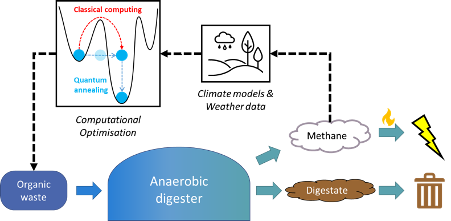
Many real-world systems - including climate systems and wastewater-to-energy production using anaerobic digesters in wastewater treatment (WWT) - are far too complex for closed-form mathematical expressions to adequately describe, necessitating time-consuming, computer simulations to analyse and predict their behaviour. Rather than limited - and incomplete - scenario analysis of classical simulated systems, we propose to take an optimisation approach (even if optimisation is not the primary objective), to identify the set of initial conditions and/or model parameter values that predict extreme outcomes (positive or negative) accurately. In this regard, we seek to apply quantum annealing algorithms for speeding up such computational-demanding tasks.
In previous research, we introduced QuAnCO (Quantum Annealing Continuous Optimisation), an adaptation of Trust Region Newton (TRN), which enables the use of Ising solvers such as D-Wave’s quantum annealers for solving the Trust Region (TR) subproblem. However, the original QuAnCO algorithm is limited to unconstrained, continuous optimisation of smooth - i.e., twice differentiable - objective functions. Our goal is to extend QuAnCO to solve optimisation problems with 1) equality and inequality constraints, 2) a mix of continuous and discrete parameters, and/or 3) objective functions which lack the second (or even the first) derivative(s). Such extensions would allow us to solve a wider range of optimisation problems, such as simulating the climate and WWT systems we proposed. This project could surpass the classical quality of sensitivity analyses and ultimately lead to more effective quantum solutions for renewable energy and environmental sustainability.
Learn more about the Quantum Annealing for Simulation Optimisation project.
 Project leads: Dr Michael Vanner, Department of Physics
Professor Malcolm Connolly, Department of Physics
Professor Mark Oxborrow, Department of Materials
Quantum computing and communication has enormous potential to improve how we process and transmit information. Such improvements will enable advanced calculations, such as stimulating new approaches to drug discovery, provide new forms of ultra‐secure communication that can form the backbone of future quantum networks, and enable breakthroughs in fundamental physics. One of the leading platforms for quantum computation, now also hotly pursued by high‐technology giants, employs microwave photons in superconducting circuits that need to be operated close to absolute zero in temperature. Networking these quantum processors over large distances, and scaling beyond current cryogenic capacity limitations, requires new methods to coherently connect these superconducting quantum nodes via room‐temperature optical fibre links.
This seed project will experimentally explore how to efficiently bridge the microwave and optical telecommunications domains via hybrid quantum system development. The project will be pursued by an interdisciplinary team spanning the Physics and Materials departments including Michael R. Vanner, PI of the Quantum Measurement Lab and an expert in quantum optics and quantum optomechanics, Malcolm R. Connolly, PI of a superconducting circuits team studying electron behaviour in nanomaterials, and Mark Oxborrow, PI of a team studying functional microwave materials. By combining their complementary skill sets, this QuEST collaboration aims to overcome existing challenges in this highly sought-after direction.
Project leads: Dr Ioannis Xiotidis, Department of Physics
Professor Wayne Luk, Department of Computing
Exploring in-depth the origins of the Universe and its mechanisms becomes increasingly more complicated and time-consuming. Existing and future particle physics experiments need to process large amounts of data obtained at rates which are unprecedented, leading to extensive computational operations and increasing carbon footprint. Reducing those factors, as well as performing efficient selection of the obtained data are the most important ingredients towards future discoveries. An upcoming technology that can be a decisive factor in reaching the required precision for discoveries in the most efficient way is quantum computers. However, quantum computers will not completely replace their classical counterparts as they are not necessarily outperforming classical computers in all challenges that are faced. For this reason, the Quantum Data Acquisition System (qDAQ) project is exploring hybrid hardware environments within the scope of high-energy physics experiments that will allow the coexistence of both technologies to maximize the gain.
As quantum computers are still experimental devices, developing a reliable method of retrieving and sending data to it, with the constraints that are present in high energy physics experiments (e.g. low latency, high bandwidth, algorithm implementations etc.), is a daunting task. Since the problems faced are complicated and multi-dimensional, building new cohorts across different fields of science is needed. For this reason, qDAQ is a multidisciplinary research group made up of researchers from the Physics and Computing departments of Imperial College.
The group currently consists of the following members:
Dr. Ioannis Xiotidis (Physics) - main Project Investigator with hardware and software experience in Data Acquisition Systems for leading experiments like ATLAS (CERN) and DUNE (Fermilab),
Prof. Wayne Luk (Computing) - main Project Investigator with experience in theory and practice of customising computations to meet application and implementation needs,
Prof. Alexander Tapper (Physics) - co-Project Investigator - particle physicist who led the real time data selection project for the international CMS collaboration at CERN,
Dr Patrick Dunne (Physics) - co-Project Investigator has extensive experience in High Energy Physics DAQ system implementations and hardware accelerating computing for big data problems,
Dr Andrew Rose (Physics) - co-Project Investigator - particle physicist by training; digital-electronics, firmware and high-performance-software engineer by profession.
Simon Williams (Physics) - Research Assistant funded by QuEST with experience in quantum simulation, addressing problems in particle theory and phenomenology,
Zhiqiang Que (Computing) - Research Assistant funded by QuEST with experience in the theory and practice of FPGA acceleration of demanding applications.