Imperial researchers take leading role in major IPCC climate report

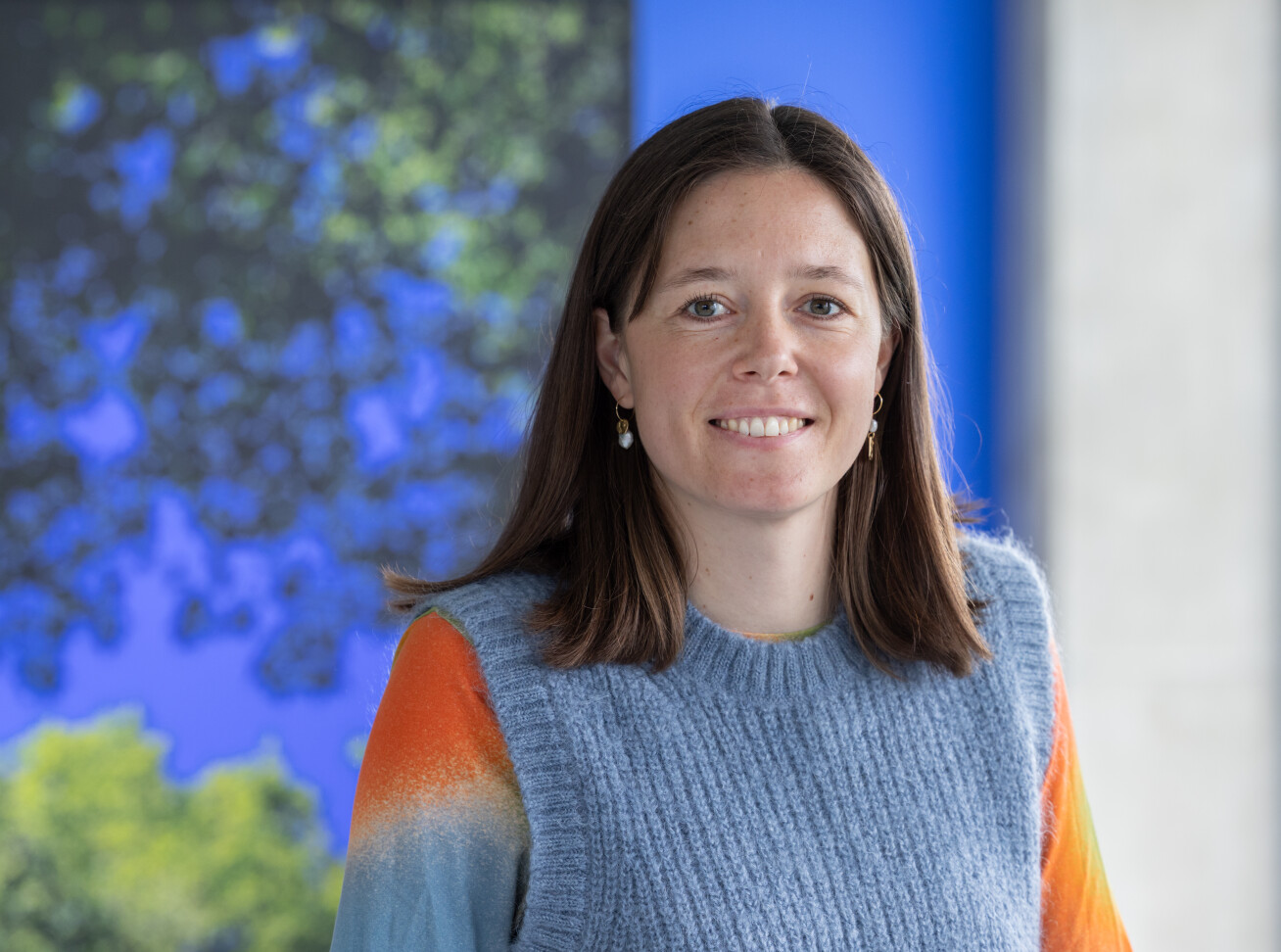
Professor Fredi Otto is one of Imperial's eleven researchers contributing to the IPCC Assessment Report 7.
Imperial has more authors contributing to a crucial report on climate change than any other organisation in the world.
On Friday, the author list was released for the Intergovernmental Panel on Climate Change’s (IPCC) Assessment Report 7 (AR7).
Over the next five years, 664 leading experts will compile the latest and most important evidence on climate change for AR7. Once finished, the report will help shape policies to tackle climate change throughout the 2030s.
Imperial will have 11 researchers working on AR7, the highest number for any institution: Paulo Ceppi, Friederike Otto, Robin Lamboll, Emily Theokritoff, Raffaele Della Croce, Estefania Quenta Herrera, Jarmo Kikstra, Joeri Rogelj, Evangelia Katsou, Diego Armando Moya-Pinta and Alaa Al Khourdajie.
The most recent of these, Assessment Report 6, was published in March 2023 and described by the UN Secretary General as a “survival guide for humanity.”
The reports set out the science of climate change, how humans are being affected, and the actions needed to cut planet-heating emissions and adapt.
Imperial’s 11 researchers contributing to AR7 reflects the College’s range of expertise on climate change, says Dr Caterina Brandmayr, Director of Policy and Translation at the Grantham Institute - Climate Change and the Environment.
“From climate science to finance and public health to engineering, Imperial hosts a wealth of experts studying the climate system, the impacts of a warming climate and solutions to promote a decarbonised, resilient future," says Dr Brandmayr.
"It is great to see this diverse expertise reflected in the Imperial contributors involved in AR7.”
Dr Robin Lamboll, a Research Fellow at the Centre for Environmental Policy, is a lead author of a chapter that will explore future changes in global temperatures. They contributed to previous IPCC reports, but AR7 will be their first time working on a report from start to finish.
“It's an honour to be included in the process of describing the scientific consensus on climate change. I'm excited to get to work synthesising so much fresh knowledge and codifying the basis for this most challenging decade of climate action,” says Dr Lamboll.
Science of 'utmost importance'
AR7 will be the third IPCC assessment report for Professor Friederike Otto, a Professor in Climate Science at the Centre for Environmental Policy and the co-founder of World Weather Attribution.
Professor Otto describes her work on AR5 and AR6, together spanning more than a decade, as “extremely rewarding.”
She points to the International Court of Justice’s advisory opinion on climate change as an example of the significance of the IPCC’s work.
Published last month, the opinion cites the IPCC dozens of times and has been described as a “turning point in international climate law” that could shape major legal decisions on climate change.
Professor Otto says the IPCC’s work “continues to be of utmost importance,” particularly with increasing attacks on climate science.
Since taking office, the Trump administration has left the Paris Agreement, defunded climate research programmes, fired hundreds of experts, taken important datasets offline and recently published a climate report with more than 100 false or misleading claims.
Professor Otto will oversee a chapter exploring changes in extreme weather around the world.
“I’m a coordinating lead author. This means leading the chapter, and ultimately being responsible for making it happen. It’ll be a lot of work, but it also gives a lot of opportunity to shape the structure and focus of the chapter,” says Professor Otto.

A priority of the chapter is including more studies focusing on the Global South, which was a key gap in AR6, says Professor Otto.
Developing nations in the Global South are the most vulnerable to climate change, but limited budgets to fund climate research makes it harder for them to investigate changes in weather extremes and prepare for the future.
Professor Otto says this also makes it more difficult for the Global South to participate in the IPCC assessment reports.
“Most scientists in the global South are paid to deliver services and teaching with very little time for research, making it incredibly hard for them to put aside the time required for IPCC.”
The IPCC has not yet confirmed a timeline for AR7, but the three Working Group reports and the final Synthesis Report are expected to be published by the end of 2029.
In May this year, the Grantham Institute brought together UK climate experts to explore research priorities to strengthen AR7. Read the report on the event here.
Imperial AR7 authors
Working Group 1 - The Physical Science Basis
- Dr Paulo Ceppi, Senior Lecturer in Climate Science at the Department of Physics - Lead Author - Chapter 2: Large-scale changes in the climate system and their causes
- Prof Friederike Otto, Professor in Climate Science at the Centre for Environmental Policy - Coordinating Lead Author - Chapter 3: Changes in regional climate and extremes, and their causes
- Dr Robin Lamboll, Research Fellow at the Centre for Environmental Policy - Lead Author - Chapter 5, Scenarios and projected future global temperatures
Working Group 2 - Impacts, Adaptation and Vulnerability
- Dr Emily Theokritoff, Research Associate, Grantham Institute - Climate Change and the Environment, Imperial College London - Lead Author - Chapter 3: Current adaptation progress, effectiveness and adequacy
- Dr Raffaele Della Croce, Co-Director Singapore Green Finance Centre and Advanced Research Fellow, Imperial College Business School - Lead Author - Chapter 6: Finance
- Dr Estefania Quenta Herrera, Postdoctoral Fellow, Department of Civil and Environmental Engineering - Faculty of Engineering - Lead Author - Chapter 14: Terrestrial, freshwater and cryospheric biodiversity, ecosystems and their services
Working Group 3 - Mitigation of Climate Change
- Jarmo Kikstra, PhD candidate, Centre for Environmental Policy - Lead Author - Chapter 3: Projected futures in the context of sustainable development and climate change
- Prof Joeri Rogelj, Professor Rogelj, Director of Research at the Grantham Institute – Climate Change and the Environment - Lead Author - Chapter 3: Projected futures in the context of sustainable development and climate change
- Dr Evangelia Katsou, Chair in Water Engineering Department of Civil and Environmental Engineering - Faculty of Engineering, Lead Author - Chapter 4: Sustainable development and mitigation
- Diego Armando Moya-Pinta, Academic Visitor, Department of Chemical Engineering - Faculty of Engineering - Lead Author - Chapter 9: Energy systems
- Dr Alaa Al Khourdajie, Department of Chemical Engineering - Faculty of Engineering, Lead Author - Chapter 14: Integration and interactions across sectors and systems
Article supporters
Article text (excluding photos or graphics) © Imperial College London.
Photos and graphics subject to third party copyright used with permission or © Imperial College London.
Reporter
Sam Ezra Fraser-Baxter
The Grantham Institute for Climate Change
