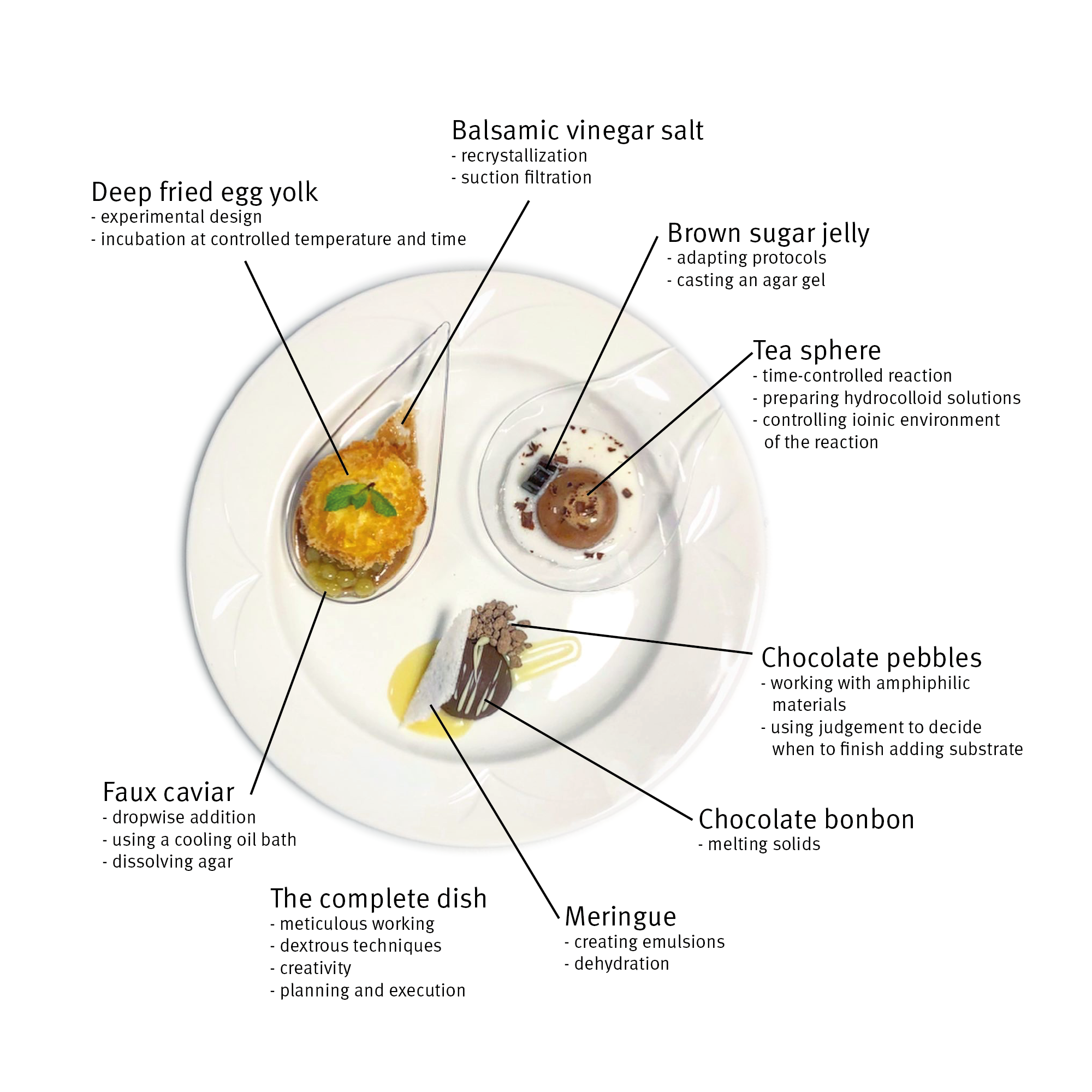
Chemical Kitchen began in 2019 with an unusual idea: teach chemistry students the skills and mindset of lab work through cooking. It was created by Professor Roger Kneebone, Professor Alan Spivey and chef Jozef Youssef of Kitchen Theory. Imperial's Pedagogy Transformation Project provided the seed funding.
Today it is a family of courses and activities built on the same idea: the kitchen is a powerful, welcoming place to learn how professionals really work.
Why cooking?
Professional cooking asks for two things at once. It needs strict method: consistent, repeatable results to tight deadlines. It also needs creativity, craft and the nerve to improvise. Those are exactly the qualities that scientists, doctors and engineers need. By practising them in the kitchen instead of the lab, students build these skills without the weight of the subject on top. They are also free to make mistakes and learn from them.
For teachers, the kitchen is a flexible tool. It lets tutors explain hard ideas in a simple way, without making them simplistic. It also brings out the parts of practice we rarely teach directly: how we plan, record, work together and carry ourselves as professionals.
Evidence and impact
Everything we do is tested. We evaluate each course and feed what we learn back into its design. Our research shows that the first-year Chemical Kitchen course levels the playing field: students who arrive with the least confidence in the lab gain the most, and the gap between groups closes by the end. Related studies show the Medical Kitchen and Biomedical Kitchen support clinical skills and a smoother transition in their own ways.
The work has been recognised with the Royal Society of Chemistry's 2022 Team Prize for Excellence in Higher Education, and as a finalist for the Falling Walls 2022 Science Breakthrough of the Year. Our related Lab-in-a-Box project was chosen for the Science Museum's permanent collection. There's more on our publications, media and awards page.