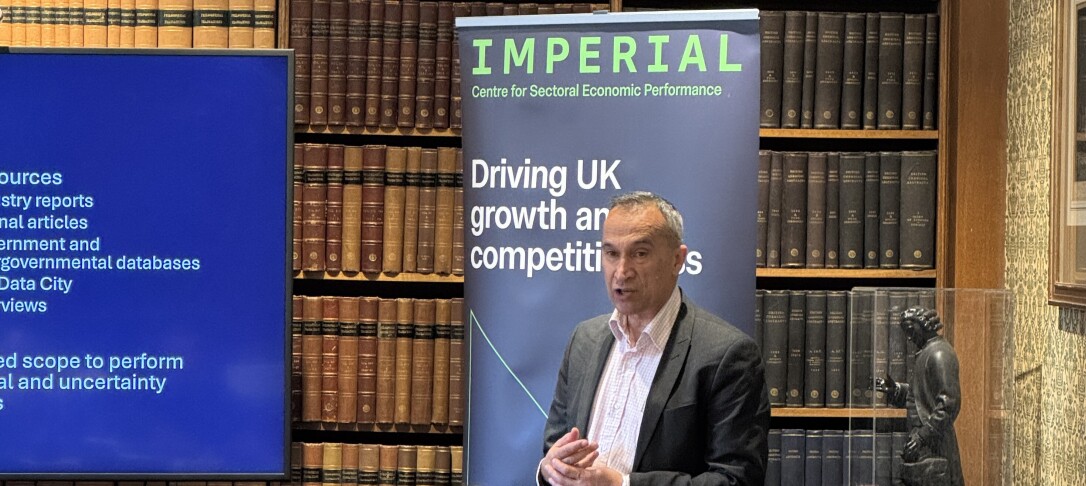
The Centre for Sectoral Economic Performance (CSEP) at Imperial College London is a joint initiative between Imperial’s Faculty of Engineering and Imperial College Business School. It combines expertise and knowledge in science, technology, economics and management from across Imperial and beyond. CSEP focuses on strengthening the UK’s industrial competitiveness through research and policy engagement. As part of this work, we have been examining the fine chemicals sector, which underpins key industries such as pharmaceuticals, agrochemicals, and advanced materials. The first phase of this project has completed a landscape review and developed recommendations to improve the competitiveness of the sector. This meeting will bring together senior representatives from academia, government, industry bodies, and leading companies to discuss our findings and policy recommendations and use them to plan the next phase of the project which involves the development of a sector strategy.
Fine chemicals study summary
The fine chemicals sector is a key contributor to the UK economy, supporting industries such as pharmaceuticals, agrochemicals, and advanced materials. Despite its strong foundation, the sector faces significant challenges, including stagnant productivity growth, global competition, regulatory uncertainty, and skills shortages.
Our study provides a comprehensive diagnosis of the industry, examining its landscape, productivity, technology, skills, and regulatory environment. Key findings include:
- The global fine chemicals industry is highly competitive and growing, with 80% of the market being involved in manufacturing
- The UK’s fine chemicals sector is well established, with highly diversified products. It contributes £11-12bn to GDP and underpins a wide range of industries
- The UK’s broader chemical industry has struggled with productivity growth and global competitiveness, particularly due to high energy costs, raw material shortages, and skills gaps. While the fine chemicals sector may be somewhat insulated due to its high-value products, its long-term success depends on continued innovation, workforce development, and a stable business and regulatory environment
- The sector has a GVA of £31bn and employs over 188,000 people, with key subsectors including catalysts, contract chemicals, pigments & dyes, additives, and construction chemicals
- Key technology enablers include process intensification, digitalisation, and biotechnology integration, alongside innovations in sustainability, synthetic biology, and biomass utilisation. The battery industry, driven by the net zero transition, is also emerging as a key driver of demand for advanced fine chemicals
- Regulatory divergence, particularly UK REACH and emerging EU policies, may increase compliance burdens and impact trade, especially considering how integrated chemical value chains are across the globe
- The sector faces a shortage of skilled workers, particularly in technician roles (Level 3-5 qualifications), alongside growing demand for expertise in innovation, data analysis, and leadership
- Industry stakeholders highlight the need for policy coordination, investment in alternative feedstocks, SME support, and stronger research-commercialisation links

Link to the report: FINAL_Fine-Chemicals_Brochure_External_RGB.pdf