Data-driven surrogates for predicting thermal performance and response functions of thermo-active piles
11/08/2026
🎉 A new paper is out in Machine Learning and Data Science in Geotechnics!
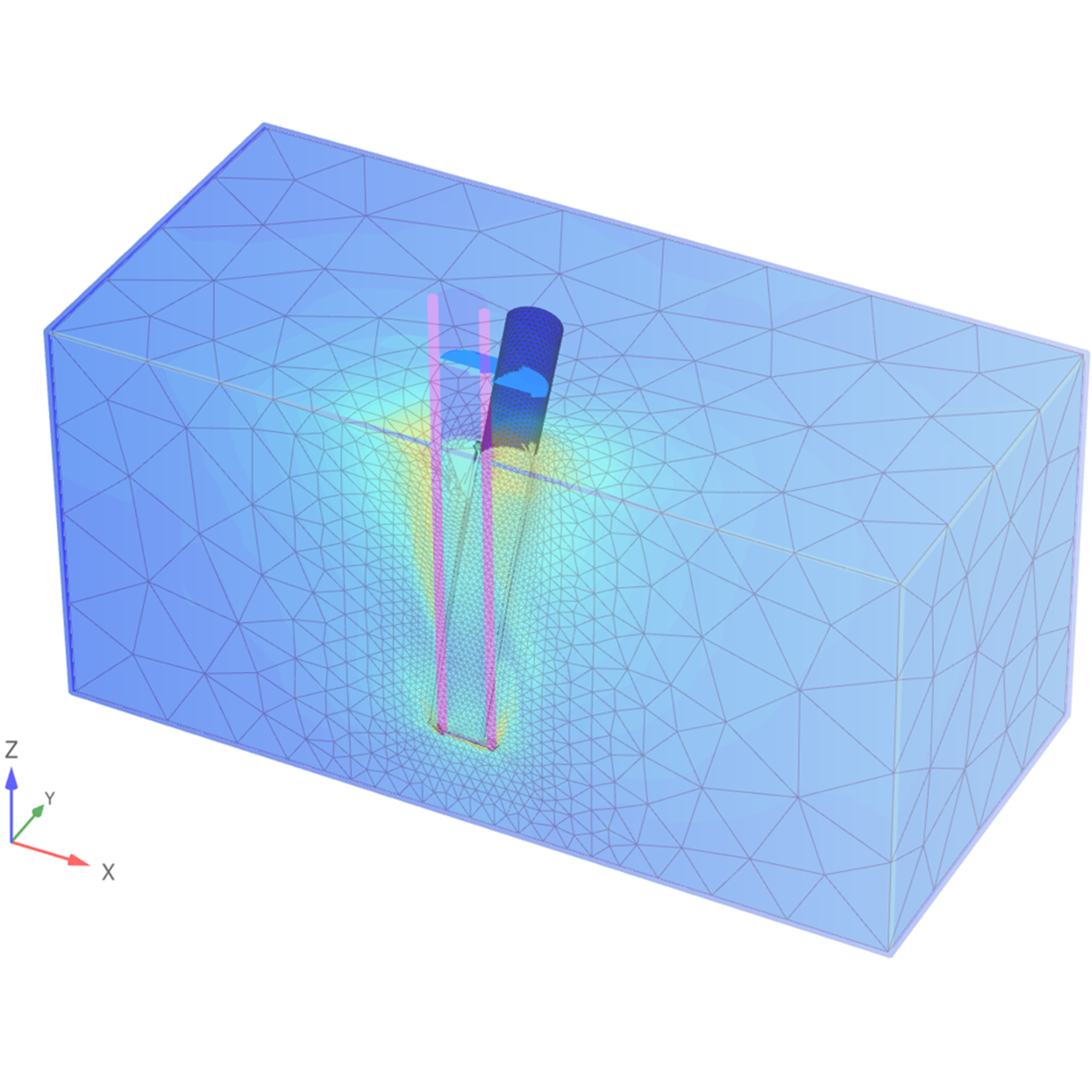
This paper presents two surrogate models to predict thermo-active pile behaviour, without running a full 3D FE simulation every time. That makes it possible to explore and compare pile thermal designs far more quickly.
We developed two complementary ANN surrogate models, trained on 1,600 3D transient FE simulations (COMSOL) spanning a wide range of pile geometries, soil/concrete thermal conductivities, fluid velocities and pipe configurations:
1️⃣ A power output surrogate — predicts transient heat exchange rate per unit pile length under a constant inlet temperature
2️⃣ A thermal response surrogate — predicts normalised pile wall and outlet g-functions under constant heat flux
Some highlights:
⚡ Power output surrogate: R² > 0.99, MAE of 4.37 W/m on the test set
📈 Thermal response surrogate: R² of 0.994–0.997
🔎 SHAP-based interpretability, linking feature importance back to thermal diffusion physics and the Fourier number
✅ Validated against two independent field tests, including extrapolation beyond the trained pile diameter range
🚀 Results predicted in a fraction of a second vs ~25 minutes per FE simulation, orders of magnitude faster!
Read it open access here!
External Talk - Dr Vadeboncoeur

01/07/2026
We hosted a talk by Dr Vadeboncoeur titled "Distributional Inversion for Engineering Applications", which shed light of new techniques for conducting inverse analysis. It was an excellent talk that can be rewatched in the link above.
Abstract
Many engineering settings involve large collections of physical assets where all assets are highly related to one another, yet also have certain key individual variations affecting their response to their environment and use. This presentation is concerned with developing data processing methodologies whereby one can efficiently leverage large amounts of response data from collections of physical systems to infer properties of the population of assets as a whole. We call this “distributional inversion.” We will look at examples of this methodology in problems of subsurface groundwater flow, structural dynamics, aerodynamics of wind turbine blades, and material mechanics. Furthermore, we show how we can accelerate the learning task by concurrently learning surrogate models which can efficiently approximate expensive numerical simulations.
Speaker
Arnaud Vadeboncoeur will be joining Imperial College London in October 2026 as a Research Fellow (IRF) between the Department of Mathematics and Imperial’s I-X Center for AI in Science. He is currently a postdoc in the Department of Engineering at the University of Cambridge in the Computational Statistics and Machine Learning lab, working with Prof. Mark Girolami. Prior to this, he completed his PhD in Engineering at Cambridge with Prof. Fehmi Cirak and earned his undergraduate degree in Civil Engineering at the University of Ottawa.
Thermal integrity profiling of concrete piles incorporating three-dimensional defects using deep convolutional neural networks
22/06/2026
A new paper has been published in Geomechanics and Geoengineering!
In this paper, we build a fully 3D Thermal Integrity Profiling framework combining finite element simulations with two deep convolutional neural networks: one to detect defects, one to characterise them. The models were trained on nearly 20,000 3D simulations covering a wide range of pile geometries, soil conditions, cage misalignments and multi-defect configurations.
Some highlights:
🔍 93.6% per-defect classification accuracy (96.8% per sample)
📐 Defect volume predicted with a mean absolute error of just 0.03 m³
📏 Cage displacement: R² = 0.992
📍 3D defect location: R² ~ 0.92
The paper is available open access here.
Surrogate Models for Back-Analysis in Geotechnical Engineering
05/06/2026
Dr Taborda delivered the second Geo-ORBIT of 2026, titled "Surrogate Models for Back-Analysis in Geotechnical Engineering", organised by the Indian Geotechnical Society's Student Chapter at Roorkee.
Numerical Framework for Stiffness Characterisation of Liquefied Sands During Post-Shaking Re-solidification
29/05/2026
A new paper has been published in Computers and Geotechnics (Volume 198, 2026).
The paper addresses a long-standing challenge in geotechnical earthquake engineering: accurately characterising the compression stiffness and hydraulic conductivity of liquefied sand deposits during the post-shaking re-solidification phase. Conventional laboratory-derived stiffness parameters are shown to systematically overestimate in-situ stiffness under the partially drained conditions that prevail during this stage, leading to overprediction of excess pore pressure dissipation rates and underestimation of surface settlements.
To address this, the paper introduces a hybrid explicit–implicit finite difference method (HEI-FDM) to solve the nonlinear 1D consolidation equation governing post-shaking pore pressure dissipation and settlement. Building on this forward solver, a joint two-parameter inversion framework is developed to back-calculate the constrained modulus and hydraulic conductivity simultaneously, by matching excess pore pressure time histories at multiple depths alongside surface settlement records from dynamic centrifuge tests.
The framework is validated against four well-documented centrifuge experiments, demonstrating consistently high predictive accuracy. The study also examines the influence of co-seismic settlement on initial hydraulic conductivity and the role of void ratio evolution, identifying which factors must be accounted for and which can be safely simplified in practice.
The paper is available open access here.
Congratulations, Dr Ma!
21/05/2026
Shengjie Ma successfully defended his thesis today, titled "Numerical modelling of earthquake-induced liquefaction and its associated ground settlements"! Many congratulations!
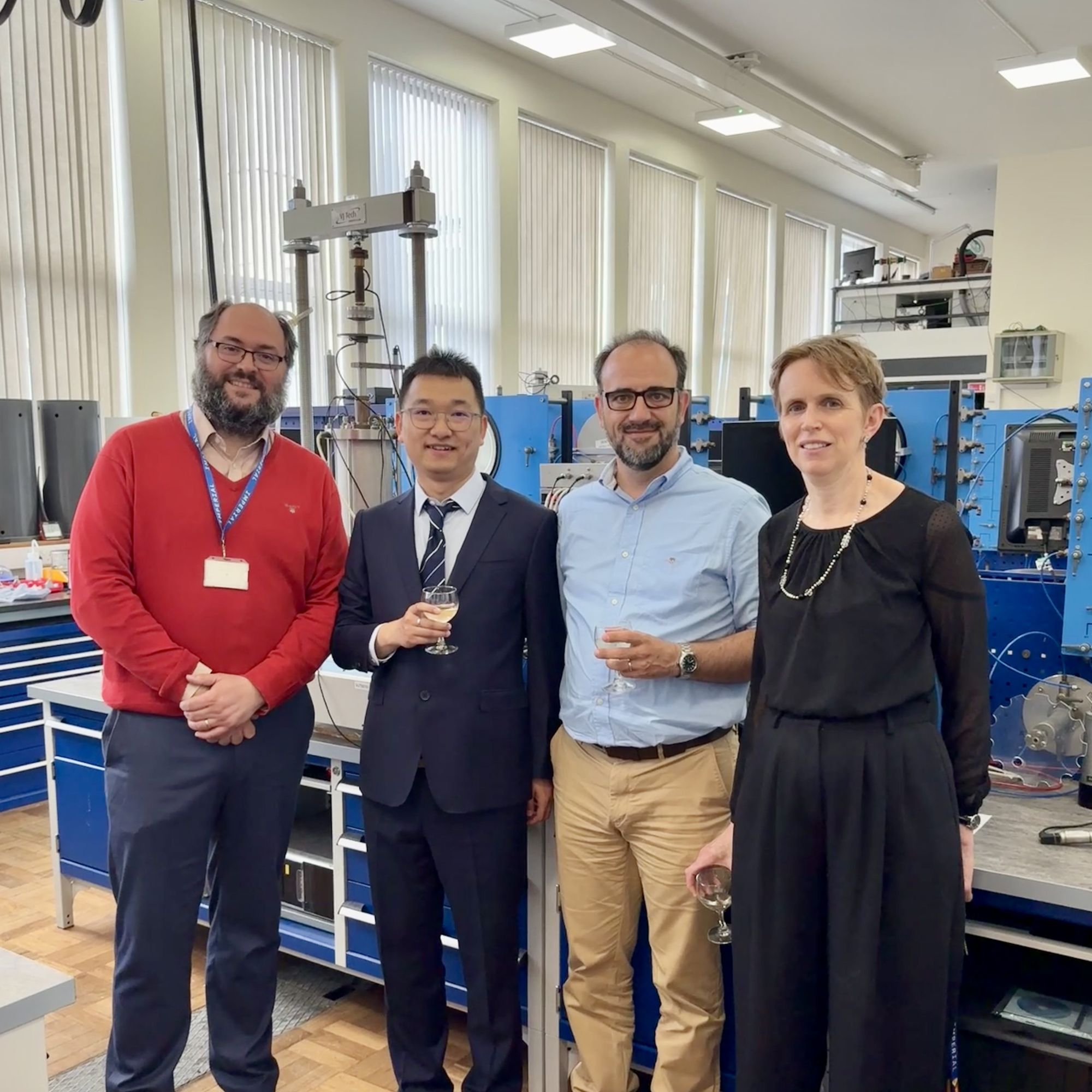
David Taborda (Supervisor), Shengjie Ma (Candidate), Dimitris Karamitros (External Examiner) & Catherine O'Sullivan (Internal Examiner)
Impact of Temporal and Spatial Resolution in Slope-Plant-Atmosphere Interaction Modelling
20/05/2026
New publication in Geotechnical and Geological Engineering
A new open‑access article has been published in Geotechnical and Geological Engineering: “Impact of Temporal and Spatial Resolution in Slope–Plant–Atmosphere Interaction Modelling”
🔗 https://doi.org/10.1007/s10706-026-03733-2
The study examines how different representations of Soil–Plant–Atmosphere Interaction (SPAI) influence long‑term predictions of slope behaviour. A well‑instrumented London Clay cut slope is used as a benchmark to evaluate the sensitivity of pore water pressures, displacements, and stability metrics to several modelling choices.
The analysis compares:
- Daily vs. monthly atmospheric boundary conditions, highlighting how temporal aggregation can smooth short‑term extremes.
- Dynamic vs. static vegetation (LAI), showing that a carefully selected static LAI can approximate dynamic vegetation for many engineering outcomes.
- Surface‑only vs. depth‑distributed transpiration, demonstrating notable differences in suction profiles and Factors of Safety when root water uptake is represented with depth and how differences in displacements can be exacerbated under future climate conditions.
Relevance
SPAI processes strongly influence seasonal and long‑term slope response, yet they are often simplified due to data or computational constraints. The findings provide guidance on when simplified approaches remain reliable and when higher‑resolution or more detailed representations become necessary—particularly under climate‑change‑driven extremes.
Key message
Modelling decisions regarding time resolution, vegetation representation, and transpiration depth can meaningfully alter predicted pore pressures, displacements, and stability outcomes. Careful selection of these assumptions is essential for robust geotechnical assessment.
A nonlinear model for strut behaviour in braced excavations
16/05/2026
New publication in Computers & Geotechnics
A new paper, "A nonlinear model for strut behaviour in braced excavations", co-authored with António Pedro (University of Coimbra) and Manuel Matos Fernandes (University of Porto), is now available online in Computers and Geotechnics (Vol. 197, 2026, 108235, doi: 10.1016/j.compgeo.2026.108235).
The paper addresses a well-known but often poorly handled problem in the numerical modelling of deep excavations: the effective axial stiffness of struts is consistently much lower than their theoretical stiffness, sometimes by as much as 90%, due to assembly imperfections, gaps between structural elements, and initial curvature.
The proposed nonlinear model is governed by a single physically interpretable parameter, δₐ, which controls the offset between the effective and theoretical force–deformation curves and serves as a direct indicator of construction quality. A consistent unloading–reloading response and pre-stressing capability are incorporated within the same framework. The model is implemented in PLAXIS as a User-Defined Soil Model [available on Zenodo] and validated against field data from instrumented excavations, as illustrated in the paper.
A straightforward calibration procedure based on monitored force–displacement data is also outlined, enabling application within the Observational Method to improve stage-by-stage predictions and inform installation practice.
The paper is open access and can be read here.
A novel adaptive sampling approach with batch selection for the automatic generation of surrogate models in geotechnical engineering
28/01/2026
🚀 New Publication Alert in Data‑Centric Engineering
📄 “A novel adaptive sampling approach with batch selection for the automatic generation of surrogate models in geotechnical engineering.”
Yunxiang Yang, Agustín Ruiz López, Aikaterini Tsiampousi & David M. G. Taborda
🔗 https://doi.org/10.1017/dce.2025.10036
In this work, we introduce CV‑BASHES, a new adaptive sampling framework with batch selection designed to build surrogate models more efficiently and more accurately—especially for computationally expensive engineering problems.
🌟 What’s new?
✔️ A model‑independent approach using K‑fold cross‑validation to guide sampling
✔️ Novel distance and projection constraints to prevent clustering and maintain space‑filling properties
✔️ Batch selection, enabling scalable training for complex machine‑learning surrogates
✔️ Demonstrated superior performance over state‑of‑the‑art methods such as MaxPro, SAS, and SFCVT
🏗️ Why it matters for geotechnical engineering
We show how CV‑BASHES can automatically and efficiently generate high‑accuracy surrogate models for deep urban excavations, enabling rapid prediction of diaphragm‑wall deformations and streamlining early‑stage design workflows.
🤖 Impact beyond geotechnics
Although demonstrated through a geotechnical application, the methodology is broadly applicable to any computationally intensive engineering simulations, making surrogate modelling faster, smarter, and more adaptive.
2025 Christmas party
09/12/2025
The annual MAGE Christmas party took place today to celebrate the achievements of 2025 and look ahead at what 2026 is bringing to the group.

From left to right: Ethelbert, Jiaming, David, Shengjie, Yunxiang, Pishun, Pedrag, Francesca, Fabian, Alison, Javier, Kika, Katerina, Hao and Eric
Congratulations to Dr Tantivangphaisal
04/12/2025
Pishun Tantivangphaisal successfully defended his thesis today, titled "Development of a constitutive framework to model the long-term cyclic performance of offshore foundations"! Many congratulations!
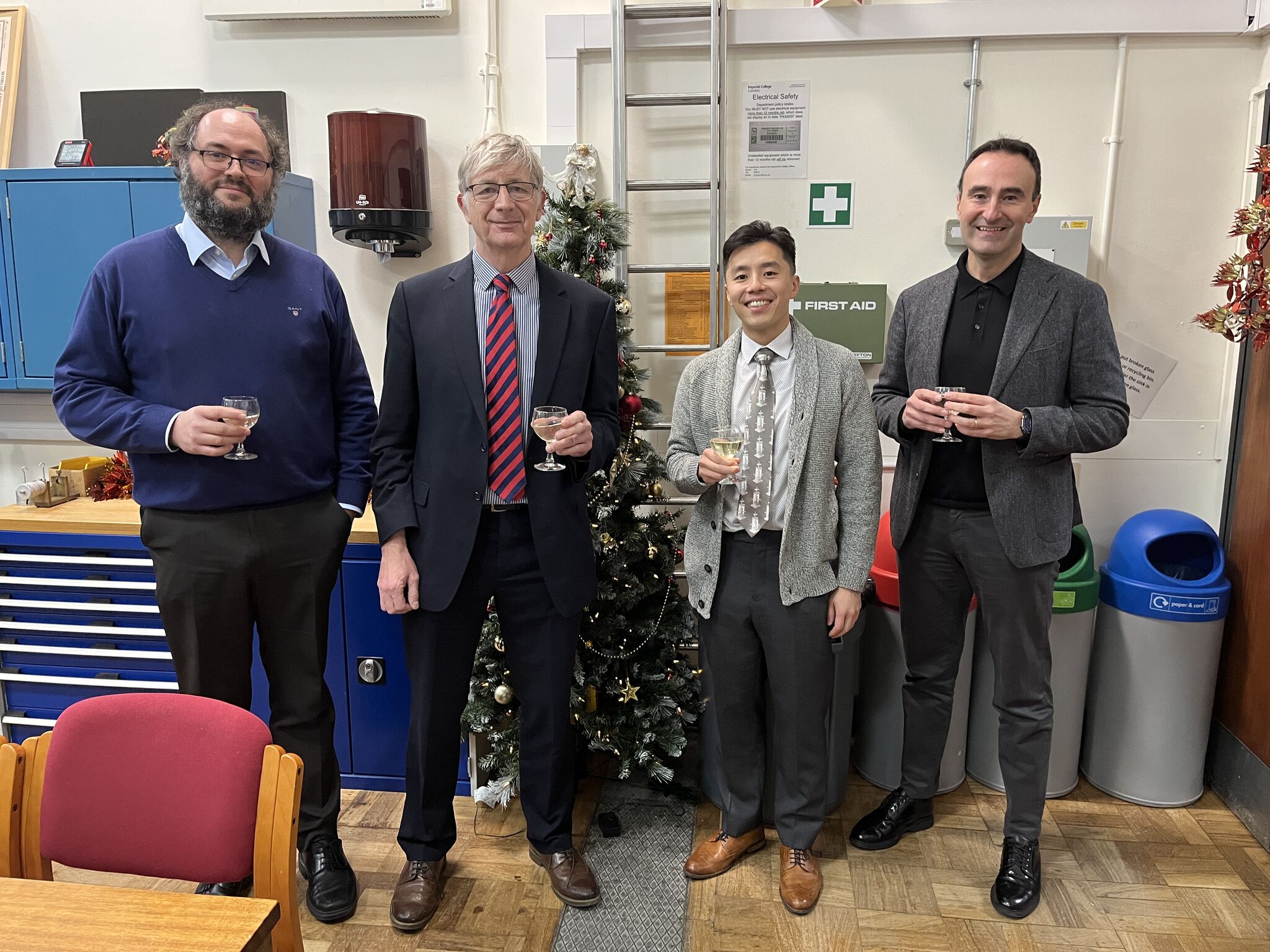 Pishun with one of his supervisors, David, and PhD examiners Prof Burd (Oxford) and Prof Macorini (Imperial)
Three-Dimensional Interaction of Twin Tunnels: Numerical Analysis of the Waterloo International Terminal Case Study
08/09/2025
🚇 This study, published in the ASCE Journal of Geotechnical and Geoenvironmental Engineering, tackles one of the most challenging questions in urban tunnelling: how do closely spaced tunnels influence each other’s behaviour in three dimensions over time?
Using the Jubilee Line Extension beneath the Northern Line at Waterloo as a benchmark, the following was combined:
- 📊 Extensive field monitoring during excavation and over two years of consolidation
- 🖥 High‑fidelity PLAXIS 3D modelling to replicate real‑world conditions
- 🔍 Detailed investigation of lining stiffness reduction factors, tunnel typology (station vs. running), and hydraulic boundary conditions
The obtained modelling results not only match observed ground movements with high accuracy, but also shed light on the subtle interplay between short‑term excavation effects and long‑term consolidation in London Clay.
Key takeaways:
- Station and running tunnels interact differently due to geometry and stiffness
- Accurate modelling of lining stiffness is critical for predicting settlements
- Long‑term consolidation effects can be as significant as immediate excavation impacts
This work serves as a reference for engineers, researchers, and infrastructure planners tackling complex underground projects in dense urban environments.
📄 Read the full paper by following this link
Numerical modelling of the long-term cyclic response of laterally loaded piles driven in sands using the high-cycle accumulation framework
03/07/2025
📘 New Research Published in Géotechnique
A new paper has been published from Pishun Tantivangphaisal's PhD research, titled "Numerical modelling of the long-term cyclic response of laterally loaded piles driven in sands using the high-cycleaccumulation framework". This paper introduces a fully site-specific finite element modelling strategy for predicting the long-term cyclic response of piles driven in sand—central to offshore wind turbine foundation design. By integrating a modified High-Cycle Accumulation (HCA) framework with a calibrated low-cycle sand model, the study achieves accurate simulations of lateral pile behaviour across tens of thousands of load cycles, validated against full-scale field data from the PISA trials at Dunkirk.
🔬 Research Impact:
- This work enables the design of offshore piles under realistic service conditions
- Improves confidence in serviceability and fatigue limit state predictions
- Reduces reliance on generic databases by using exclusively site-specific calibration
- Bridges the gap between element-level soil behaviour and field-scale performance
- Provides a scalable methodology compatible with industry-standard FE tools (e.g., Plaxis)
This work supports more sustainable and cost-effective offshore infrastructure through improved cyclic design methods, informing both academic research and engineering practice.
A novel machine learning-based approach to thermal integrity profiling of concrete pile foundations
30/06/2025
📘 New Research Publication
A new paper has been published from Javier Sanchez Fernandez's PhD research, titled "A Novel Machine Learning–Based Approach to Thermal Integrity Profiling of Concrete Pile Foundations" in the journal Data-Centric Engineering.
📄 Abstract
This study presents a novel methodology for interpreting Thermal Integrity Profiling (TIP) data using machine learning techniques. TIP is a nondestructive testing method that leverages the heat of hydration in concrete to assess the structural integrity of pile foundations. The authors developed a two-stage artificial neural network (ANN) framework trained on a comprehensive dataset generated via finite element simulations.
The proposed model:
- Classifies piles as defective or non-defective,
- Predicts defect size and location,
- Estimates reinforcement cage misalignment, and
- Back-calculates key concrete hydration parameters.
The approach demonstrated high predictive accuracy and robustness, even under noisy data conditions, and is compatible with standard TIP workflows.
🏗️ Significance
This research contributes to the advancement of nondestructive testing in geotechnical engineering by:
- Enhancing the reliability of TIP for defect detection
- Reducing the risk of undetected structural anomalies
- Supporting safer and more efficient foundation construction practices.
🔓 Open Access and Data Availability
The article is freely accessible via Cambridge University Press. The dataset used for model training is available on our Zenodo community.
📖 Read the Full Article
Numerical study of the effect of soil-plant-atmosphere interaction under future climate projections and different vegetation covers
14/06/2025
A new MAGE paper has been published from Maryam Maddah Sadatieh's ongoing PhD project on soil-plant-atmosphere interaction. This paper investigates these interactions under future climate projections and different vegetation covers. It combines ecohydrological and geotechnical modelling to assess the impact on slope stability and serviceability. Using the Tethys-Chloris model, the research calculates actual evapotranspiration and integrates it into geotechnical analysis. Results show vegetation increases slope safety by enhancing soil suction. Climate change effects and vegetation dynamics are analysed, revealing complex interactions between climate, soil hydraulic properties, and slope behaviour. The study emphasizes the importance of realistic boundary conditions and field monitoring for accurate geotechnical assessments.
The new paper is available on Geomechanics for Energy and the Environment, where it is Open Access!
Quantifying the variation of hydraulic conductivity during seismic liquefaction
02/06/2025
A new MAGE paper has been published from Shengjie Ma's ongoing PhD project that details an in-depth investigation into the evolution of permeability during earthquake-induced liquefaction. Using a novel back-analysis method based on a fully coupled solid-fluid (u–p) formulation, permeability changes throughout the co-seismic and post-shaking phases are quantified. Experimental data from eight dynamic centrifuge tests reveal that hydraulic conductivity increases rapidly during seismic shaking but declines even as liquefaction persists. Settlement and Arias Intensity show a strong linear correlation, indicating that agitation, liquefaction, and solidification govern permeability shifts. The findings enhance numerical modeling techniques, aiding the development of more accurate variable-permeability models for liquefaction simulations in engineering applications.
The new paper is available in Soil Dynamics & Earthquake Engineering, where it is Open Access.
Presentation on Numerical Modelling of Long-term Cyclic Loads on Offshore Monopiles
25/03/2025
Pishun Tantivangphaisal delivered a talk to the SUT ECOSIGG and the British Geotechnical Association Early Careers Group. This talk took place at Imperial College on 25th March 2025 and focussed on Pishun's experience with developing, implementing and applying tools for modelling the effects of long-term cyclic loading on offshore monopiles. Pishun also gave us some insights into his career in industry and research.
Read Pishun's paper in MethodsX detailing the implementation of HCA in PLAXIS3D and watch the recording in our page dedicated to offshore geotechnics research.

Presentations at the DTE-AICOMAS 2025 conference
27/02/2025
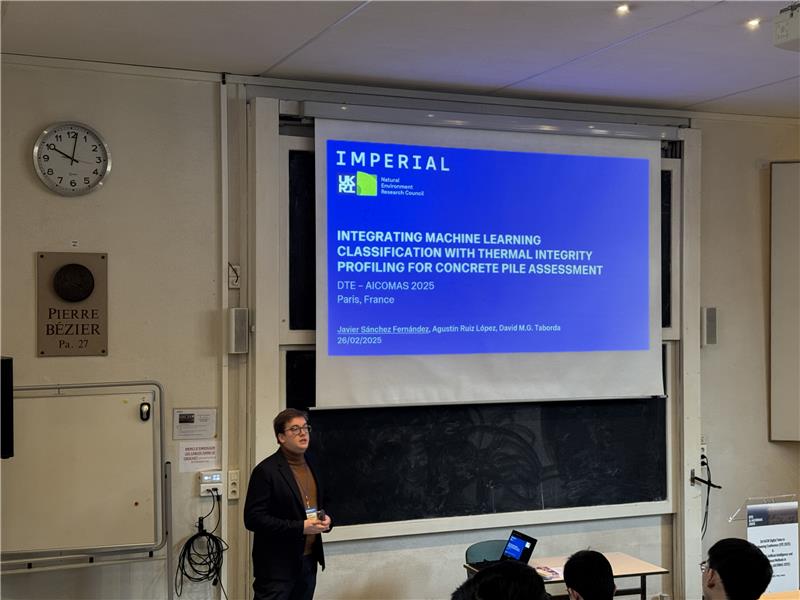
Two of our researchers presented their work at the 3rd IACM Digital Twins in Engineering Conference (DTE 2025) & 1st ECCOMAS Artificial Intelligence and Computational Methods in Applied Science (AICOMAS 2025), in Paris.
Javier presented his research on "Integrating machine learning classification with thermal integrity profiling for concrete pile assessment", while Yunxiang provided an update on new sampling methods for surrogate models in his talk "A model-independent adaptive sampling approach for surrogate design in geotechnical engineering".

Implementation of a practical sand constitutive model coupled with the High Cycle Accumulation framework in PLAXIS
28/01/2025
A new MAGE paper has been published from Pishun Tantivangphaisal's ongoing PhD project that details the implementation of the High Cycle Accumulation framework in PLAXIS, coupled with a state parameter-based constitutive model for sands. It proposes changes to the base formulation and shows its application to the challenging problem of calculating the accumulation of deformations in offshore wind turbine foundations when subjected to thousands of loading cycles.
The new paper is available in MethodsX, where it is Open Access thanks to the support of Imperial College London Open Access Fund.
2024 Christmas party
16/12/2024
The annual MAGE Christmas party took place today to celebrate the achievements of 2024 and look ahead at what 2025 is bringing to the group.

Back row: Pishun, Fabian, Maryam, Ethelbert, David & Eric
Front row: Javier, Alison, Katerina, Shengjie & Yunxiang
Not present: Agustin, Dariel, Francesca, Jiaming, Julia & Stavroula
We look forward to the next get together, which is scheduled for the week of the Rankine Lecture in mid-March!
A new method for estimating ground movements due to shaft excavation
06/12/2024
A new MAGE paper has been published that proposes a new method for determining vertical and horizontal ground movements due to the excavation of shafts in London Clay. This paper is available on the Proceedings of the ICE - Geotechnical Engineering with the accepted copy available in Spiral.
As part of this paper, we created a spreadsheet that implements the developed expressions, which is available for download in Zenodo.
First place in blind prediction contest
06/11/2024
The results of the GEOLAB Blind Prediction Contest organised by TU Darmstadt for pile foundations under monotonic and cyclic lateral loading are out!
The IC MAGE team comprising Pishun Tantivangphaisal, Fabian Wall and David M. G. Taborda from the Geotechnics section at Imperial College ranked first in the monotonic prediction, second in the cyclic prediction and took the top prize for the overall top prediction of the event, among 18 teams from 15 different countries around the world!
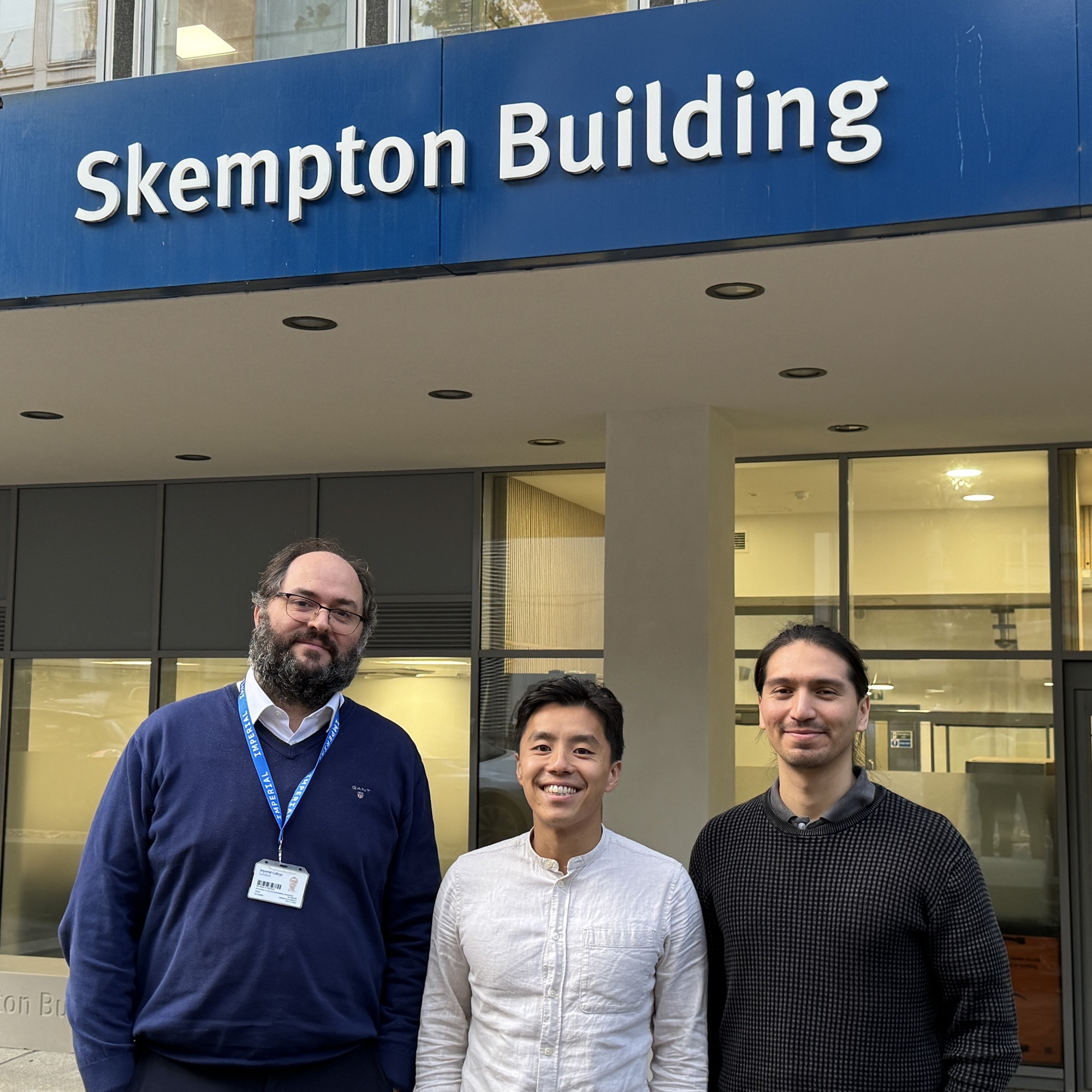
The team combined Seequent PLAXIS 3D with material models and advanced numerical tools developed by the IC MAGE research group and will now get the chance to present their prediction at the 5th International Symposium on Frontiers in Offshore Geotechnics in Nantes, France, in June 2025!
Contact Geotechnics
Geotechnics
Civil and Environmental Engineering
Skempton Building
Imperial College London
South Kensington Campus
London, SW7 2AZ
Telephone:
+44 (0)20 7594 6077
Email: geotechnics@imperial.ac.uk
Alternatively, you can find a member of Geotechnics staff on the Department of Civil and Environmental Engineering website.
Follow us on Twitter: @GeotechnicsICL
We are located in the Skempton Building (building number 27 on the South Kensington Campus Map). How to find us