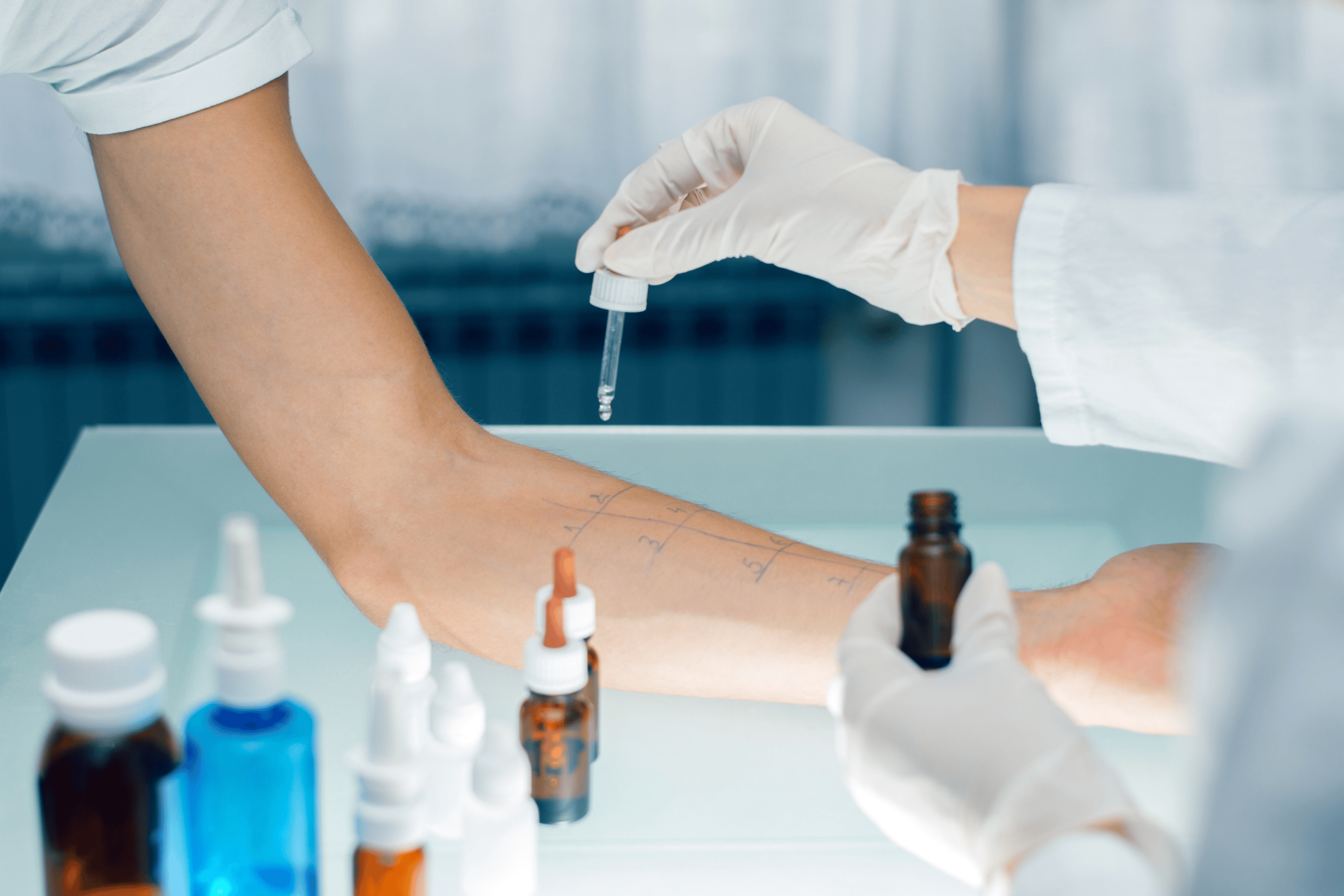
Allergic skin disease and drug allergy
This course covers a wide range of allergic skin diseases, including atopic eczema, contact dermatitis, urticarias, hereditary and acquired angioedemas, photodermatoses and drug allergies.
Course key facts
-
Date
30 Apr - 21 May 2026
Duration
3 weeks
-
Credits
Non credit bearing
-
Format
Blended
Fee
£425
-
Location
On Campus (South Kensington)
Overview
This course covers a wide range of allergic skin diseases, including atopic eczema, contact dermatitis, urticarias, hereditary and acquired angioedemas, photodermatoses and drug allergies. The underlying mechanisms, diagnostic work-up and advanced management will be discussed. Challenging topics such as the role of food allergy in eczema, refractory urticaria and mastocytosis will be addressed. The course will be delivered by experts and world leading international academics.
Learning journey
The course has been devised in an attractive and innovative format combining asynchronous materials (e.g. pre-recorded sessions, reading lists and web-based resources) as well as live interactive sessions, both online and on campus. A range of formats will be used to encourage active learning, including ‘meet the expert question & answer’ sessions, focused discussions, interactive case-based sessions as well as group work. Practical ‘hands-on’ elements will be covered on the optional on campus half day.
The course forms part of a range of short courses in Allergy which are available both to students who are enrolled on the MSc in allergy programme, and as stand-alone CPD programmes for GPs, specialist trainees and consultants, nurses, dietitians and other healthcare professionals wishing to improve their ability to manage allergic patients in daily practice. The course is also suitable for basic scientists and professionals working in industry willing to further their career in the field of allergic skin diseases.
This course will be delivered in a hybrid format. This includes pre-recorded materials, live online sessions, and you can also attend in person teaching or choose to follow this online.
A ‘course launch webinar’ will be held in April for registered participants to introduce the course and help you get organised to maximize your learning experience.
Key dates & provisional times (UK time):
- Wednesday, 1 April 2026, 2.30 - 2.50pm: Launch webinar (online)
- Thursday, 30 April 2026, 1.30 - 6.15pm: Live online teaching
- Monday, 11 May 2026, 1.30 - 6.00pm: Live online teaching
- Thursday, 21 May 2026 9.00am - 12.30: Live teaching – students can choose to attend online or on campus*.
*The live hybrid teaching will be held at one of our campuses – live streaming will be made available for those that choose to follow the course online.
Course details
By the end of the course, participants should be able to:
- Critically evaluate the interaction between genetics, skin barriers and environmental factors in the pathogenesis of atopic eczema both in the literature and in practice examples.
- Identify the pathogenic factors within potential preventative, diagnostic and therapeutic strategies for allergic skin diseases and drug allergy.
- Design diagnostic and management plans to address a range of scenarios in practice, including complex or uncommon cases.
- Propose a differential diagnosis and diagnostic work-up based on the clinical history and examination in children and adults with allergic skin diseases and drug allergy.
- Integrate the findings of the clinical history, examination and diagnostic tests to formulate a proposed diagnosis in children and adults with allergic skin diseases and drug allergy.
- Formulate an optimal management plan in children and adults with allergic skin diseases and drug allergy, including complex and uncommon cases.
- Assess current controversies and knowledge gaps in the prevention, diagnosis and management of allergic skin diseases and drug allergy, and how these apply to specific scenarios or patients.
The course is suitable for doctors (GPs, specialist trainees and consultants in Allergy, Paediatrics, Dermatology), as well as nurses and other healthcare professionals wishing to improve their ability to manage patients with allergic skin diseases in daily practice. The course is also suitable for basic scientists and professionals working in industry willing to further their career in the field of allergic skin diseases.
The fee covers tuition and online resources but does not cover, refreshments, travel or accommodation.
If you have any queries regarding your booking please contact us via email or by phone: +44 (0)20 7594 6885
Detailed joining instructions will be sent to all participants 10-14 days prior to the commencement of the course. Places on these courses are limited, EARLY BOOKING IS ADVISED.
A 20% administration fee will be levied for cancellations made up to two weeks prior to the start of the course. Cancellations thereafter will be liable to the loss of the full fee. Notice of cancellation must be given in writing by letter or fax and action will be taken to recover, from the delegates or their employers, that proportion of the fee owing at the time of cancellation.
Imperial College London reserves the right to cancel an advertised course at short notice. It will endeavour to provide participants with as much notice as possible, but will not accept liability for costs incurred by participants or their organisations for the cancellation of travel arrangements and/or accommodation reservations as a result of the course being cancelled or postponed. If a course is cancelled, fees will be refunded in full. Imperial College also reserves the right to postpone or make such alterations to the content of a course as may be necessary.
Module leaders
Dr Timothy Watts
Dr Timothy Watts is a Consultant Physician in Adult Allergy. His substantive consultant post is based at Homerton Healthcare NHS Foundation Trust, London, where he leads the drug allergy service. He was appointed Clinical Lead for Allergy at Homerton Healthcare in 2024.
He is an Honorary Clinical Senior Lecturer in Allergy at Imperial College London, where he is a faculty member on the MSc Allergy postgraduate programme and has been the Allergic Skin Disease & Drug Allergy Module Lead for the course since 2019.
He completed dedicated higher specialty training in Adult Allergy within Guy’s & St Thomas’ NHS Foundation Trust. He was elected to the Fellowship of the Royal College of Physicians (FRCP) in 2022. He has extensive experience in all aspects of allergic disease, with specialist clinical and research interests in delayed (Type IV) drug hypersensitivity and cutaneous allergy (patch testing), having published and presented extensively in these fields at an international level. He is also frequently invited to both chair sessions & speak on Drug Allergy at the annual BSACI National Allergy Conference.
Additionally, he developed and leads a tertiary drug patch testing service at Homerton University Hospital, which functions as a regional referral centre within London for the investigation of delayed-type drug eruptions. His clinical research in particular focuses on the utility, methodology, efficacy and safety of Drug Patch Testing, and the wider investigation of Delayed (Type IV) T-cell mediated drug hypersensitivity reactions. He is also a Member of the WAO Drug Hypersensitivity Reactions Committee and actively contributes to guidelines and consensus papers.
He frequently teaches and supervises both undergraduate students and postgraduate trainees and sits on the Specialty Training Committee for Allergy & Immunology and ARCP panels (London Deanery). He is named Clinical Supervisor and local training lead for Immunology & Allergy Specialty Registrars, and an Educational Supervisor for FY2 Doctors. Dr Watts is also an examiner for FRCPath Part 1 Examination (Allergy and Clinical Immunology Certificate Examination).
Contact us
Eva Moreno
Senior Programme Administrator
- Phone: +44 (0)20 7594 6885
- Email: cpd@imperial.ac.uk
.png)