Radiation exposure affects everyone differently. Factors such as age, ethnicity, health status, occupation and where someone lives can change the level of risk and the support they need. By including a wide range of voices and studying a wide spectrum of individuals, we design and conduct research that takes these differences seriously and produces findings that can improve health protection for everyone.
In practice, this means better, fairer access to research findings and training as well as a vigilant approach to understand and increase the impact of our research.
When research represents and supports the people and communities who face real-world radiation risks, our results become more reliable, more relevant and far more useful for public health decisions. This is why research inclusion sits at the heart of our work.
Why research inclusion matters
Stronger inclusion leads to:
- Inclusive design – Inclusion ensures research benefits all groups, not just the most represented. Studies built with inclusion in mind better reflect real-world diversity.
- Comprehensive data – Broader participation improves the reliability and generalisability of findings. Wider representation yields richer, more accurate data.
- Better outcomes – Diversity in research fosters creativity and novel approaches. Interventions become more effective and equitable.
- Sustained engagement – Inclusion strengthens public confidence and engagement with research. Inclusive research fosters lasting collaboration and trust.
Our research inclusions mission is, therefore, to conduct research that is not only scientifically rigorous but also socially responsible and inclusive.
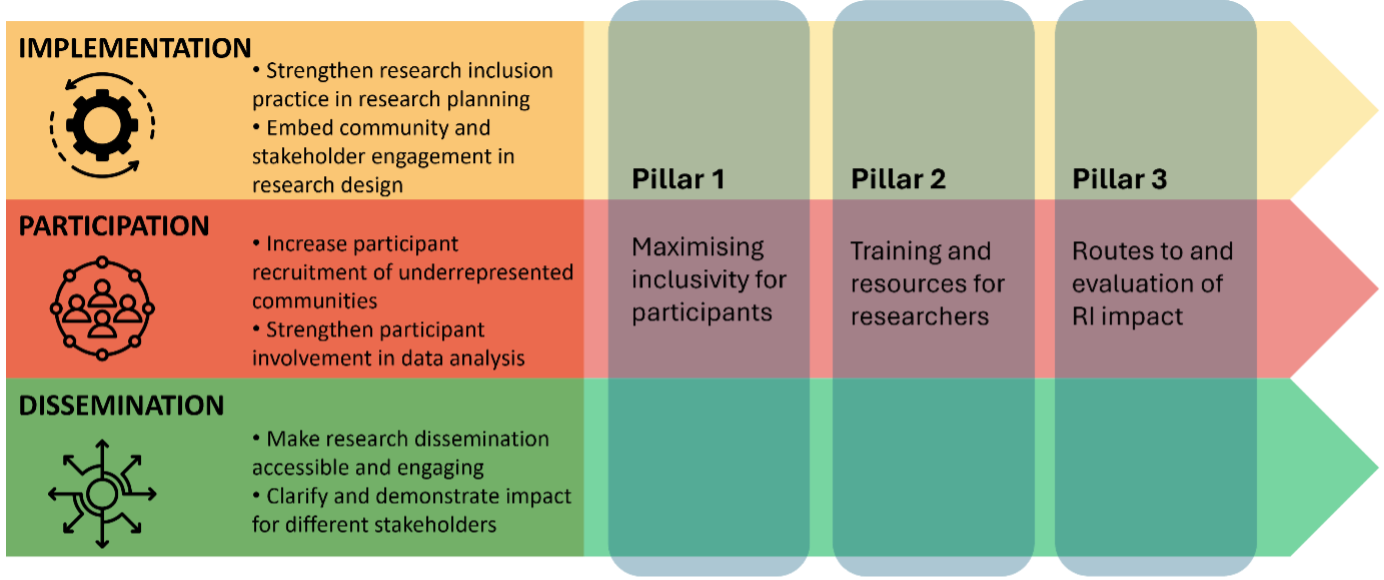
Our approach
The various stages of our research - starting from implementation, participation to dissemination - are underpinned by our three research inclusion pillars:
Pillar 1: Maximise inclusivity for participants
We make it easy for people to take part in our research by removing practical barriers. This could mean providing language support, choosing accessible venues or offering different ways to share experiences and provide information. We involve residents, community groups and the wider public from the planning stage to the sharing of results so research questions address genuine needs.
Pillar 2: Training and resources for researchers
Good inclusion depends on well-supported researchers. We offer training, guidance and opportunities to learn from colleagues and community partners. This helps researchers to design studies that recognise cultural, social and practical differences across the population.
Pillar 3: Clear routes to impact
We monitor who is involved in our research, how accessible our methods are and whether our findings are reaching the right audiences. We use data, surveys and community feedback to understand what is working. This helps us refine our approach and show the value of inclusive research to policymakers and practitioners.
The difference we aim to make
Our goal is to produce research that strengthens public health protection and reduces inequalities linked to radiation exposure. By working closely with communities, government and health organisations, we aim to turn evidence into advice, guidance and action that people can trust.
How to get involved
The research inclusion theme is led by Dr Daniela Fecht (Imperial College London) and Dr Sean Gettings (UKHSA). If you want to get involved, please get in touch.
